
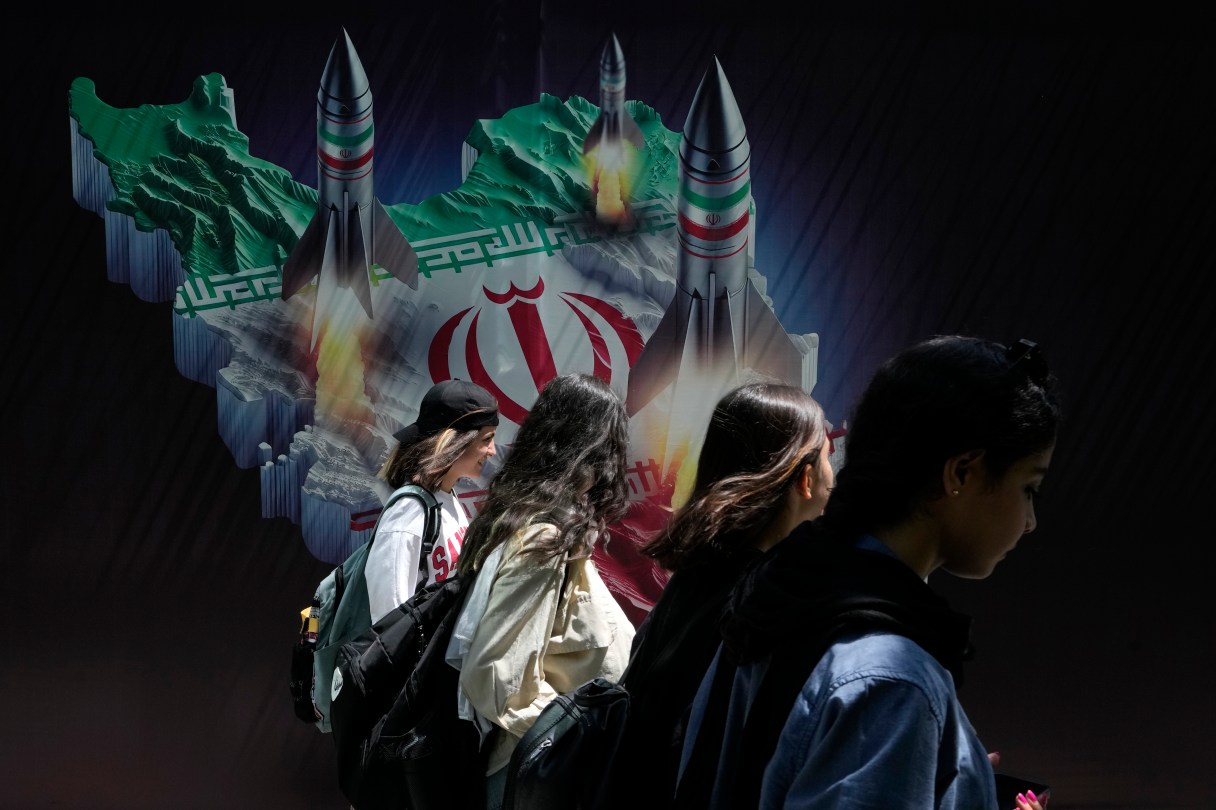
JERUSALEM (AP) — Israel and Iran on Friday both played down an apparent Israeli airstrike near a major air base and nuclear site in central Iran, signaling the two bitter enemies are ready to prevent their latest eruption of violence from escalating into a full-blown regional war.
But the indecisive outcome of weeks of tensions — which included an alleged Israeli strike that killed two Iranian generals, an unprecedented Iranian missile barrage on Israel and the apparent Israeli strike early Friday in the heart of Iran — did little to resolve the deeper grievances between the foes and left the door open to further fighting.
“It appears we’re closer than ever to a broad regional war, despite the fact that the international community will most likely make a great effort to de-escalate tensions,” wrote Amos Harel, the military-affairs commentator for the Israeli daily Haaretz.
Israel has long considered Iran to be its greatest enemy — citing the Islamic Republic’s calls for Israel’s destruction, its controversial nuclear program and its support for hostile proxies across the Middle East.
These tensions have risen since Hamas and Islamic Jihad, Iranian-backed Palestinian groups, attacked Israel on Oct. 7, sparking a devastating Israeli offensive in Gaza that has continued for more than six months. Hezbollah, an Iranian-backed proxy in Lebanon, immediately began striking Israeli targets, opening up tit-for-tat fighting along a second front, while Iranian-backed militias in Iraq, Syria and Yemen have also fired missiles and drones at Israel throughout the war.