
INDIANAPOLIS — College football is ready to put the signs away.
After a sign-stealing scandal dominated the headlines last fall and hung over Michigan’s 15-0 run to the national championship, the NCAA’s football oversight committee has approved the use of coach-to-player helmet communications in games for the 2024 season.
That action was taken Friday. The football rules committee last month made a recommendation to allow (but not require) teams in the Football Bowl Subdivision, the highest tier of Division I, to use radio technology similar to what NFL teams have employed since the 1994 season.
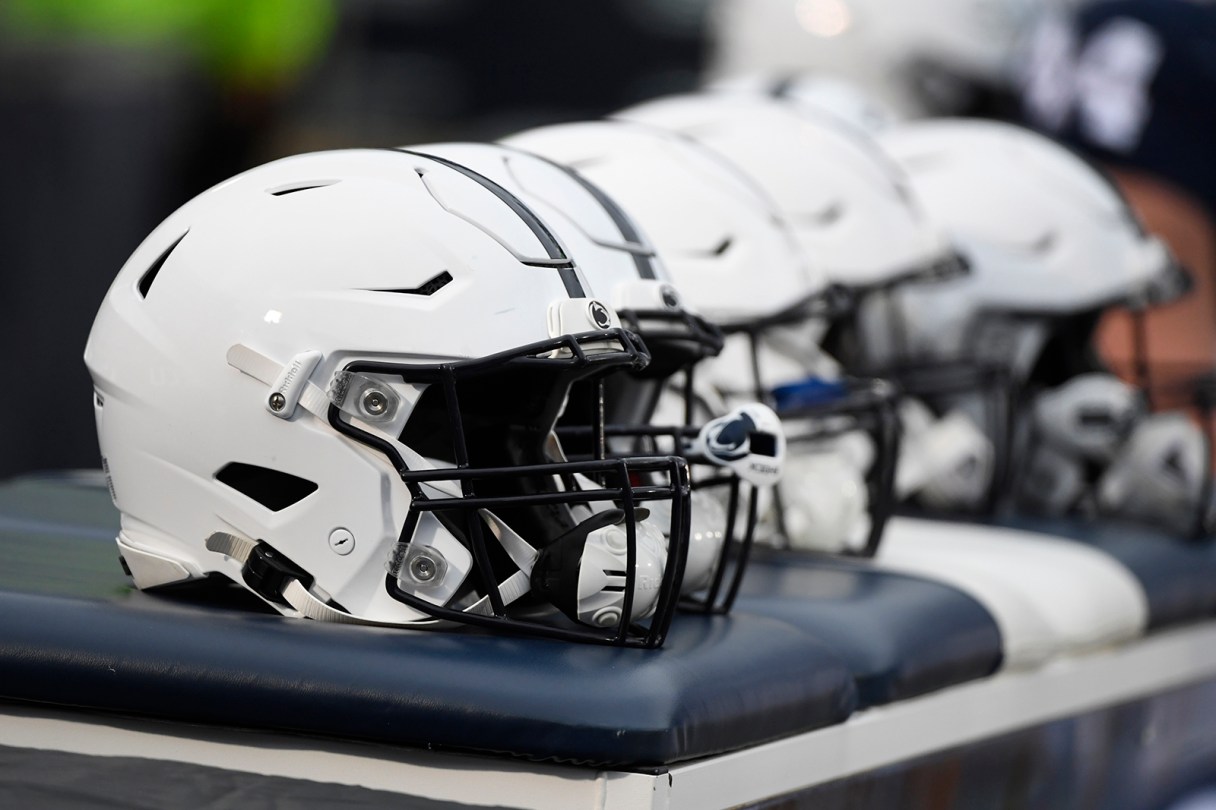
Only one player for each team will be permitted to be in communication with coaches while on the field; a green dot on the back of the helmet will be used to identify that player. The communication from the coach to the player will be turned off with 15 seconds remaining on the play clock or when the ball is snapped, whichever comes first.
The rules committee had been moving toward coach-to-player communication in recent years, but it was slow to be implemented because of concerns that not every school could afford to do it in an equitable way. During the most recent bowl season, teams were permitted to experiment with helmet communication if both sides agreed to it, but no team was forced to use it, and that will be the case going forward.
Teams can still choose to signal in plays using hand gestures or visual sign boards as in the past, but that could be risky: Stealing signs during games is not illegal under NCAA rules, unless it is done with the use of electronic technology.
The NCAA investigated Michigan for using an elaborate impermissible in-person scouting scheme to aid its sign-stealing operation. That case is ongoing, but the Big Ten punished the school by suspending its head coach at the time, Jim Harbaugh, for the final three games of the regular season.
Harbaugh left the Wolverines after the season to coach the NFL’s Los Angeles Chargers.
The NCAA’s football oversight committee also approved the the use of computer tablets to view in-game video in coaching booths, on the sideline and in locker rooms. All team personnel will be allowed to view the tablets during the game.
The oversight committee also approved implementation of an NFL-style 2-minute warning at the end of the second and fourth quarters.
The oversight committee said the rules committee will continue to examine the use of wearable technology that would also allow coaches to send in play calls to the field through an small LED screen that could be wrapped on around a player’s wrist. Proposals for experimental usage of wearable tech much be submitted to the oversight committee by June 15.