
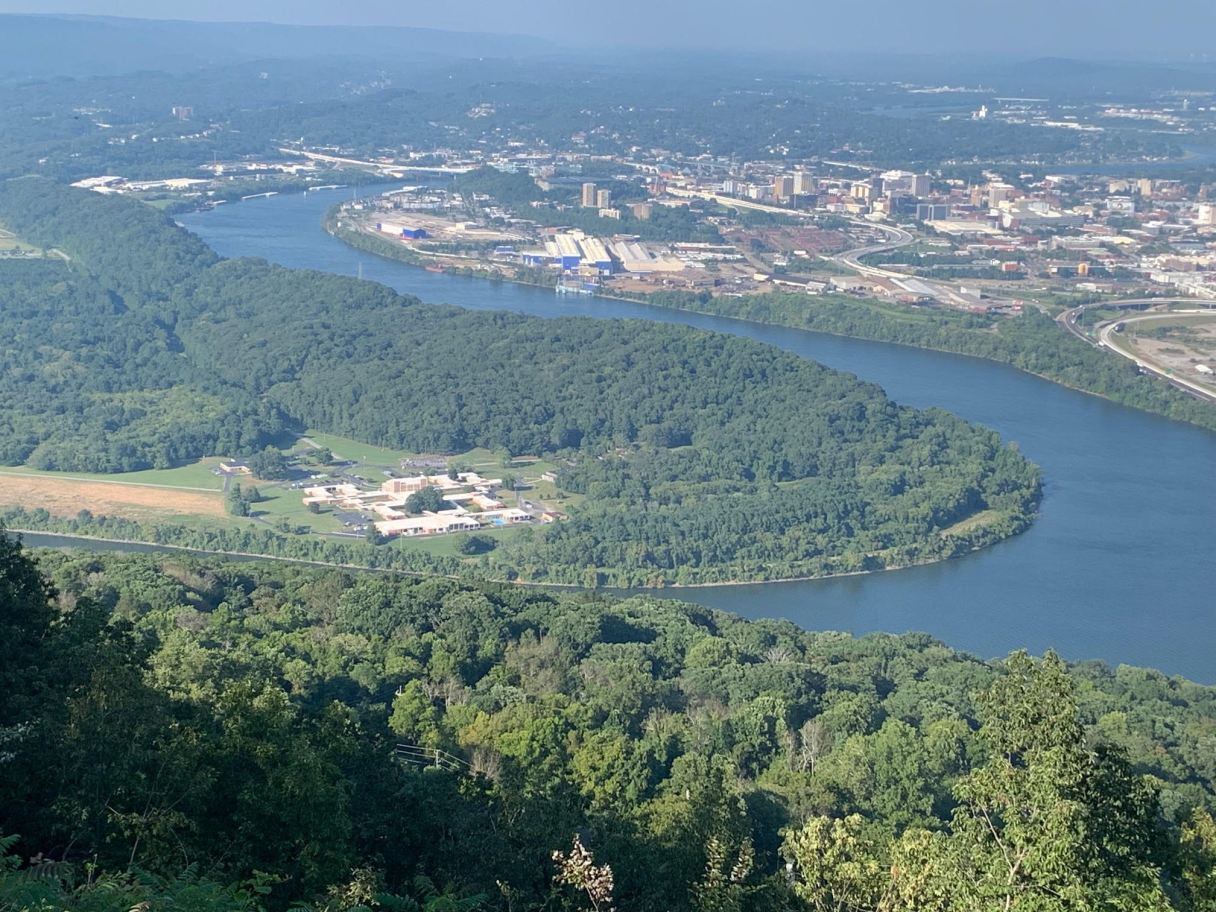

We wouldn’t categorize it as an apples-to-apples comparison, but a city in North Carolina has shown the way in transforming a state mental hospital with a cultural history into a spacious park.
That’s what supporters of the Moccasin Bend National Archeological District are hoping can happen with the Moccasin Bend Mental Health Institute — that it move off the land it has occupied since 1961 and that the national park that adjoins it be allowed to assume the land promised since legislation for the district was signed more than 20 years ago.
Dorothea Dix Park, a 308-acre park two miles southwest of downtown Raleigh, North Carolina, once was part of a 2,343-acre mental health hospital campus that contained 282 buildings and housed more than 2,700 patients. Most of its patients were relocated to Central Regional Hospital in Butner, North Carolina, in 2000, and the hospital closed in 2012. The City of Raleigh purchased the land from the state of North Carolina in 2015, with proceeds to “fund facilities and services for the mentally ill,” and opened it as a public park.
Several factors, according to North Carolina Health News, caused the hospital to close. Among them were general decay in its physical plant, more expense for upkeep and the general premise that people with mental illness would be better served in newer facilities or in the community, all factors extant at Moccasin Bend.