
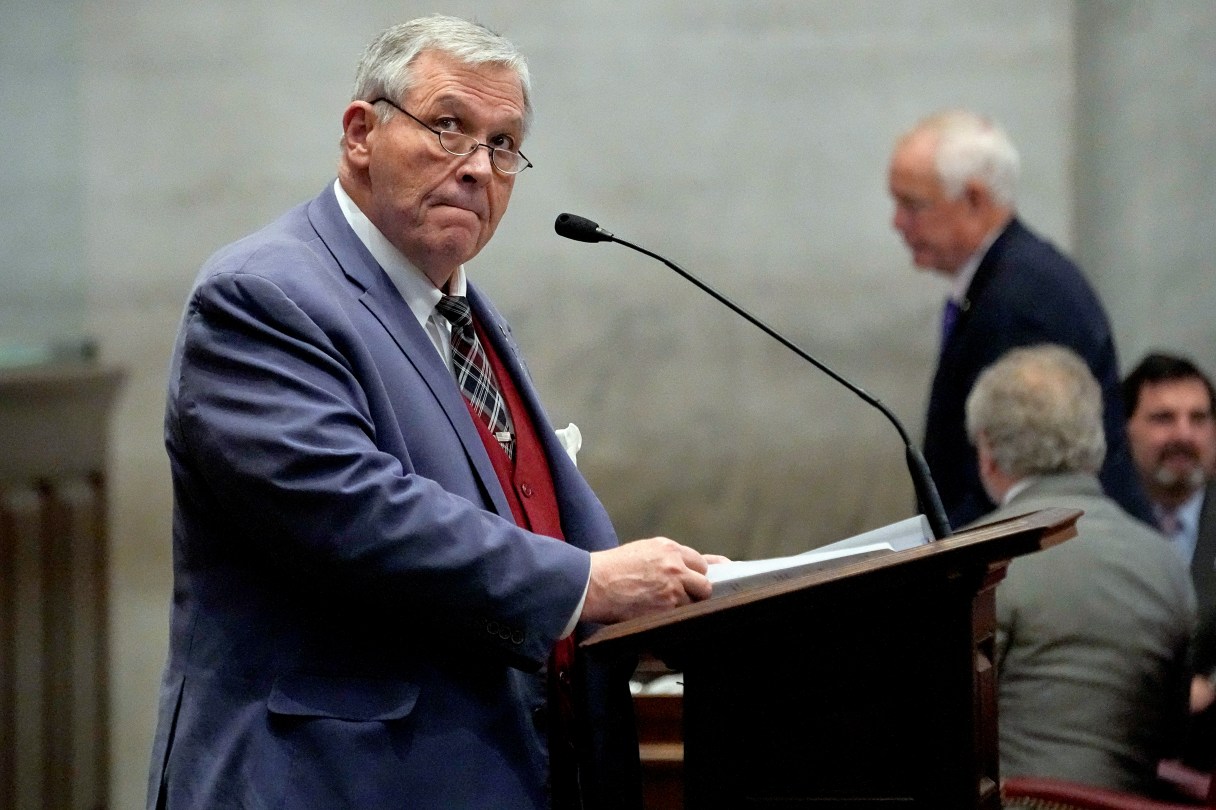
NASHVILLE, Tenn. (AP) — Tennessee’s Republican-dominant House on Wednesday spiked legislation that would have banned local governments from paying to either study or dispense money for reparations for slavery.
The move marked a rare defeat on a GOP-backed proposal initially introduced nearly one year ago. It easily cleared the Republican-controlled Senate last April, but lawmakers eventually hit pause as the House became consumed with controversy over expelling two Black Democratic lawmakers for their participating in a pro-gun control protest from the House floor. That protest followed a deadly elementary school shooting in Nashville.
Interest in the reparations bill emerged again this year, just as lawmakers and GOP Gov. Bill Lee were in the process of finalizing the removal and replacement of every board member of the state’s only publicly-funded historically Black public university, Tennessee State University. That sparked more outrage among critics who contend that Tennessee’s white GOP state leaders have long refused to trust Black local leaders.
As the TSU fallout increased, House members appeared hesitant to hold a potentially explosive debate over reparations. The bill was briefly debated on the House floor last week but support remained unclear.
“The idea of studying reparations doesn’t take anything from you,” Democratic Rep. Larry Miller, who is Black and from Memphis, said during the short House debate. “What’s inside of you to say, ‘Look, we can’t study our history. We can’t even talk about our history, you can’t even use your local tax dollars to study it.’ That is so antiquated.”