
Tuesday, November 17, 2026Nov 17

Dozens of deaths reveal risks of injecting sedatives into people restrained by police

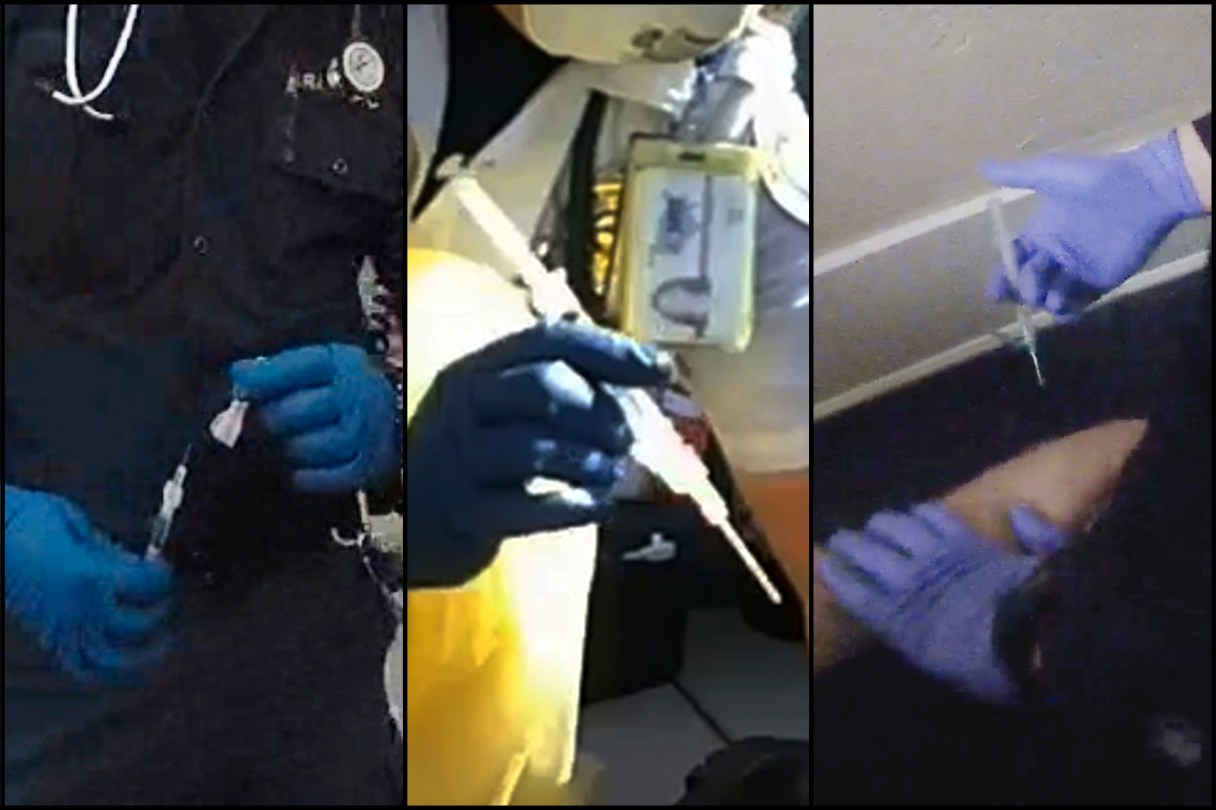
In this combination of images from body-camera videos, medics prepare to inject sedatives to Ivan Gutzalenko in Richmond, Calif., in 2021; Hunter Barr in Colorado Springs, Colo., in 2020, and Wesley Garrett-Henry in San Diego, Calif., in 2020. An investigation led by The Associated Press published in 2024, has found the practice of giving sedatives to people detained by police spread quietly over the last 15 years, built on questionable science and backed by police-aligned experts. (Richmond Police Department, Colorado Springs Police Department, San Diego Police Department via AP)

Demetrio Jackson was desperate for medical help when the paramedics arrived.

The 43-year-old was surrounded by police who arrested him after responding to a trespassing call in a Wisconsin parking lot. Officers had shocked him with a Taser and pinned him as he pleaded that he couldn’t breathe. Now he sat on the ground with hands cuffed behind his back and took in oxygen through a mask.

Then, officers moved Jackson to his side so a medic could inject him with a potent knockout drug.

“It’s just going to calm you down,” an officer assured Jackson. Within minutes, Jackson’s heart stopped. He never regained consciousness and died two weeks later.

Jackson’s 2021 death illustrates an often-hidden way fatal U.S. police encounters end: not with the firing of an officer’s gun but with the silent use of a medical syringe.