
Monday, November 16, 2026Nov 16

Things to know about the largest US-Russia prisoner swap in post-Soviet history

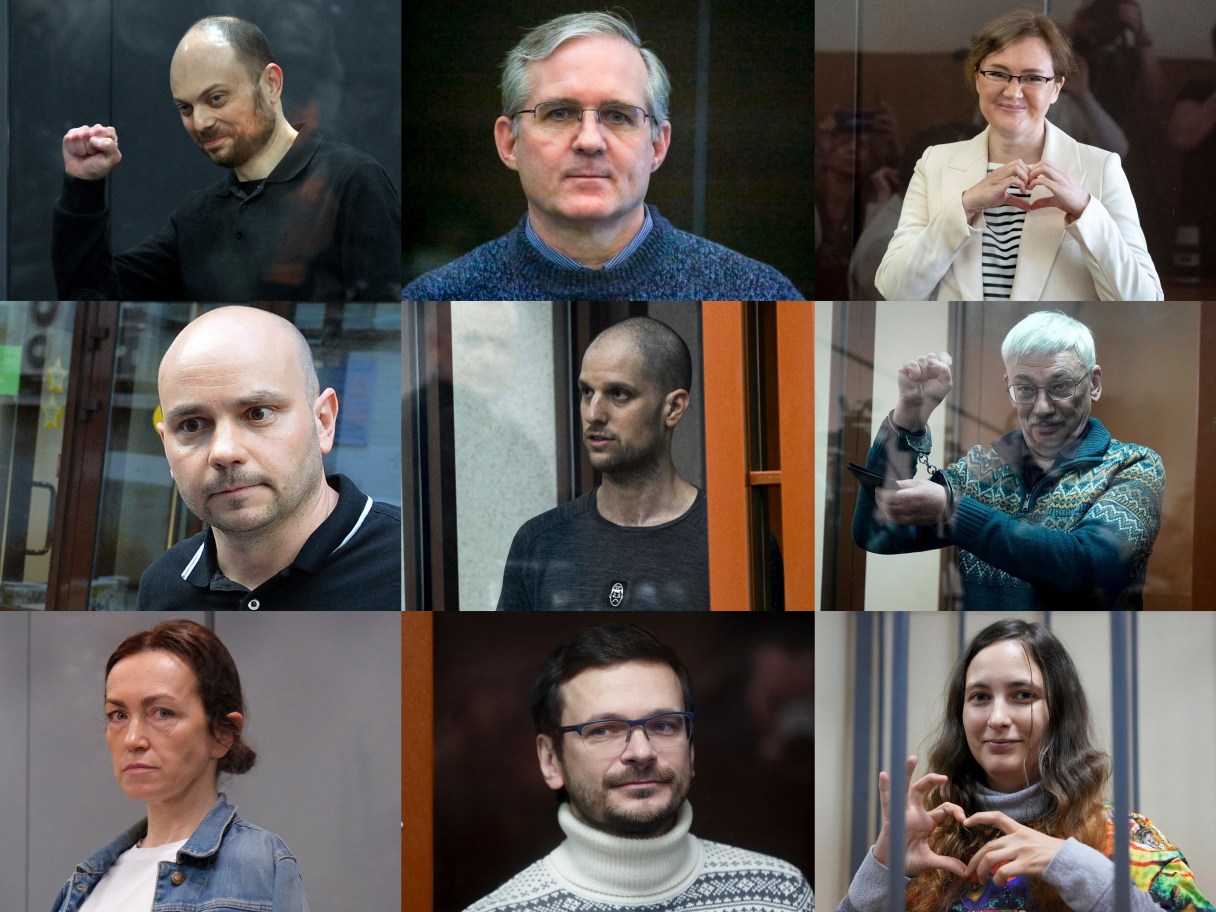
This photo combination shows, in the centre, Wall Street Journal reporter Evan Gershkovich, and clockwise from top left are Russian opposition activist Vladimir Kara-Murza, corporate security executive and former U.S. Marine Paul Whelan, Lilia Chanysheva, former coordinator of regional offices of the late opposition figure Alexei Navalny, co-chair of the Nobel Peace Prize winning Memorial Human Rights Centre Oleg Orlov, artist and musician Sasha Skochilenko, Russian opposition activist and former municipal deputy of the Krasnoselsky district Ilya Yashin, government-funded Radio Free Europe/Radio Liberty's Tatar-Bashkir service Alsu Kurmasheva and former head of Open Russia movement Andrei Pivovarov. (AP Photo)

WASHINGTON (AP) — The U.S. and Russia on Thursday completed their largest prisoner swap in post-Soviet history, a deal involving 24 people, many months of negotiations and concessions from other European countries who released Russians in their custody as part of the exchange.

Here are some things to know:

Who was freed

The 24 people — some prominent, some not — included a collection of journalists and political dissidents, suspected spies, a computer hacker and a fraudster. Even a man convicted of murder.

Russia released 16 people, including Wall Street Journal reporter Evan Gershkovich and Paul Whelan, a corporate security executive from Michigan. Both were facing long prison sentences after being convicted in Russia’s heavily politicized legal system of espionage charges that the U.S. government called baseless.