
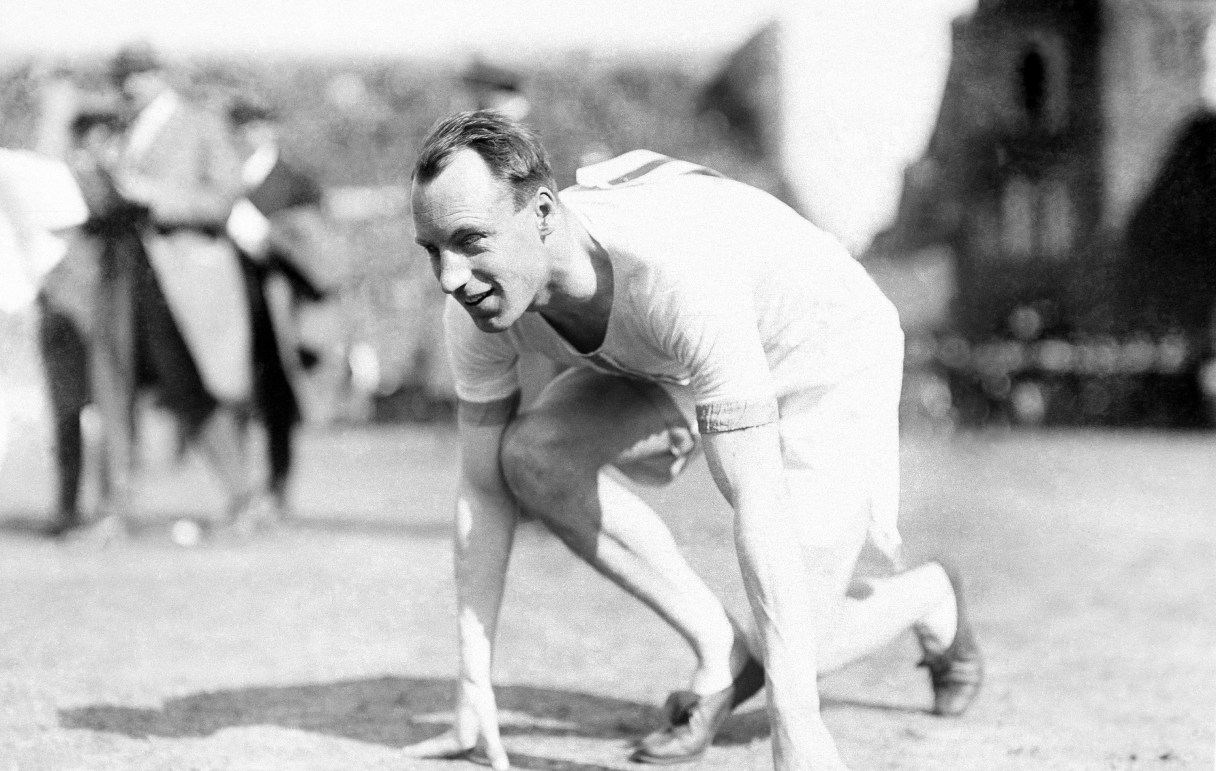
This summer’s Olympic games marked the 100th anniversary of the incredible performance and shocking faith of Scottish gold medalist Eric Liddell, whose story was immortalized in the 1981 movie “Chariots of Fire.”
A devout Christian and son of Scottish Presbyterian missionaries to China, Liddell was an athlete of tremendous promise from his youth. In addition to running, Liddell was selected to play for Scotland’s international rugby team seven times. Alongside his rigorous athletic training was his rigorous faith. In particular, Liddell had a practice of resting on the Sabbath, which meant never racing on Sundays.
Liddell’s athletic prowess eventually took him to the 1924 Summer Olympics in Paris. That year, when the schedule of events was released, Liddell’s best race — the 100-meter dash — was scheduled for a Sunday. But because the race was scheduled on the Sabbath, Liddell dropped out.
As one of his peers recalled, Liddell’s decision “caused tremendous furore amongst many people, particularly with the newspapers and journalists,” with some even calling him “a traitor to his country.”
Nevertheless, the Scottish runner refused to race on Sunday and instead ran in the 200-meter and 400-meter events, races not scheduled on a Sunday and for which he had not trained. Incredibly, he took bronze in the 200-meter and gold in the 400-meter, finishing five meters ahead of the pack.