
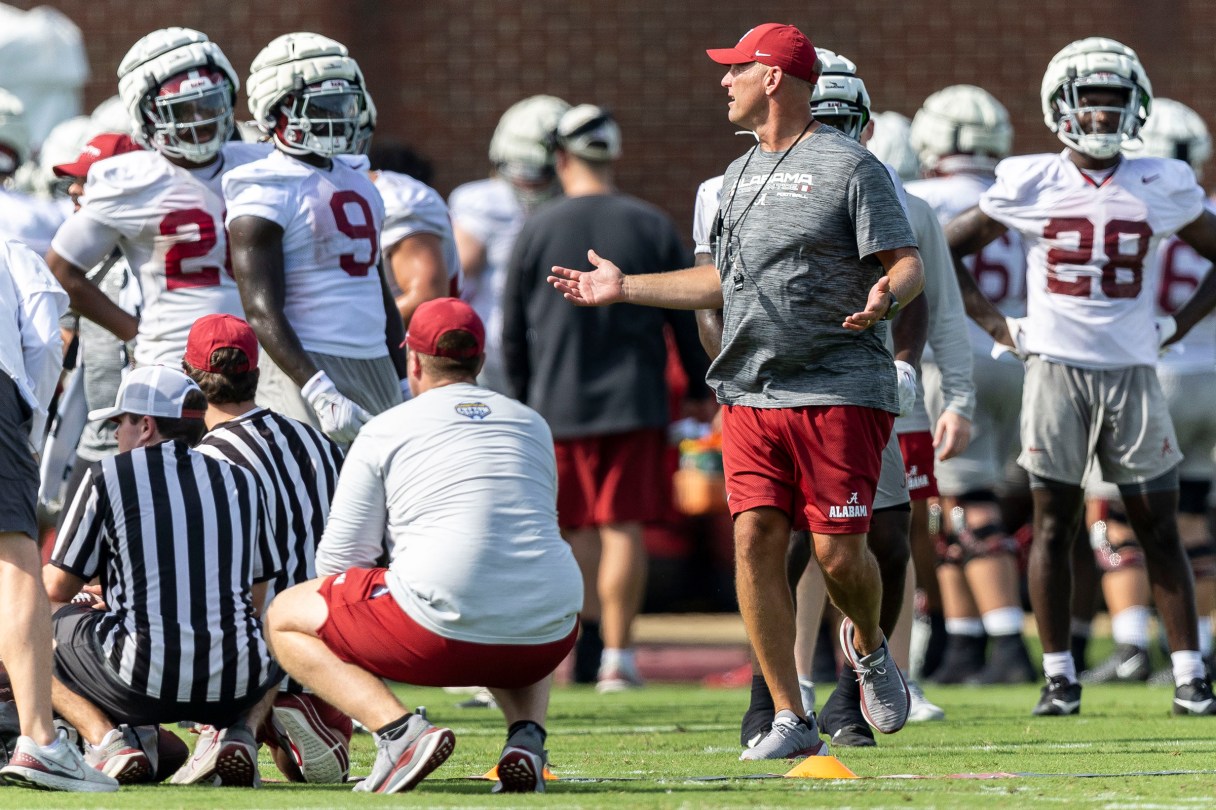
A new era has arrived in college football, with some of the most recognizable programs in history now playing in different conferences — in some cases, as part of reshuffled leagues that stretch from one side of the country to the other.
The postseason is different, too. The College Football Playoff, after spending its first decade as a four-team event, is expanding this fall to 12 teams, altering the calculus of the national championship chase.
There’s also change for some of the game’s biggest names.
Jim Harbaugh led Michigan to the national championship last season, his ninth as the head coach at his alma mater, then left in January to become coach of the NFL’s Los Angeles Chargers. Nick Saban retired from coaching with a record seven national titles — winning all but one of those at Alabama, where he led the Crimson Tide for the past 17 seasons — and is now an analyst on ESPN’s “College GameDay” show. Prolific quarterback Dillon Gabriel takes his big arm to his third school, Oregon, for his sixth and final college season.
The NCAA transfer portal and NIL compensation has players on the move more than ever, but the biggest challenge for fans this season might be remembering which teams are in which conferences. Regional identities are all but a thing of the past in the Football Bowl Subdivision, save for, to some degree, the Southeastern Conference — which has also stretched its borders by adding Oklahoma and Texas to become a 16-team league.