
When I was a white supremacist who had infiltrated the Canadian military reserves, an officer who had spent two tours in Northern Ireland embedded in a British unit told me that the Irish Republican Army had only 75 active personnel who pulled triggers and planted bombs. Behind those combatants were 3,500 people who offered them safe houses and storage for their ammunition. Bolstering them was a much broader community of people who endorsed their efforts.
Ultimately, decades of sectarian violence were perpetrated by a small group of people on each side; but it was the broader public’s support that gave extremists permission to carry out their carnage.
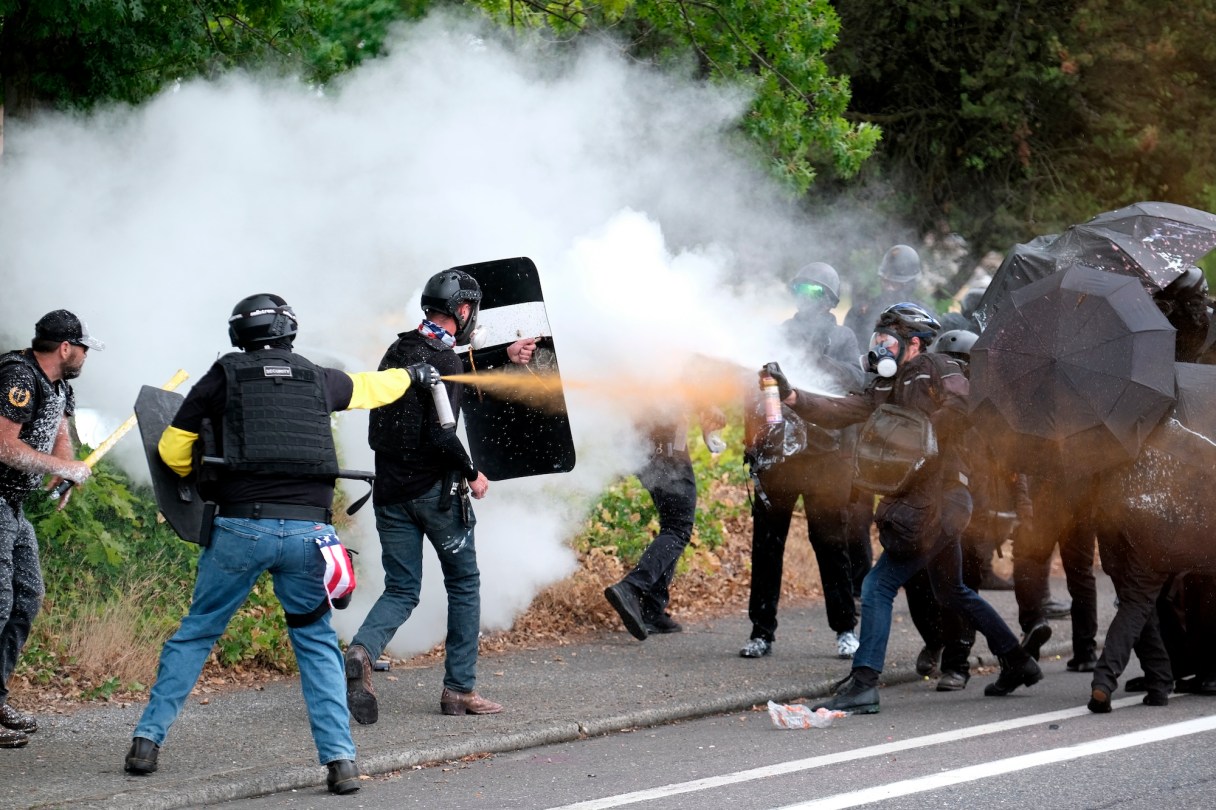
Britain’s recent riots, instigated by anti-immigration protesters in cities across England following the stabbing deaths of three young girls, illustrate this point clearly. A violent eruption only spreads like wildfire when an environment of public support enables it to escalate.
In the days when I was driven by an extremist agenda, our movement recognized the need and opportunity to increase broad-based support among the North American middle. To normalize extremist ideas, we attempted to take a position previously considered radical and make it palatable enough for the public to get behind. If we could repackage a concept that only 1% of people supported in a way that 5% would accept, we could expand our outer edge of extremism while simultaneously moving where the center lies.
We paid close attention to public discourse in the middle, searching for signals of our efforts taking hold. Thankfully, we failed; but the lesson remains: Language of intolerance and dehumanization in the center ultimately enables radical extremism at the outer edges.