
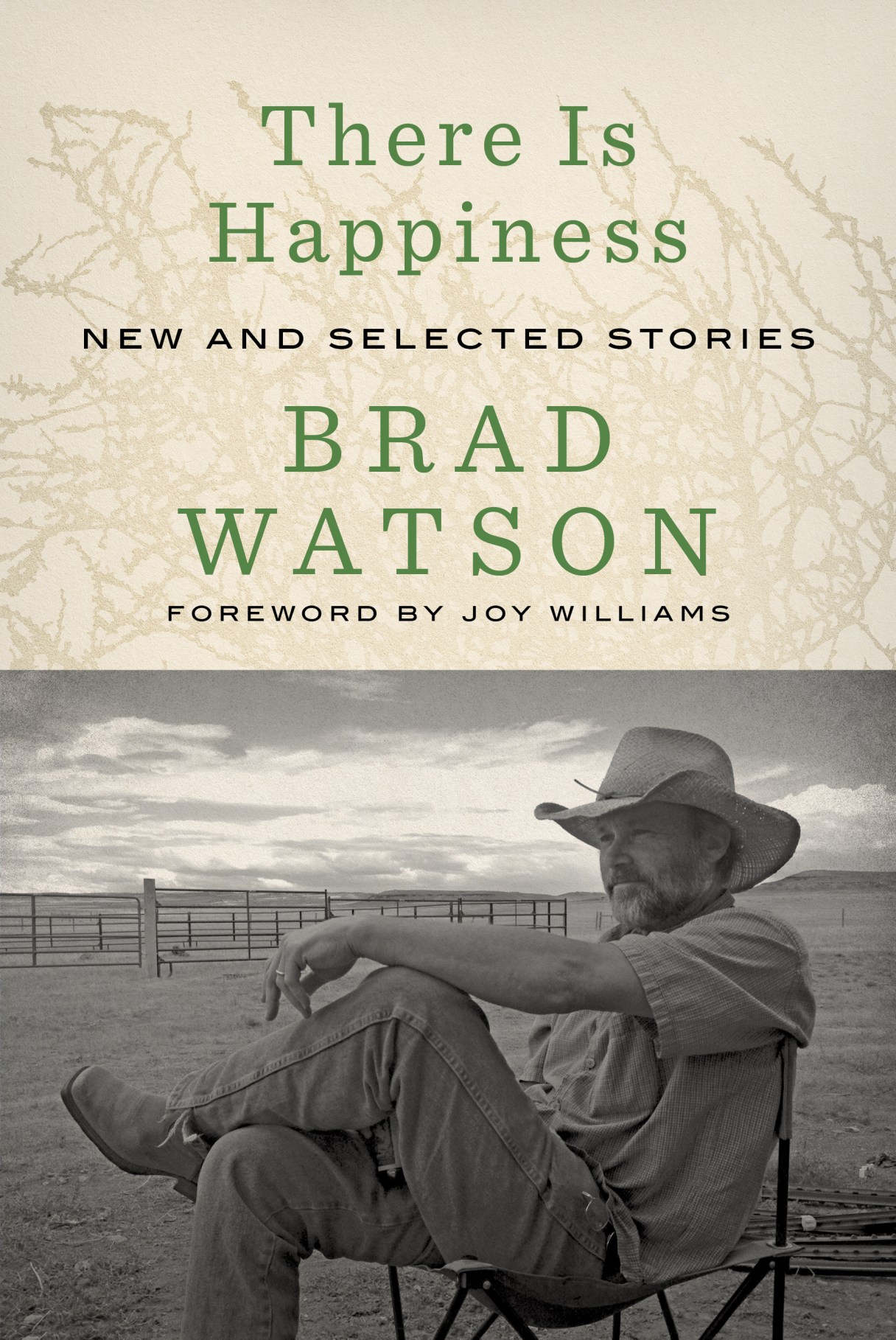
“THERE IS HAPPINESS: NEW AND SELECTED STORIES” by Brad Watson (W.W. Norton, 288 pages, $30).
It’s been four years since the unexpected passing of Brad Watson, from cardiac arrest at his home in Wyoming. One of the most gifted and underappreciated American fiction writers of the last half-century, Watson was a master of style and form, but he was also a terrific storyteller and just plain fun to read.
Inventive and unpredictable, Watson’s work covers the full spectrum of human experience, from comic absurdity to profound pathos and everything in between. He came of age as a writer evoking the tradition of his friends and mentors Barry Hannah and Larry Brown, eventually departing from the “Dirty South” territory and heading out for stranger, surreal, elegiac climes.
In his lifetime, Watson was a writer’s writer and a cult hero, which are not at all bad things to be, but he was not as widely read as he wished to be or should have been. Thanks to the efforts of Watson’s widow, Nell Hanley, and his editor Alane Salierno Mason, we now have an opportunity to correct that injustice: “There Is Happiness: New and Selected Stories,” which is both a career retrospective anthology and a glimpse of the still-evolving aesthetic of a singular talent.
The collection is introduced by the great Joy Williams, Watson’s friend and one-time colleague at the University of Wyoming and a clear influence on his later work. Indeed, Watson’s later stories bear closer resemblance to Williams’ aesthetic and philosophy than the Southern literary heavyweights to whom Watson was often compared, at first accurately, later by default. Reading the new stories and rereading the old, I am struck by how purposefully and deliberately Watson had always been moving toward this territory. Though he was born and raised in Mississippi and is inevitably classified as a Southern writer, Watson’s work doesn’t really belong to any geographical region. His genre is the sublime.