
A nonprofit animal shelter is seeking support from Hamilton County to continue offering its services through June. Without increased funding, the Humane Educational Society could be forced to cut spay and neuter services and end indefinite holds on animals, according to shelter leadership.
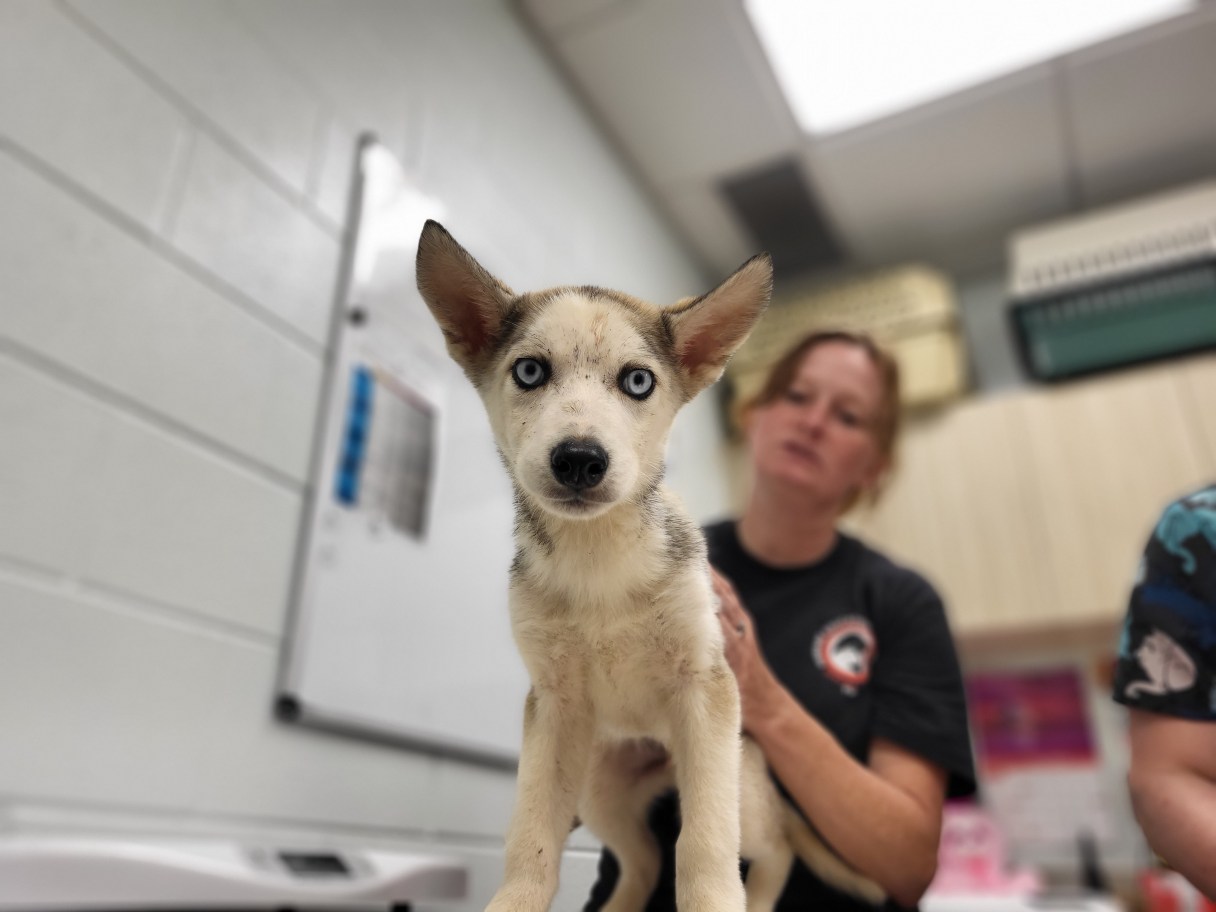
The shelter has tracked rising operational costs in recent years. It’s also faced unexpected expenses, including tax bills totaling more than $500,000 and a court order to house 19 huskies seized from the Harrison area that cost the shelter over $84,000. It also took in 56 dogs found in Ooltewah.
But some county commissioners said during a Wednesday meeting they had major reservations about raising Hamilton’s contribution, and it’s uncertain whether they’ll vote next week to approve $250,000 in emergency funding for the shelter, which serves the unincorporated parts of Hamilton County, along with Collegedale, Walden, Soddy-Daisy and Signal Mountain.
The shelter also provides animal control services for the unincorporated county and the four municipalities.
EMERGENCY FUNDING
The shelter needs the emergency funding to operate as usual for the rest of the fiscal year, according to the shelter’s board president, Jim Kennedy. The $250,000 would be matched by private interests, he told commissioners. Kennedy also said that the shelter, which moved from Highland Park to a new location on Randolph Circle in 2021, has drawn down its reserves as its operational costs have spiked.
And after this fiscal year closes at the end of June, he said, he hoped to talk with the governments that fund the shelter about a new agreement.
When the new shelter opened, he said, “It was, for all intents, a new enterprise — a startup, if you will. And like most startups, its operations cost more than people originally anticipated. That wasn’t being short-sighted or careless. That was learning new systems, with new people, with new expectations in a new and larger facility, all of it being slammed by a soaring inflation rate.”
Animal care was better after the move, he said. The shelter’s executive director, Rebecca Bryan, said over the phone that the facility before the move “was unsafe to animals and humans.”
But fundraising efforts in the years since the shift have stagnated, as have bequests from estates, Kennedy said. The other governments that support the shelter have agreed to raise their contributions, he said.
Public tax forms show the shelter’s total assets as of 2023 at $11.6 million. Its liabilities sat at $177,000 for 2023, according to tax forms. The same forms show that the shelter’s expenses exceeded revenue by about $200,000 last year.
There is $700,000 remaining in the organization’s investment fund, according to Kennedy.
(READ MORE: Two arrested in suspected animal hoarding case in Walker County)
ANIMAL CARE
Some out-of-the-ordinary costs have been burdens on the shelter, both Kennedy and Bryan said.
The seizure of 19 huskies from a home in the Harrison area left the nonprofit with $84,000 in costs after six months of boarding. A court order put the dogs in a legal limbo during that period and prevented the shelter from adopting the dogs out, Bryan said.
But the price tag raised questions for some on the county commission.
“There’s a little sticker shock there for me,” Commissioner Lee Helton, R-East Brainerd, said. “That’s more than I spend on my children, probably.”
“I know that this is a special situation but it’s a lot for a business and organization that has scale, that’s built, to provide these services,” he said.
Bryan said it would be more helpful to think of boarding the dogs in a commercial setting for six months.
“The scale is hard to comprehend,” Bryan said Thursday. The dogs were special needs, she said, and required veterinary care and isolation. “That’s not our typical intake.”
Other officials said their concerns also stemmed from a desire to act in the best interests of their districts. Commissioner Joe Graham, R-Lookout Valley, said that the shelter doesn’t serve his district, which is made up of mostly incorporated areas.
“I venture to say it doesn’t serve many of our districts because many of us are in municipalities,” he said of other commissioners. “We love animals, but from a tax point, at least from District 11, I have a problem with the finance of spending more on animals than we’re already spending, than what we’re spending on our children, on our schools.”
Bryan said over the phone that the shelter does serve the unincorporated parts of Graham’s district.
As the discussion continued, Commissioner David Sharpe, D-Red Bank, said, “We all represent our districts.”
“But we have to look at the county as a whole, and the services that are provided by HES, you know, they ensure that the entire county is covered for animal control, rabies, etc.,” he said. “Some things aren’t about our district. It’s about the county,” Sharpe said.
(READ MORE: Two Chattanooga dog parks cater to human companions with beer)
TAXES
Past emergency needs and long-stay occupants, the shelter is struggling to address the consequences of what staff said stemmed from a misunderstanding.
The shelter’s leadership did not apply for tax exempt status on the new building, an oversight that prompted the city and county to send it tax bills for more than $530,000. Bryan said that the leadership team assumed that the tax exempt status the organization had at its previous location would follow it to the new building, and it has been granted tax exempt status again. But the debt was from the time before the shelter staff learned of the mistake.
The county can’t waive the bill. Commissioners asked Hamilton County’s attorney, Rheubin Taylor, whether they had the power to defer or cancel the debt. Taylor told them they could not do so, as did the county’s trustee, Bill Hullander, who spoke near the end of the meeting.
The county and the state have been helpful on the tax issue, Bryan said over the phone Thursday.
“People have been helpful to us,” she said. “Everyone we’ve talked to has been cooperative with us.”
Contact Mariah Franklin at mfranklin@timesfreepress.com or 423-757-6354.