
INDIANAPOLIS — Undefeated Oregon pulled off the expected and grabbed the top spot in the College Football Playoff.
Underdog Clemson pulled off a last-second stunner and stole one of the last spots.
In between, Georgia’s starting quarterback got hurt, fellow Southeastern Conference program Alabama’s hopes grew murkier, and the CFP selection committee settled in to create an unprecedented 12-team postseason bracket for the Football Bowl Subdivision that promises only one sure thing: a 100% chance of enraging at least some slice of college football’s rabid fan base.
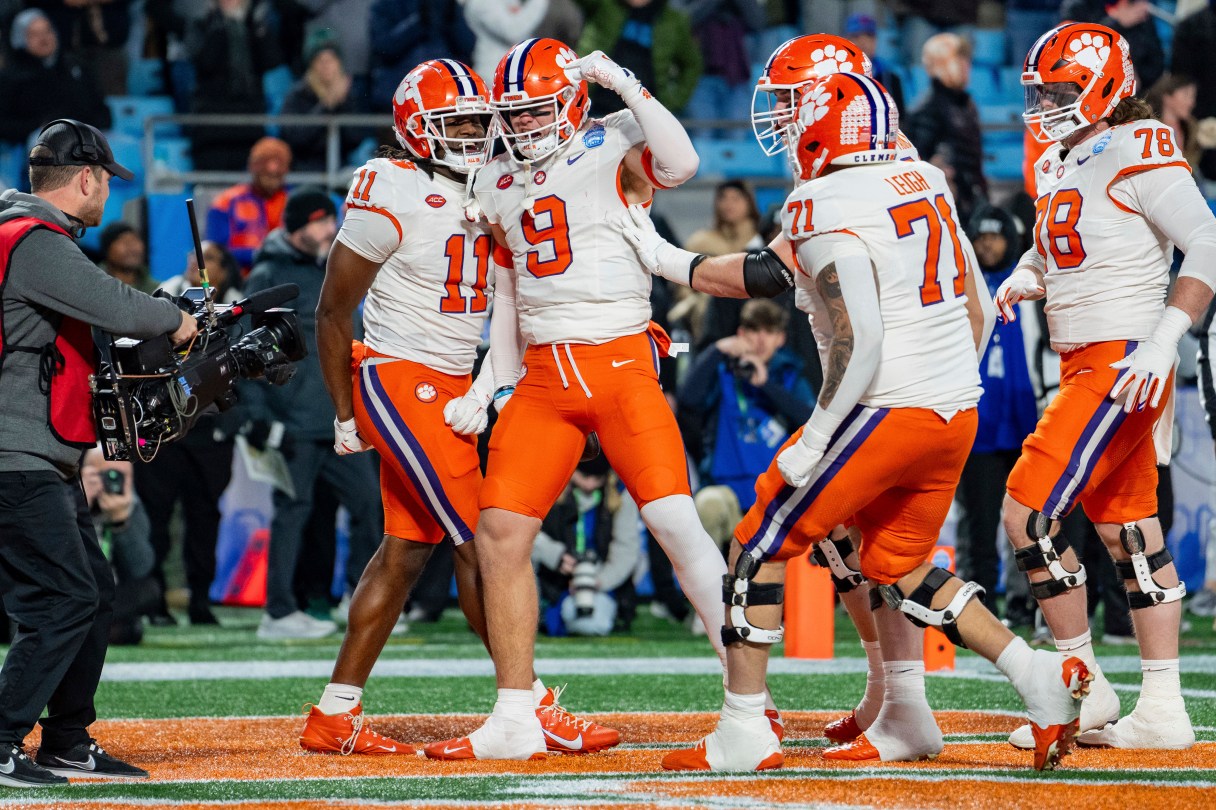
The drama began — and ended — when Clemson, 17th in the last CFP rankings, blew a three-touchdown lead Saturday night, then got a 56-yard field goal to win with no time left, nosing its way into the 12-team playoff with a 34-31 victory over No. 8 SMU in the Atlantic Coast Conference championship game.
That killed off any small chance of a placid, predictable Selection Sunday.
It presented the 13-member committee with a choice it was hoping it wouldn’t have to make: Take Alabama with three losses but a resumé that includes five wins against SEC teams, or take SMU, which has only two losses and showed so much heart in the comeback against Clemson that even the opposing coach was lobbying for the Mustangs.
“That’s a playoff football team,” said Clemson’s Dabo Sweeney, who is going to the CFP for the seventh time himself. “SMU, they better be in the dang playoffs. What a comeback by those guys.”
SMU coach Rhett Lashlee wasn’t arguing.
“It doesn’t matter what I say, but it would be incredibly wrong” if SMU were left out, he said. “I think it would be unprecedented. It would set a really bad precedent. It would break all the principles of what we’ve been told.”
The committee’s most scrutinized decision will dictate whether the SEC puts three or four teams into this year’s bracket — what was a four-team event from its inception in 2014 through last season has tripled in size — and whether the ACC gets one or two.
The Big Ten is all but certain to have four, led by Oregon, a 45-37 winner over Penn State in a conference championship game that cemented the Ducks as the postseason favorite at 13-0.
The loss by SMU also shook up the first-round bye discussion. Arizona State, which started the day with a 45-19 clobbering of Iowa State for the Big 12 title, now looks poised to be the fourth-best conference champion. The top four move directly into the quarterfinals.
That is, of course, assuming the committee keeps the Sun Devils ahead of Clemson. Arizona State was 15th in the last CFP rankings, two spots ahead of the Tigers.
There won’t be any second guessing about giving No. 5 Georgia a first-round bye after its 22-19 overtime victory over No. 2 Texas in the SEC title game, but to say the Bulldogs are one of the four best teams in the country right now might be stretching it.
They got outgained by more than 100 yards by the Longhorns, they have two losses, and they also have a big question mark at quarterback after fifth-year senior Carson Beck left the game with an injured hand.
The committee has taken injuries into account before; it left Florida State, with injured quarterbacks dotting the unbeaten ACC champion’s roster, out of the four-team playoff last year.
That won’t happen to Georgia, but it will force a conversation about who really deserves these byes.
The first-round breaks are currently projected to go to teams that were ranked No. 1 (Oregon), No. 5 (Georgia), No. 10 (Boise State) and No. 15 (Arizona State) a mere week ago and whose rankings probably will only change by a spot or two come Sunday.
Everything else will be a matter of analytics, statistics, the “eye test” and some semblance of an attempt by the committee to avoid a rebellion in conference headquarters and coaching offices across the country.
First-round games will be played on four campuses on Dec. 20-21, so home-field advantage means a lot.
Curt Cignetti, the coach of No. 9 Indiana, was among those watching Saturday’s action unfold and asking: “How are we, right now, not seeded for a home game?”
The Hoosiers lost the biggest game on their schedule, 38-15 to Ohio State, which was ranked three spots higher than Indiana after its own loss, 13-10 to Michigan.
Here’s a look at other teams to watch.
Notre Dame: As an independent, the Fighting Irish were never eligible for a bye, but they will be at home the first weekend.
Texas: The Longhorns are 11-0 against the world and 0-2 against Georgia. Does that drop them far enough to face a road game? The committee has indicated it’s not inclined to penalize title-game losers that much.
Penn State: Coach James Franklin said he felt his Nittany Lions showed enough against Oregon to stay at home for the first game, but “we’ll be excited about whatever opportunity comes.”
Ohio State and Tennessee: Last week, they would have been paired in an 8-9 game at Ohio State — fair enough, except the AP Top 25 had them flip-flopped, which would’ve given home field to the Volunteers instead of the Buckeyes.
Boise State: The Broncos’ win Friday night in the Mountain West Conference title game puts Heisman Trophy hopeful running back Ashton Jeanty in the playoffs — and with a bye, no less.
Miami: The ACC’s Hurricanes were the first team out last week, will probably be the second team out this week and, along with the loser in the Alabama-SMU debate, a great example of how expanding the playoff field does not make the FBS postseason perfect.