
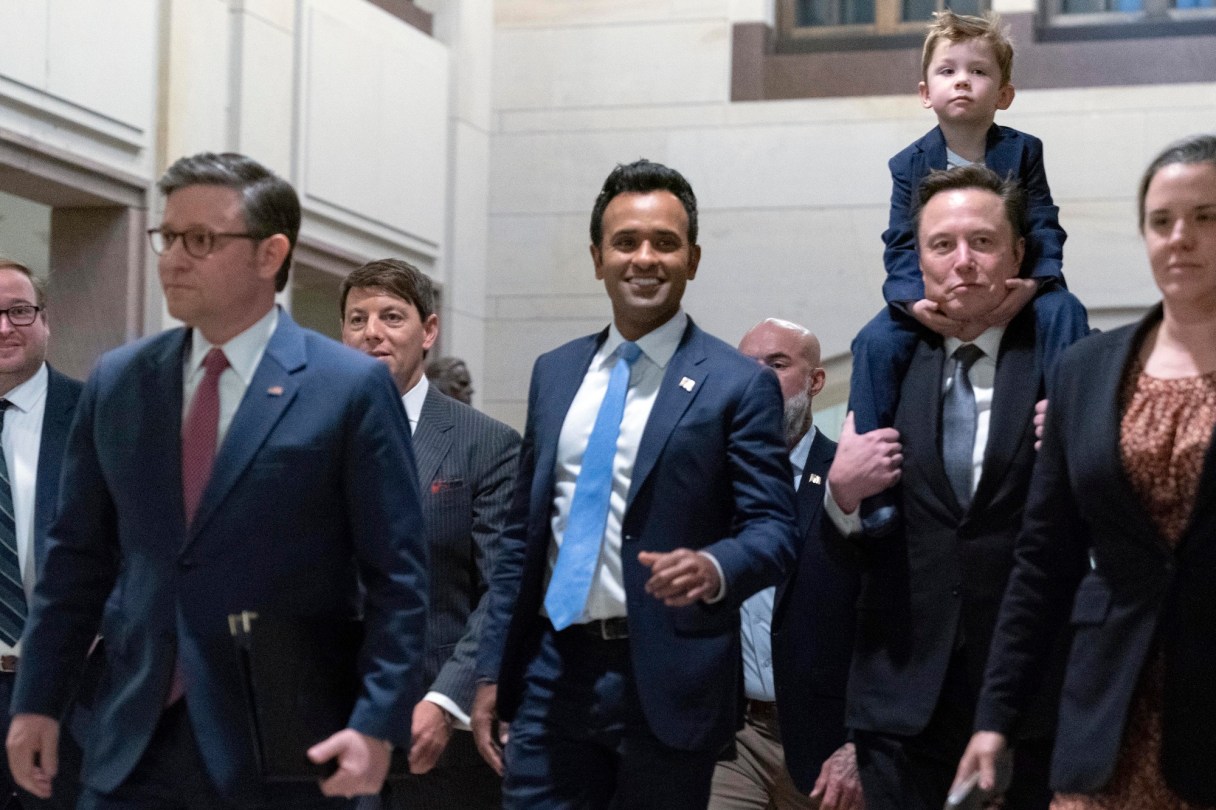
Beneath all the furor around Donald Trump’s appointment, the most important figures in this administration’s orbit have not changed since Election Day: the future of Trumpism is still most likely to be shaped and stamped by two men, JD Vance and Elon Musk.
It’s because they represent, more clearly than any other appointee, two potent visions for a 21st-century right, and their interaction is likely to shape conservatism for the next four years and beyond.
Musk is the dynamist, the believer in growth and innovation and exploration as the lodestars of American civilization. His dynamism was not always especially ideological: The Tesla and SpaceX mogul was once a Barack Obama Democrat. But as Musk has moved right, he has adopted a more libertarian pose, insisting on the profound wastefulness of government spending and the tyranny of the administrative state.
Vance meanwhile is the populist, committed to protect and uplift those parts of America neglected or left behind in an age of globalization. Along with his support for the Trumpian causes of tariffs and immigration restriction, this worldview has made him more sympathetic than the average Republican senator to certain forms of government investment — from long-standing programs like Social Security to new ideas about industrial policy and family policy.