
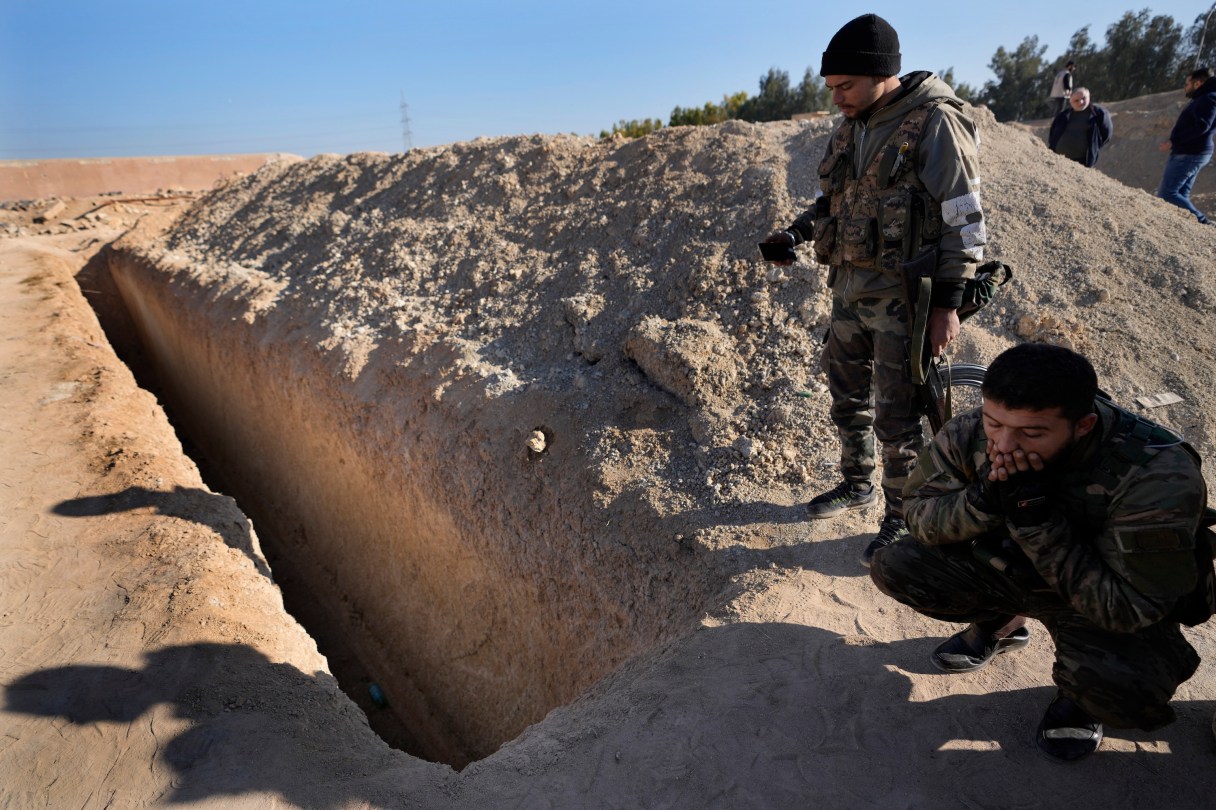
NAJHA, Syria (AP) — Bones are visible here and there among the mounds of earth in a field south of Damascus, one of the mass graves around Syria believed to hold the bodies of tens of thousands of people killed under Bashar Assad’s rule. With his ouster, residents, forensic teams and international groups face what could be a yearslong task of unearthing the dead.
In this site alone, by the town of Najha, several tens of thousands of bodies could have been buried, said Stephen Rapp, a former U.S. ambassador-at-large for war crimes issues who was visiting the site Tuesday. Some are believed buried under already existing graves of a regular cemetery nearby, he said.
It’s too soon to start digging, and it’s unknown how many bodies remain there or if some were moved over the years. But here and there, bones were visible, including some vertebrae from a human spine and fragments of a femur.
Rapp is working with two organizations that aim to help document mass graves and identify officials implicated in war crimes — the Commission for International Justice and Accountability and the Syria Emergency Task Force. They and other groups have for years been remotely gathering witness testimonies and satellite imagery to track and estimate the size of mass graves that swelled from crackdowns by Assad’s feared security agencies, particularly in the early years of Syria’s civil war that began in 2011.
With Assad’s fall 10 days ago, they are now able to see them firsthand. That gives the chance to “really corroborate what we already know about the machinery of death that was maintained and operated by the Assad regime,” Rapp said.