
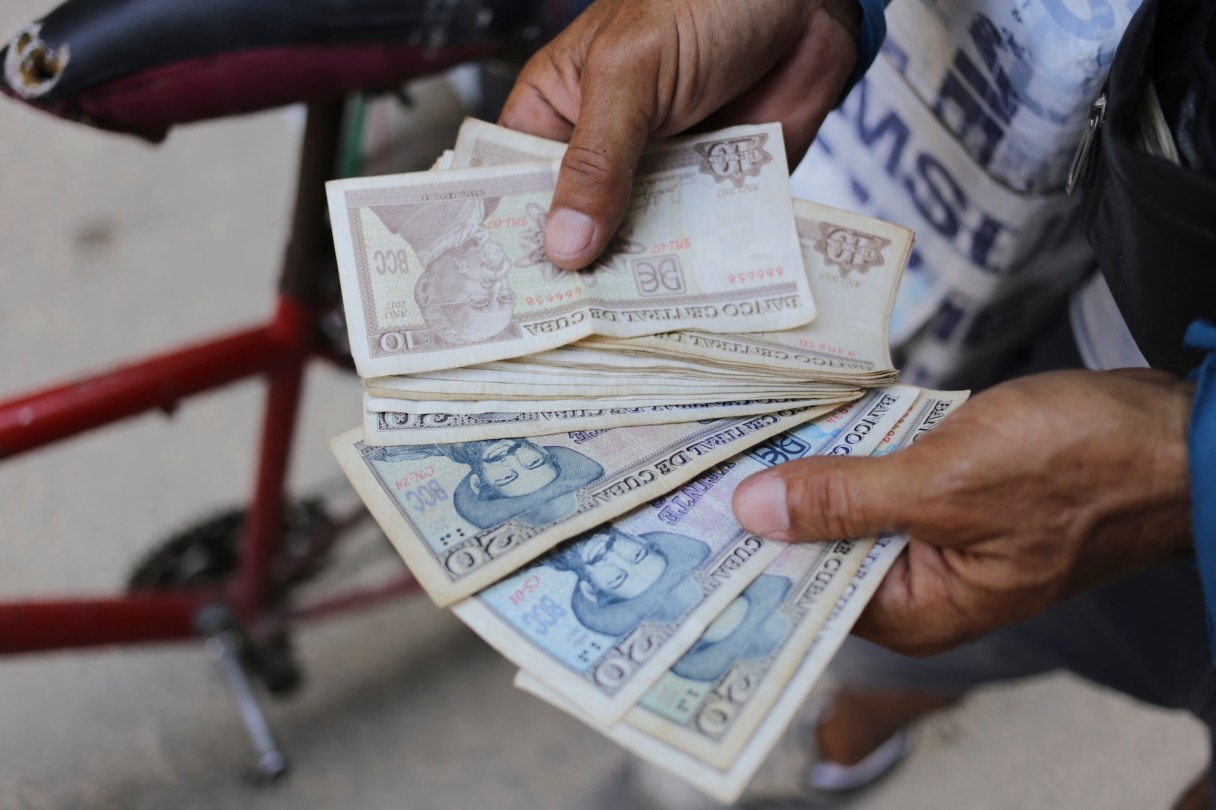
Cuba lies at a crossroads. David Adams in The New York Times recently wrote: “In a Communist Stronghold, Capitalists Become an Economic Lifeline.”
My wife, Eloise, and I traveled last month to Cuba and attest that private businesses are proliferating and that the socialist economy for all its lofty goals appears to be faltering. The opportunity for the U.S. will come in January when Sen. Marco Rubio likely becomes Secretary of State with the power to support normalization with the island and resist tighter sanctions and isolation, as advocated by his Cuba-exiled friends in South Florida.
It is easy to get to Cuba. We took an American Airlines on a 55-minute flight from Miami to Havana. In addition to American’s 10 flights a day to Cuba, several other U.S. airlines serve island airports.
The U.S. Treasury authorizes American citizens the flexibility to travel to Cuba under one of 12 general categories, including education, journalistic, athletic, informational, and humanitarian. Travelers routinely receive a visa upon arrival at the airport and specify one of the 12 categories while avoiding the tourism classification.
We embarked on six days of local culture, arts, education, sports lore (especially baseball) and entrepreneurialism. An impressive stop came at a privately-owned car repair shop, where we learned that the 1952 Chevrolet — closely followed by Ford — was the most popular of many vintage American cars cruising Havana streets. Cuban mechanics have to be some of the most skilled in the world!
We visited artists in their community studios and enjoyed meals at paladares (small, family-owned restaurants). A walk through the historic downtown with its elegant architecture reminded us that Havana was once the prosperous trading center of the Caribbean. A one-day trip to western Cuba’s tobacco farms showed us how an entrepreneur was capitalizing on the rich soil and favorable weather. Visiting Ernest Hemingway’s villa as he left it in 1960 was a treat.
Travel to Cuba is enriching, but most Cubans are having a hard time. Adams in his New York Times report pointed out that, “Cuba is confronting its worst financial crisis in decades, driven by government inefficiency and mismanagement and a decades-long U.S. economic embargo that has led to a collapse in domestic production, rising inflation, constant power outages and shortages of fuel, meat and other necessities. So the island’s communist leaders are turning back the clock and embracing private entrepreneurs, a class of people they once vilified as ‘filthy’ capitalists … roughly 10,200 new private businesses have opened since 2021, creating a dynamic, if fledgling, alternative economy alongside the country’s hobbled socialist model.”
Government officials defend the socialist model, but “U.S. officials say that the growth of private businesses could be a game changer, paving the way for greater democratic and economic freedom.”
The greatest potential help for the continued revival of private enterprise on the island lies with U.S. government policy. American visits to the island continue to grow. Remittances from expatriate relatives in the U.S. provide important support. However, many Cubans worry that the incoming U.S. Secretary of State will be pressured to restore sanctions with the goal of bringing down the Cuban government, which the exiles regard as corrupt and self-serving.
American policy stands at an important juncture. It is in the U.S.’s — and Cuba’s — interest to support continued privatization and modernization on the island. Ideas: travel to Cuba; enjoy the sites; see the suffering and the potential; and convey your thoughts to your elected representatives in Congress.
Frank “Mickey” Robbins coordinates the Local History column in the Times Free Press and enjoys travel. Contact him at frank.m.robbins.iii@gmail.com.