
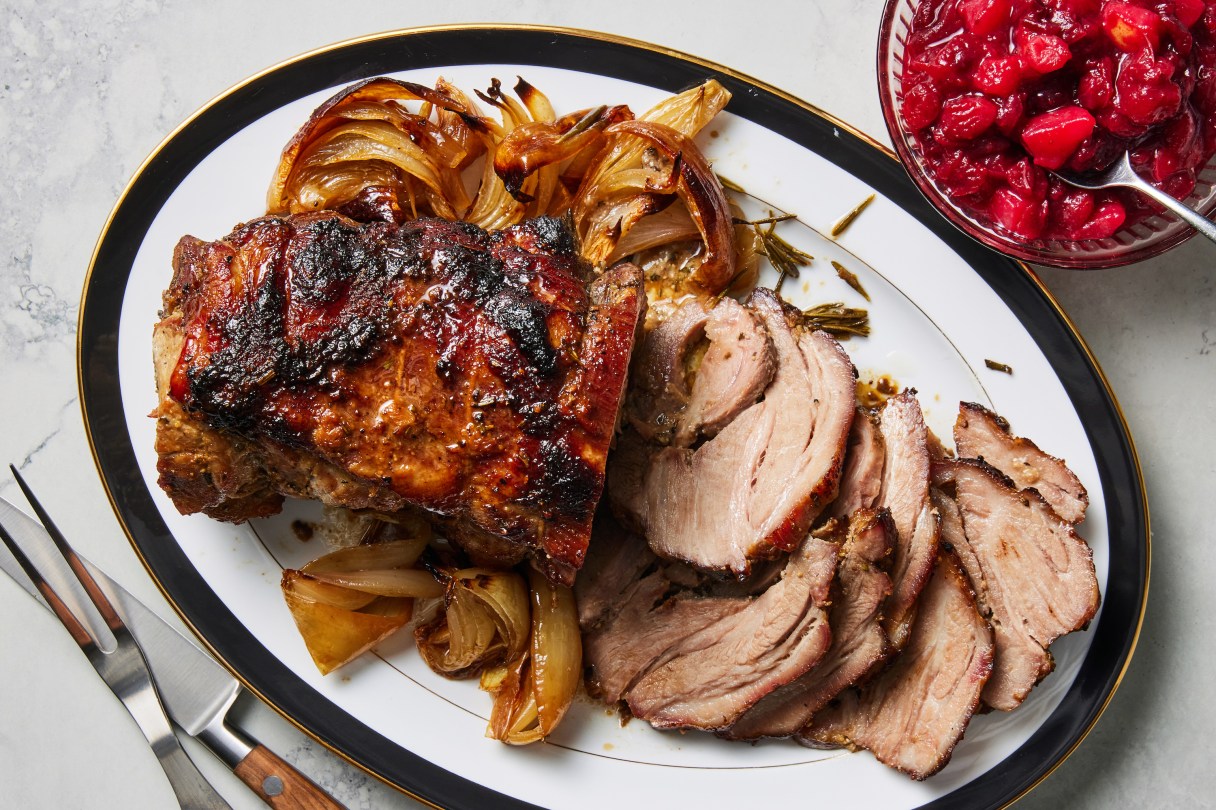
A pork shoulder roast rivals a standing rib roast or beef tenderloin in richness, but it’s more foolproof (and costs far less). This one tastes and smells like the holidays, savory with the scent of rosemary, cozy with a caramelized crust and warming with black pepper. Even though the marinade has only four ingredients, the cut of meat and miso carry a natural complexity that becomes even more nuanced over time, so the roast wows like a restaurant dish without demanding medium-rare perfection.
But what exactly is a pork shoulder roast?
It goes by at least half a dozen names, so it helps to know where it’s from. If you imagine a pig standing on all fours, the shoulder starts at the top of its front legs and extends up behind its neck. That upper portion is confusingly sometimes known as Boston butt or, simply, butt, because preserved pork shoulders were shipped in the colonial era from Boston in barrels with the size designation “butt.” The lower part is (more obviously) labeled shoulder, shoulder roast, picnic shoulder or blade roast.
At most supermarkets, you get what you get in the meat case. If you’re lucky enough to have options, pick the part you want: This recipe works with any part of the shoulder, whether it has bone or skin, both or neither.
The well-marbled butt is often cut into a tidy rectangle with the bone in and a thick cap of fat, so much of its flavor comes from its own richness. The cut labeled shoulder usually comes in boneless triangles or trapezoids and has slightly less fat. If it’s sold already tied, unfurl it to slather the marinade all over both sides to permeate throughout, then reroll and tie it. No matter how the pork is butchered, tying it gives it the structure to end up sliceable. Otherwise, it’ll collapse like shreddable pulled pork – also tasty, but not sturdy enough to carve.