
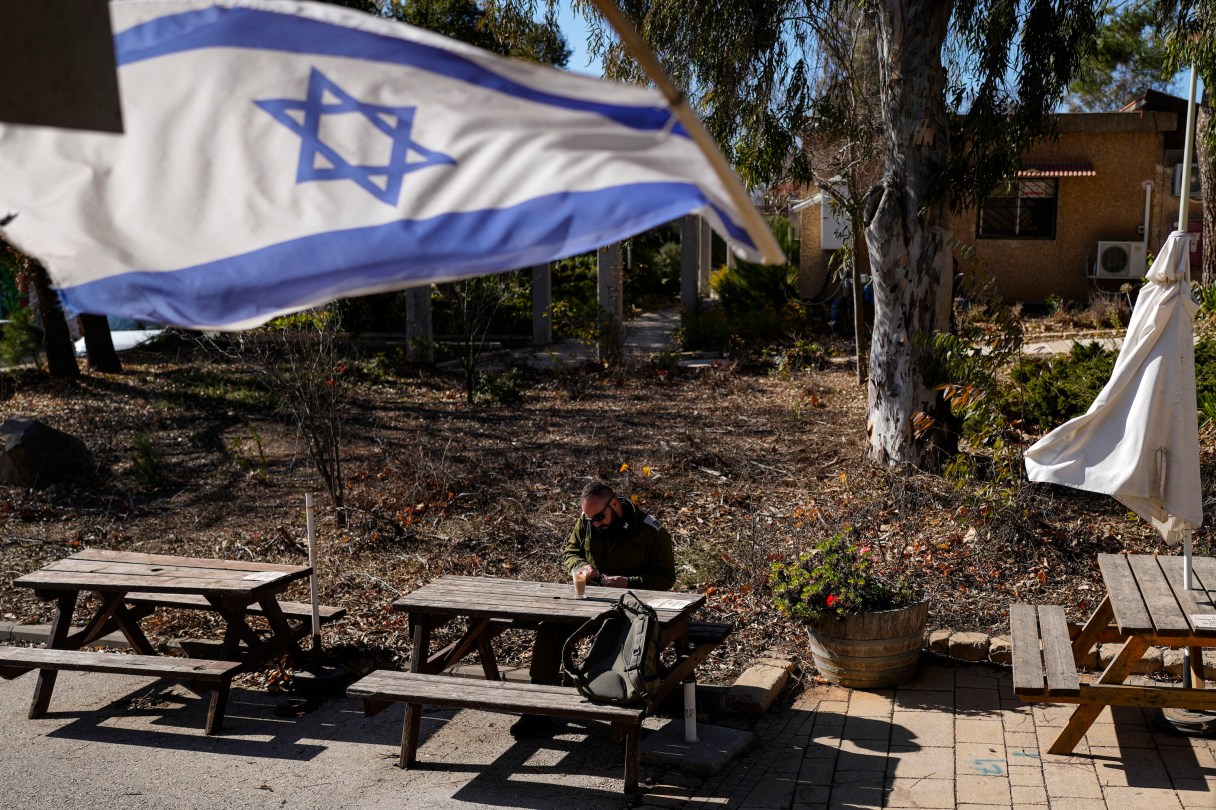
EIN ZIVAN, Golan Heights (AP) — A dry mountain wind whipped through a cluster of Israeli flags at the entrance of a kibbutz in the Israeli-annexed Golan Heights, where the tranquility belies the tumultuous events unfolding nearby.
Earlier this month, Syrian President Bashar Assad was ousted after nearly 25 years in power. Within hours, Israeli tanks rolled past a razor wire-reinforced fence into the Golan’s demilitarized buffer zone in Syria, created as part of a 1974 ceasefire between the countries. Israel said it was a temporary move to secure its border.
Days later, the Israeli government approved Prime Minister Benjamin Netanyahu’s $11 million plan of financial incentives to double the population of Israeli settlers in the Golan Heights, which Israel seized from Syria in the 1967 Mideast war.
Israel will “continue to hold onto it, make it flourish and settle it,” Netanyahu said.
The international community, with one exception, considers the Golan to be occupied Syrian territory, while the United Nations lists Israeli settlements there as illegal. In 2019, the United States became the only country to recognize Israel’s 1981 annexation.