
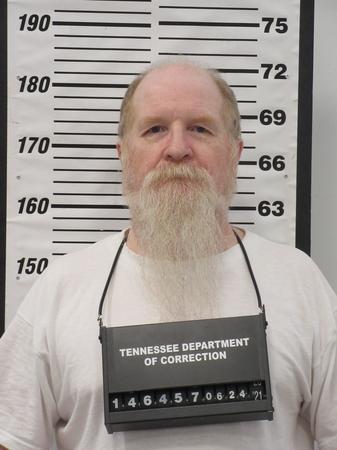
There are 46 death row inmates, including one Hamilton County man, who once again may be facing execution now that the Tennessee Department of Correction has completed its revision of its lethal injection protocols.
Executions were put on hold in May 2022 when Gov. Bill Lee ordered an independent review of the state’s lethal injection procedures, the department announced in a statement Friday.
Lee halted executions after acknowledging the state failed to properly test its lethal injection drugs, which were used in several executions, since it revised procedures in 2018, according to reporting by The Associated Press.
The department will now use a single drug called pentobarbital under the new protocol, according to the correction department statement, instead of the previously used three-drug mix.
The department’s announcement is notable for its lack of detail. The secrecy of the execution process in Tennessee is what allowed the department to violate its protocols in the first place, said Kelley Henry, a supervisory assistant federal public defender in Nashville who leads a unit specializing in death row cases.
Scientific data has shown single drug pentobarbital results in a condition in which water builds up in the lungs, “which is akin to waterboarding,” Henry said.
Harold Wayne Nichols, 63, of Hamilton County, is among the 46 men and women awaiting state execution.
Nichols is a serial rapist, according to court records, who was convicted for the first-degree felony murder of Karen Pulley.
Nichols was arrested months after Pulley’s murder for unrelated Chattanooga-area burglaries and rapes, according to Chattanooga Times Free Press archives. He then confessed to the 1988 killing along with raping several other woman.
According to trial testimony, Nichols broke into Pulley’s home, raped her and repeatedly hit her in the head with a board, the paper reported in 2002.
She suffered massive brain injuries and died the next day.
Available case documents said Pulley was 21, but her 1988 obituary said she was 20. Her family described her as “well known for her energetic involvement in various activities at Woodland Park Baptist Church,” and a memorial scholarship was established in her name at the time at Brainerd Baptist School, the archives said.
There were no available public documents describing the case because his sentence was handed down decades ago in 1990, according to the Hamilton County Criminal Court Clerk’s Office. A filing was made in Nichols’ case this week, but it did not have any clear connection to the death penalty nor the details of this case.
Henry said she could not speak specifically on behalf of Nichols because she does not represent him.
(SIGN UP: Get today’s Chattanooga area news, sports and entertainment directly to your inbox. Sign up for our free newsletters at timesfreepress.com/newsletters.)
But no death row inmates should be scheduled for executions in the coming days, she said.
Tennessee’s lethal injection practice is at the center of an ongoing lawsuit, according to Henry. There’s an agreement that the federal public defender’s office will have 90 days to review any new procedures, amend its complaint and challenge new protocols.
The spirit of that order was that it would apply to all death row cases, she said, so all executions will likely be in limbo for the time being.
“We would certainly anticipate challenging any new protocol in court,” Henry said.
At the same time, the United States Department of Justice is expected to release a report on the use of single drug pentobarbital in executions before the end of President Joe Biden’s administration, she said.
The correction department declined to address any comments made by Henry.
(READ MORE: Judge orders convicted Chattanooga serial rapist, murderer to stay on death row)
“The news release sent earlier will be TDOC’s only statement today,” spokesperson Kayla Hackney said by email.
There are 45 men and one woman on death row, according to state death row facts. Of those, 23 of the inmates are Black, 22 are white and one is Asian. Critics say the death penalty is disproportionately leveled against Black defendants.
Correction Commissioner Frank Strada started developing this revised execution protocol immediately following his appointment in January 2023, the department statement said.
It was developed in consultation with the Tennessee Attorney General’s Office to ensure lawful and effective procedures are followed in carrying out death sentences, and the Tennessee Supreme Court is responsible for scheduling those execution dates.
“I am confident the lethal injection process can proceed in compliance with departmental policy and state laws,” Strada said in the statement.
The correction department’s announcement came less than one week after Biden commuted the sentences of almost all of the federal death row inmates to life without the possibility of parole.
Rejon Taylor, of Atlanta, was convicted in Chattanooga’s first federal death penalty case in connection with a 2003 Collegedale shooting. He was among the 37 of 40 federal death row inmates who are no longer facing execution.
Contact Sofia Saric at ssaric@timesfreepress.com or 423-757-6476.
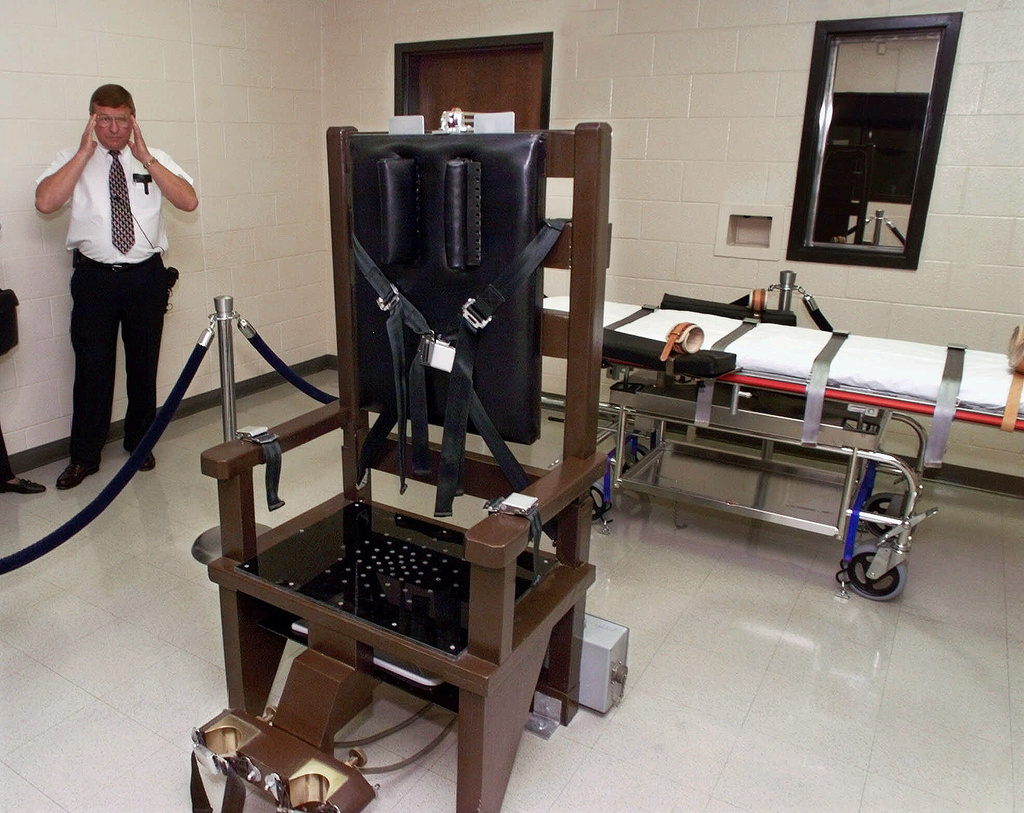 FILE – Ricky Bell, warden at Riverbend Maximum Security Institution in Nashville, Tenn., gives a tour of the prison’s execution chamber, Oct. 13, 1999. (AP Photo/Mark Humphrey, File)