
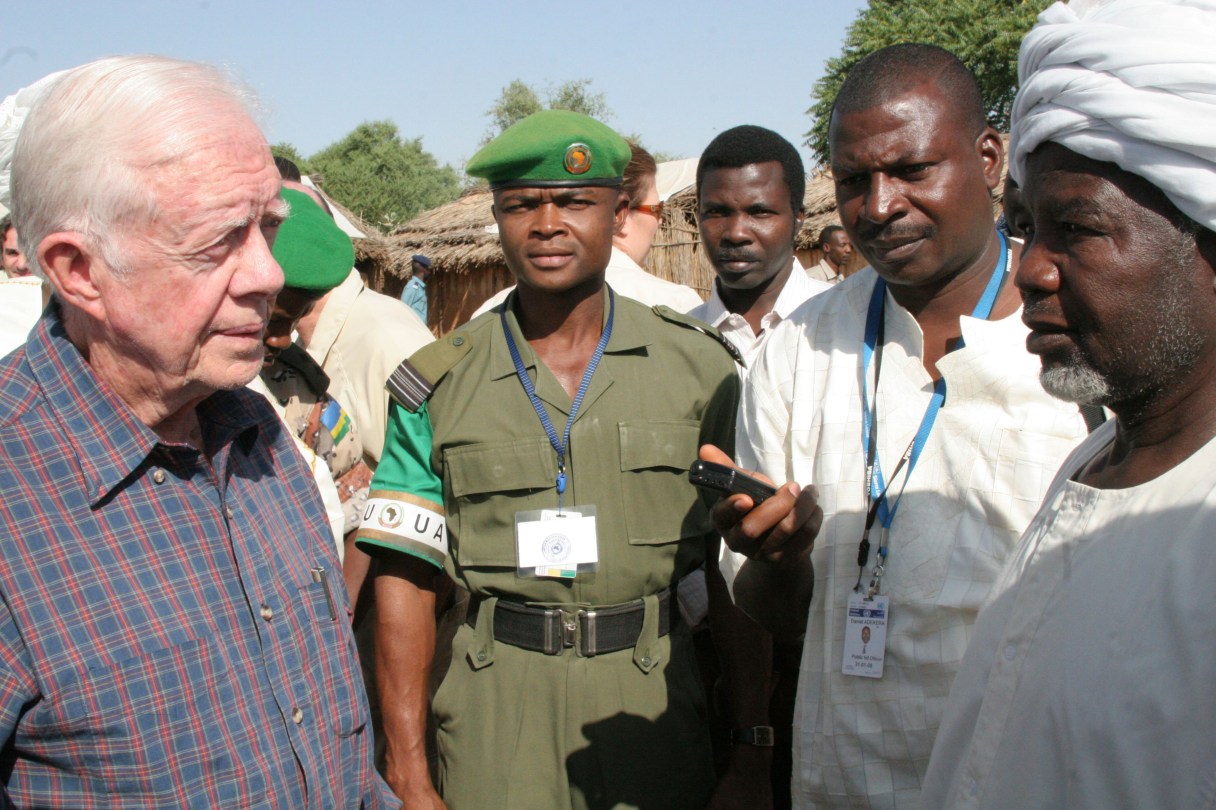
PLAINS, Ga. (AP) — Newly married and sworn as a Naval officer, Jimmy Carter left his tiny hometown in 1946 hoping to climb the ranks and see the world.
Less than a decade later, the death of his father and namesake, a merchant farmer and local politician who went by “Mr. Earl,” prompted the submariner and his wife, Rosalynn, to return to the rural life of Plains, Georgia, they thought they’d escaped.
The lieutenant never would be an admiral. Instead, he became commander in chief. Years after his presidency ended in humbling defeat, he would add a Nobel Peace Prize, awarded not for his White House accomplishments but “for his decades of untiring effort to find peaceful solutions to international conflicts, to advance democracy and human rights, and to promote economic and social development.”
The life of James Earl Carter Jr., the 39th and longest-lived U.S. president, ended Sunday at the age of 100 where it began: Plains, the town of 600 that fueled his political rise, welcomed him after his fall and sustained him during 40 years of service that redefined what it means to be a former president.