
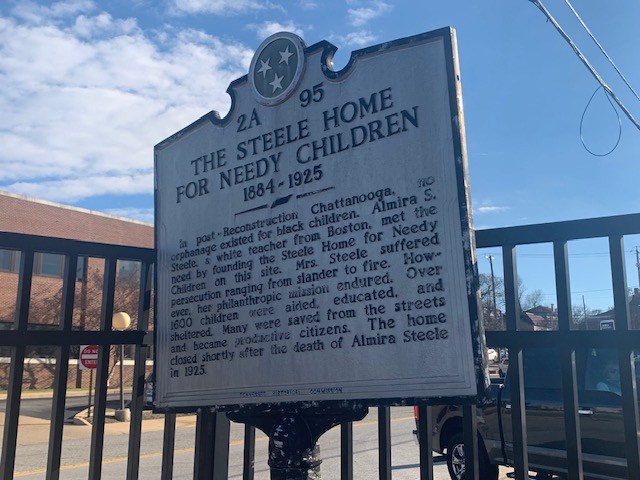

Late last week, in conjunction with Black History Month, the Bessie Smith Cultural Center hosted a community information session with archaeologists regarding the Steele Home for Needy Children Archaeological Project.
The home, which was located on what is now a gravel parking lot on the University of Tennessee at Chattanooga campus and is expected to become the site of a new university health and sciences building, doubled as an orphanage for white and later Black children and a school between 1884 and 1925.
Its status as the only orphanage in the area to serve Black children over the age of 10, or those who were disabled or diseased, made it unique among such agencies locally. Indeed, the Tennessee Encyclopedia calls it the South’s first orphanage for African Americans. And the fact its founder, Almira Steele, was white added to its somewhat controversial existence in the city.
Before the medical sciences building is built, UT Capital Projects — responsible for development projects across all University of Tennessee campuses — requested assistance from the Laboratory of Environmental Archaeology at the University of Tennessee at Knoxville (which is collaborating with UTC and the Bessie Smith Center to help record and minimize damage to any historical features on the site).