
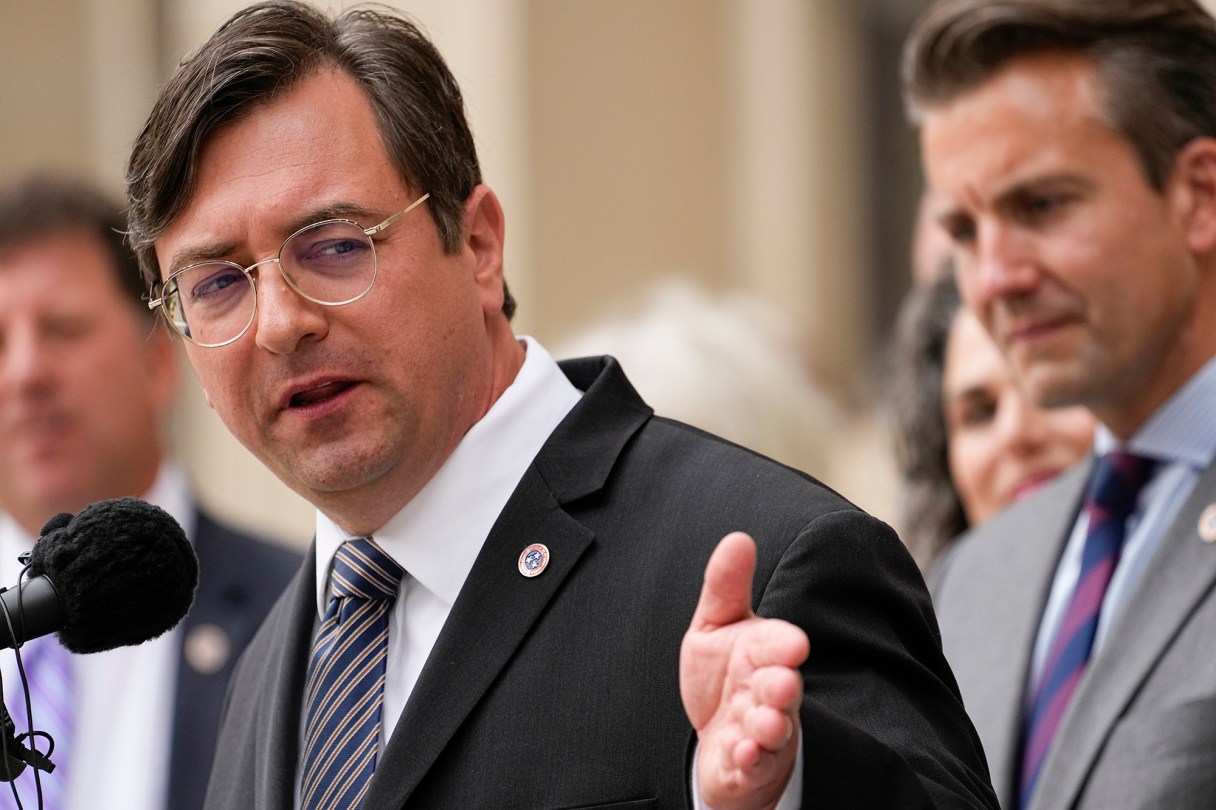
In reply to the NCAA claiming college sports would be thrown into “disarray” if rules banning name, image and likeness compensation being used as recruiting inducements were lifted by court order, Tennessee Attorney General Jonathan Skrmetti said in a Sunday filing the association is defending “a world that doesn’t exist.”
The attorneys general of Tennessee and Virginia are seeking a temporary restraining order and preliminary injunction as part of their federal lawsuit arguing the NCAA’s NIL rules violate antitrust law.
The NCAA asked a judge to deny both motions in its 25-page response filed Saturday with the U.S. District Court of the Eastern District of Tennessee. On Feb. 13, a federal judge will hear a request by the two states for a preliminary injunction.
(READ MORE: NCAA wants judge to deny motions by Tennessee and Virginia)
“The NCAA waits until page 16 — two-thirds of the way into its brief — before it defends the NIL-recruiting ban on the merits. And even then, the NCAA defends a world that doesn’t exist,” Sunday’s reply read. “It says it must “prohibi(t) NIL compensation” to protect amateurism, competition, and athletes.”
The attorneys general said student-athletes will suffer irreparable harm if the temporary restraining order is not granted by Tuesday, because college football’s second signing period of high school football players for the current recruiting cycle begins Wednesday.
“And it’s not Plaintiffs’ fault that the NCAA has decided to regulate NIL and recruitment through a byzantine set of overlapping rules of guidance. To the extent there’s confusion the NCAA thinks give its power to enforce the NIL-recruiting ban, that problem is one of the NCAA’s own creation,” Sunday’s reply said.
The lawsuit was filed last Wednesday, the day after it was revealed the NCAA is investigating the University of Tennessee for potential recruiting violations related to NIL compensation.
“There is no reason to upend this process, invite chaos on a moment’s notice, and transform college sports into an environment where players and schools match up based primarily on the dollars that can change hands,” the NCAA wrote Saturday.
“Requests for radical change require sound deliberation.”
Last Tuesday, UT released a scathing letter from its chancellor, Donde Plowman, to the president of the NCAA, Charlie Baker, that revealed the college sports sanctioning body was investigating Tennessee and The Vol Club, an NIL collective run by Spyre Sports Group. Tennessee’s recruitment of quarterback Nico Iamaleava — a five-star prospect from California who was a freshman for the Volunteers last season and is expected to be their starter this year — and his NIL contract with Spyre are among the matters receiving scrutiny from the NCAA.
(READ MORE: Vols AD White joins Plowman in citing NCAA’s failure in NIL guidance)
On Saturday, the NCAA’s response argued granting the motions would result in “recruiting inducements tantamount to pay for athletic performance” and spoil the recruiting process of athletes choosing schools that fit them best while exposing them to “bad actors” signing people to “coercive contracts.
“They do not actually seek here to preserve the status quo, but instead to fundamentally alter the landscape of college athletics by mandating the creation of an NIL market for student-athlete recruits that does not presently exist,” the NCAA said in its motion.