
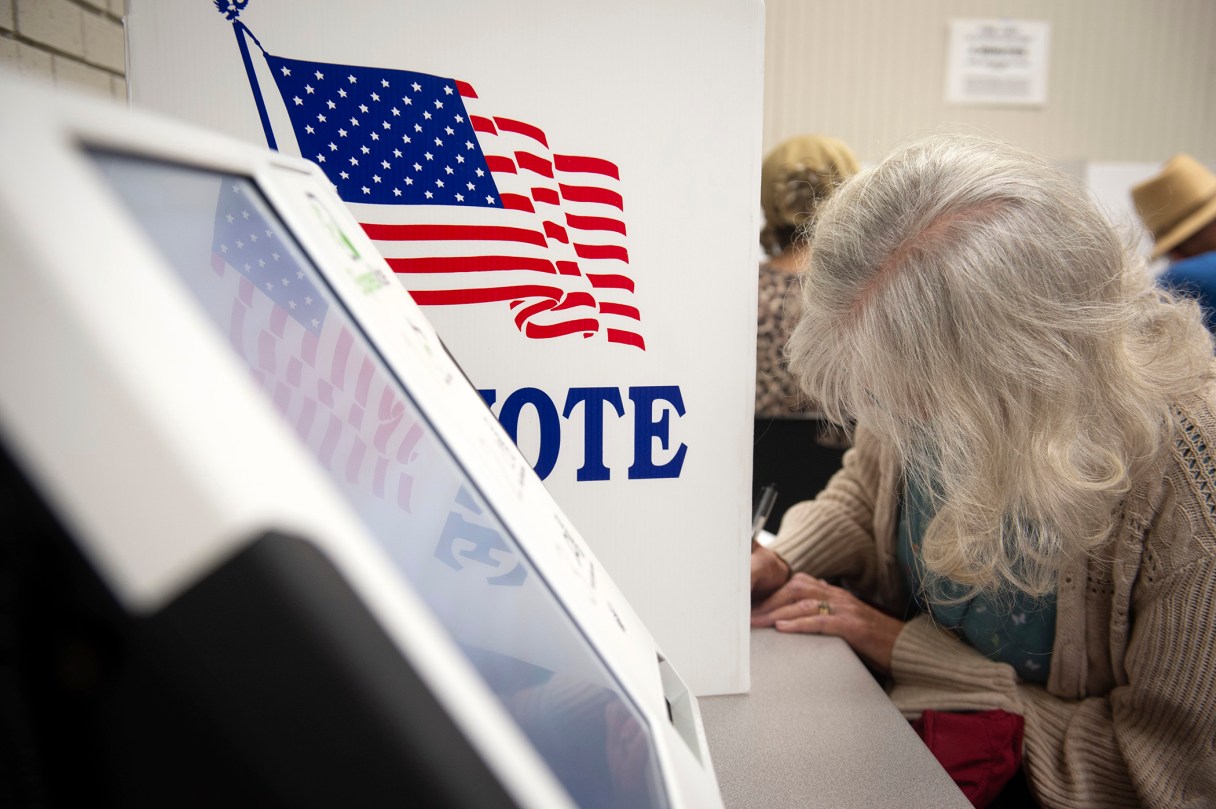
Since most Americans last voted for Congress, thousands of people have been added to certain voting districts — and subtracted from others — under new political maps enacted following court rulings.
The sum of that redistricting math, assuming no major political shift in either major party’s direction, figures to provide at least a one-seat gain for Republicans in November’s U.S. House elections. But that equation could flip to Democrats’ favor depending on what happens in an ongoing effort to reshape New York’s congressional districts.
House boundaries redrawn before the 2022 elections based on the last decennial census have been redrawn again ahead of the 2024 elections in Alabama, Georgia, Louisiana and North Carolina. New York could be next. A bipartisan commission is to release a revised plan for New York’s districts by Feb. 28.
Republicans hold a narrow 219-213 House majority over Democrats, with vacancies in three seats previously held by the GOP. A special election for one of those — to replace ousted Rep. George Santos of New York — will be held Feb. 13.
Here’s a look at how voting districts have changed — or could change — before the November elections and what affect that could have on the battle for control of Congress.