
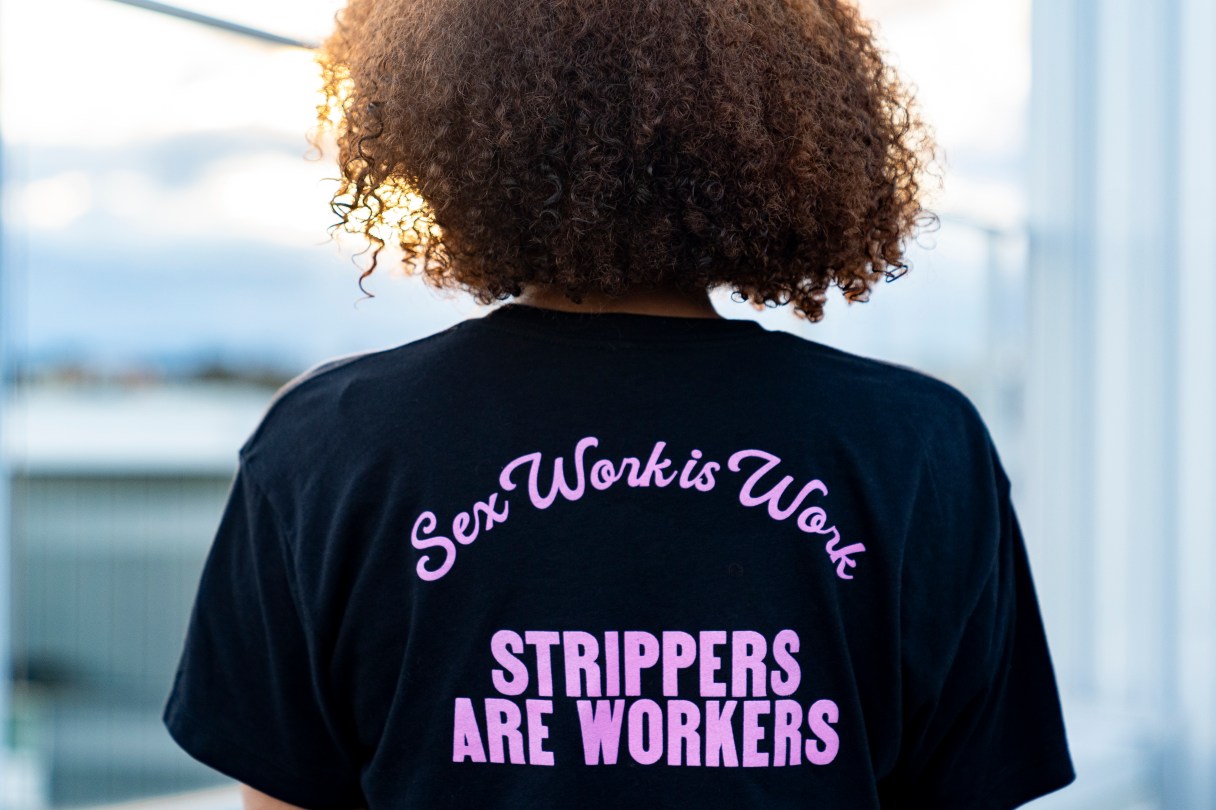
SEATTLE (AP) — For months, Andrea studied for her master’s degree in library sciences between dancing naked at clubs in Seattle. But then she was sexually assaulted at work and slapped by a customer — and nobody stepped in to help.
Now, she and hundreds of other strippers in Washington state are fighting for statewide protections that would be the most comprehensive in the U.S., according to advocates.
“We shouldn’t be verbally abused for just doing our job and existing,” said Andrea, who has seen a DJ at one club harass dancers if they don’t tip him enough. She avoids the club if he’s there, said the 24-year-old, who would only use her first name. The Associated Press does not identify people who say they have been sexually assaulted.
Known as the “strippers’ bill of rights,” proposals being considered in the Legislature would require a security guard at each club, keypad codes to enter dressing rooms, training for employees on preventing sexual harassment, and procedures if a customer is violent. It would also require training on how to de-escalate conflict between dancers, employees and customers, and signs stating that dancers are not required to hand over tips.
“It is a legal, licensed business operation in the state of Washington, so the people who work there deserve our attention and our respect and the protections that every other Washington worker gets,” said Democratic Rep. Amy Walen, who sponsored the House bill. The Senate is considering a similar bill.