
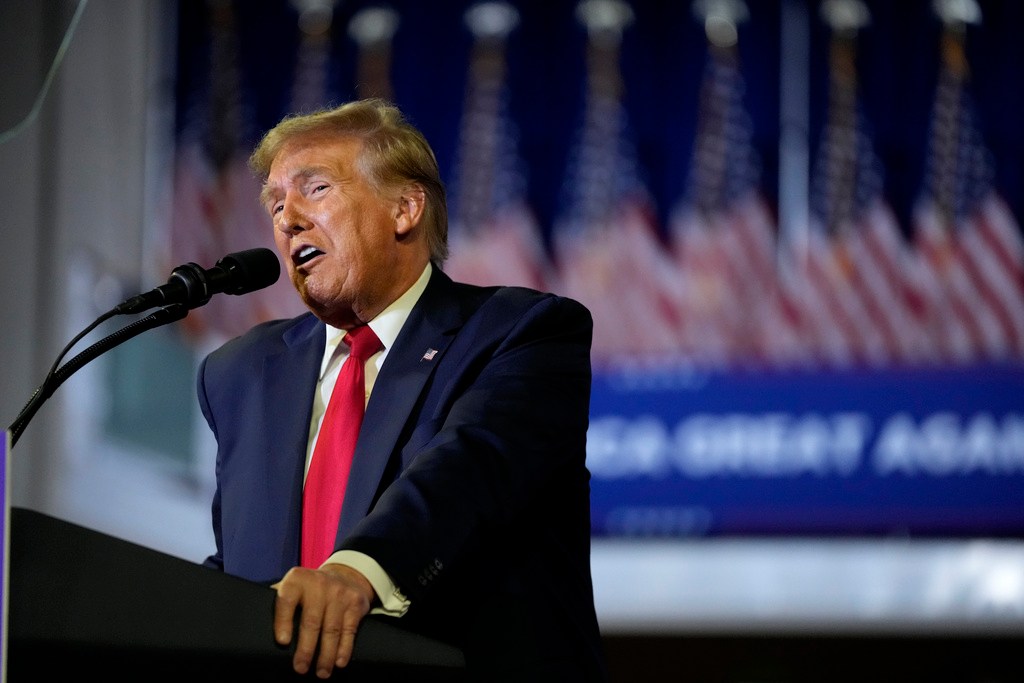
The Trump legal whirlwind continues, and the former president’s Monday Supreme Court filing may be the most consequential yet.
Last week, the court heard oral arguments in Trump’s case challenging a Colorado decision to remove his name from that state’s presidential ballot. Now he’s appealing a ruling from the D.C. Circuit Court of Appeals that rejected his argument for immunity from criminal prosecution over his role in the events of Jan. 6, 2021. Importantly, he is also asking the court for a stay of that prosecution while a decision is made.
How the justices react to these two cases will have a huge impact on the Supreme Court’s credibility — not to mention the future of the country. The very principles that seem likely to lead to a ruling in Trump’s favor on the Colorado disqualification case all but require the court to reject his claim of criminal immunity, and quickly at that.
Start with the disqualification case, Trump v. Anderson. Based on the oral arguments last week, a majority of justices appear likely to vote to reverse the Colorado Supreme Court’s decision to remove Trump from the Colorado ballot. The justices left little doubt as to the main motivation for this outcome: a desire to leave the ultimate choice over Trump’s fitness for the White House up to the American people.
Justice Brett M. Kavanaugh, for example, asked whether “we should think about democracy” and the fact that a ruling disqualifying Trump would have “the effect of disenfranchising voters to a significant degree.” Justice Elena Kagan touched on the same concern when she asked, “Why should a single state have the ability to make this determination not only for their own citizens but for the rest of the nation?”