
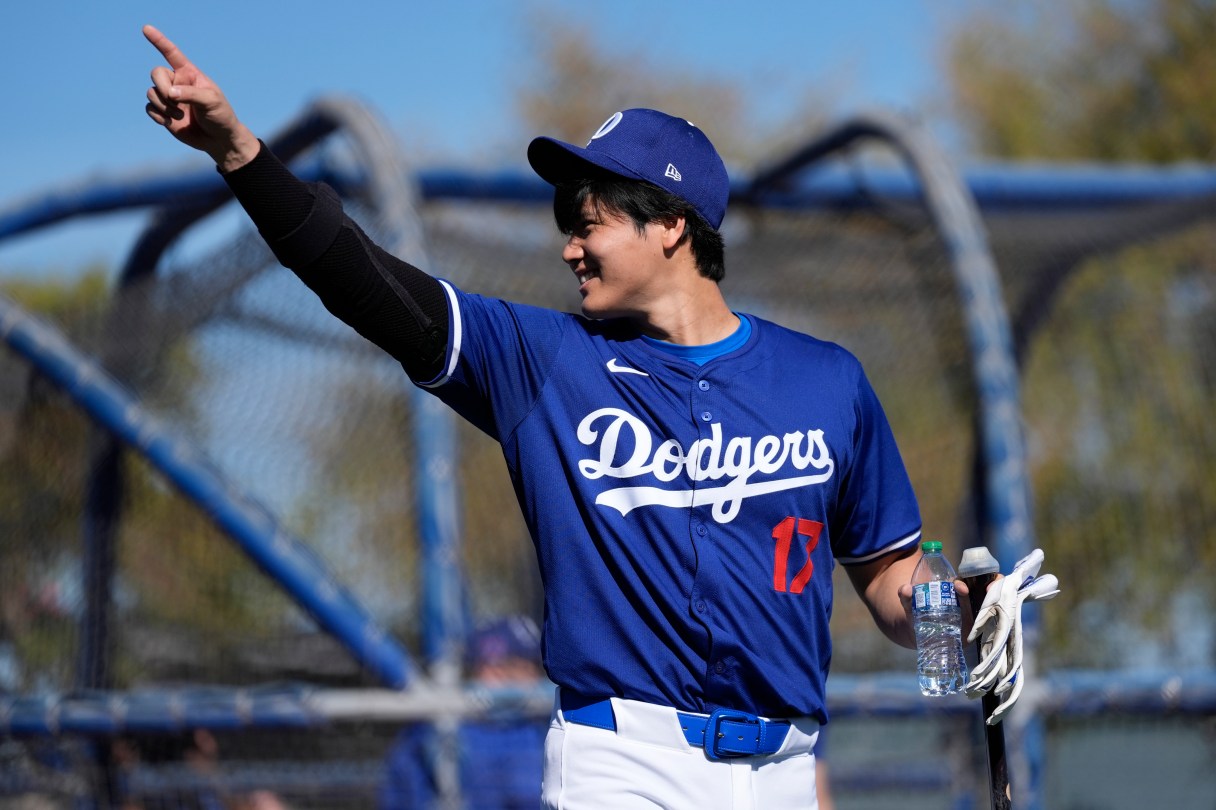
What players are wearing has garnered as much attention as what they’re doing during the first few days of spring training.
Major League Baseball teams are donning newly designed uniforms this year aimed at improving performance and helping players stay cool throughout games in the summer months. The new gear, designed by Nike and manufactured by Fanatics, has drawn mixed reviews from players.
“I know everyone hates them,” Philadelphia Phillies shortstop Trea Turner said Friday. “We all liked what we had. We understand business, but I think everyone wanted to keep it the same way, for the most part, with some tweaks here or there.”
Nike has been designing MLB uniforms since 2020, and Fanatics has been manufacturing them since 2017, but this is the first year for the Nike Vapor Premier jerseys.
MLB officials said these uniforms improve mobility by providing 25% more stretch and also will dry 28% faster. The lettering, sleeve emblems and numbering are less bulky in an attempt to make uniforms more breathable and comfortable.
Commissioner Rob Manfred said he expects criticism to fade.
“In baseball, any new initiative, there’s going to be some negative feedback,” Manfred said Thursday. “First and most important, these are Nike jerseys. So we entered this partnership with Nike because of who they are and the kinds of products that they use. Everything they’ve done for us so far has been absolutely 100% successful across the board.
“The jerseys are different. They’re designed to be performance wear as opposed to what has traditionally been worn. So they are going to be different, but they have been tested more extensively than any jersey in any sport.”
Fanatics representatives declined comment, and Nike didn’t respond to an email sent to its media relations office.
Manfred noted feedback was positive when these uniforms were introduced at last year’s MLB All-Star Game in Seattle.
MLB released a video Tuesday showing players raving about the new uniforms during that event. MLB also issued a news release about the new gear this week that included positive testimonials from St. Louis Cardinals third baseman Nolan Arenado, Baltimore Orioles catcher Adley Rutschman and Atlanta Braves right fielder Ronald Acuña Jr., the reigning National League MVP.
“It’s almost like wearing my favorite fitted T-shirt out on the field — and so easy to move around in,” Arenado said in a statement released by MLB.
When players started wearing them this week, though, many complained.
“Don’t fix what’s not broken,” Phillies pitcher Matt Strahm said. “The looks of it, it just looks different. The names are smaller on the back.”
Dave Meluni, an associate teaching professor for Syracuse University’s department of sports management, mentioned reasons that could keep fans from buying the jerseys. Meluni said qualities that might help the jerseys improve performance by being more breathable and lightweight could make them less appealing to consumers.
“There’s a look that they’re cheaper,” Meluni said. “And then you go to buy them, and they’re not.”
Meluni said colors appear faded on jerseys for some teams, such as the Chicago Cubs and Seattle Mariners.
While complaints about the uniforms have received plenty of attention this week, some players have offered praise.
Los Angeles Angels outfielder and three-time American League MVP Mike Trout wrote on social media that “Change can be good and I’m a big fan of these!!!”
Los Angeles Dodgers outfielder Jason Heyward also had good things to say in a social media video posted by the team: “Somehow this feels even more authentic than the ones that we’ve been wearing, to be honest. The material feels that much nicer. It feels like it’s going to breathe better, and I think the really cool part for the fans — the numbers on the back having that different texture.”
Manfred is confident more players will come around.
“So I think after people wear them a little bit, they’re going to be really popular,” the commissioner said.
And the players who would prefer the previous uniform designs realize they don’t have much choice in the matter.
“It is what it is,” Philadelphia’s Strahm said. “Deal with what we’ve got. Any time you change something, there’s a learning curve and adjustment period. How many people in America get to choose their work uniforms?”