
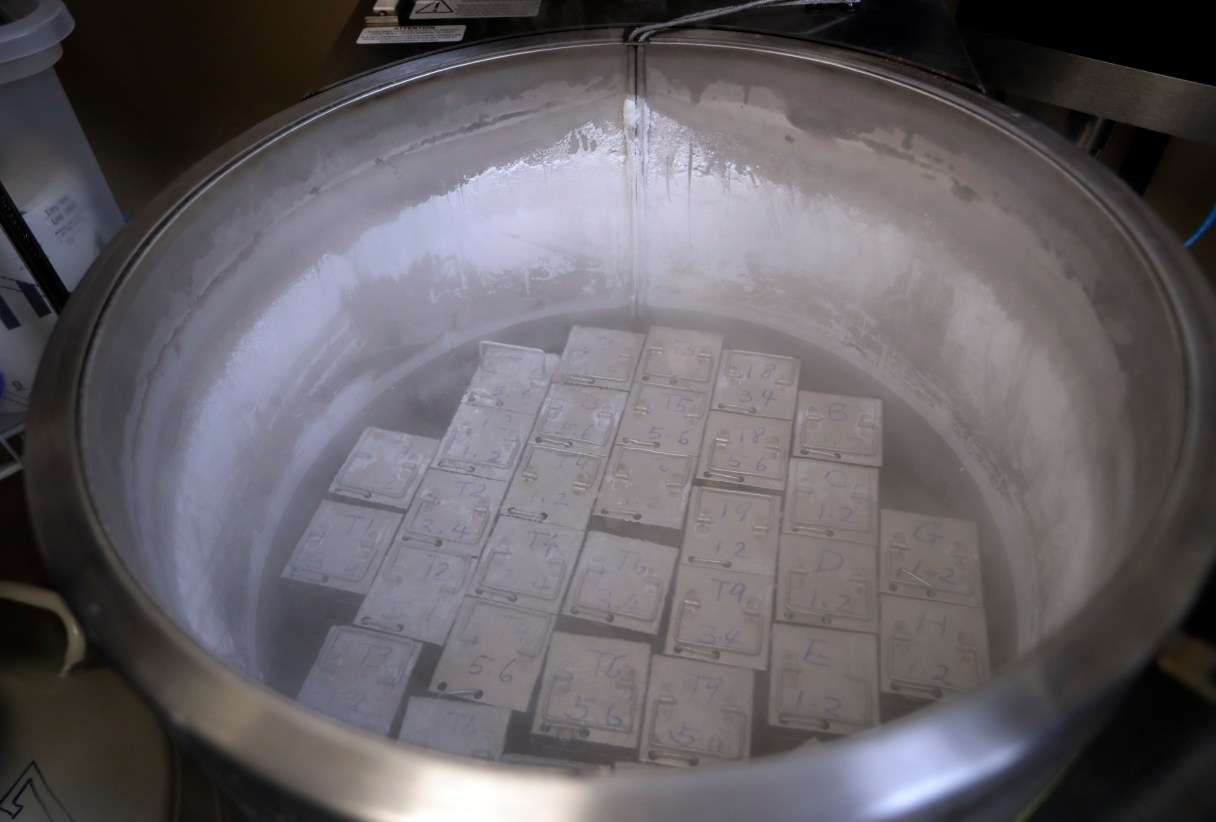
MONTGOMERY, Ala. (AP) — The Alabama Supreme Court has ruled that frozen embryos can be considered children under state law, a decision critics said could have sweeping implications for fertility treatment in the state.
The decision was issued in a pair of wrongful death cases brought by three couples who had frozen embryos destroyed in an accident at a fertility clinic. Justices, citing anti-abortion language in the Alabama Constitution, ruled that an 1872 state law allowing parents to sue over the death of a minor child “applies to all unborn children, regardless of their location.”
“Unborn children are ‘children’ … without exception based on developmental stage, physical location, or any other ancillary characteristics,” Justice Jay Mitchell wrote in Friday’s majority ruling by the all-Republican court.
Mitchell said the court had previously ruled that fetuses killed while a woman is pregnant are covered under Alabama’s Wrongful Death of a Minor Act and nothing excludes “extrauterine children from the Act’s coverage.”
The ruling brought a rush of warnings about the potential impact on fertility treatments and the freezing of embryos, which had previously been considered property by the courts.