
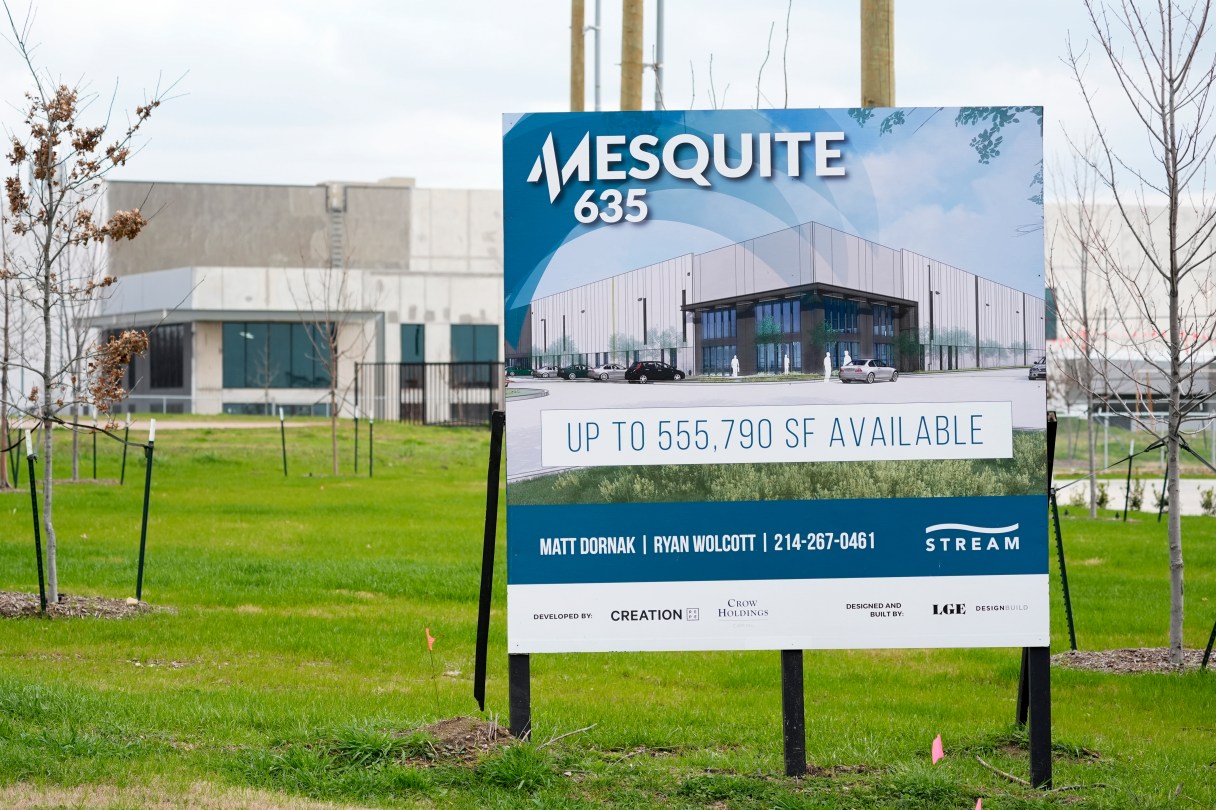
MESQUITE, Texas (AP) — At a bustling construction site outside of Dallas, there are hopes that Congress can finally pass nearly $95 billion in foreign aid including funding for Ukraine — because factory jobs in the United States depend on that money.
Aerospace and defense company General Dynamics’ new factory in the Dallas suburb of Mesquite is expected to initially employ 150 people to produce munitions. Set to open in June, construction is nearing completion, with newly planted trees and shrubs already in place at the complex overlooking one of the area’s busiest interstates.
“We want to increase our wages and increase our skill levels and job opportunities,” said Kim Buttram, Mesquite’s director of economic development, who added that the factory is expected to have over 300 jobs when it’s at full production.
As President Joe Biden pushes House Republicans to pass needed aid, he wants voters to understand that nearly two-thirds — or nearly $40 billion — of the money for Ukraine would actually go to U.S. factories spread out across the country including plants in Lima, Ohio and Scranton, Pennsylvania as well as Mesquite.
House Speaker Mike Johnson, R-La., has refused to put the bill up for a vote on the House floor on the premise that it does not meet the needs of the American public.