
Monday, November 16, 2026Nov 16

A brain pacemaker helped a woman with crippling depression. It may soon be available to more people

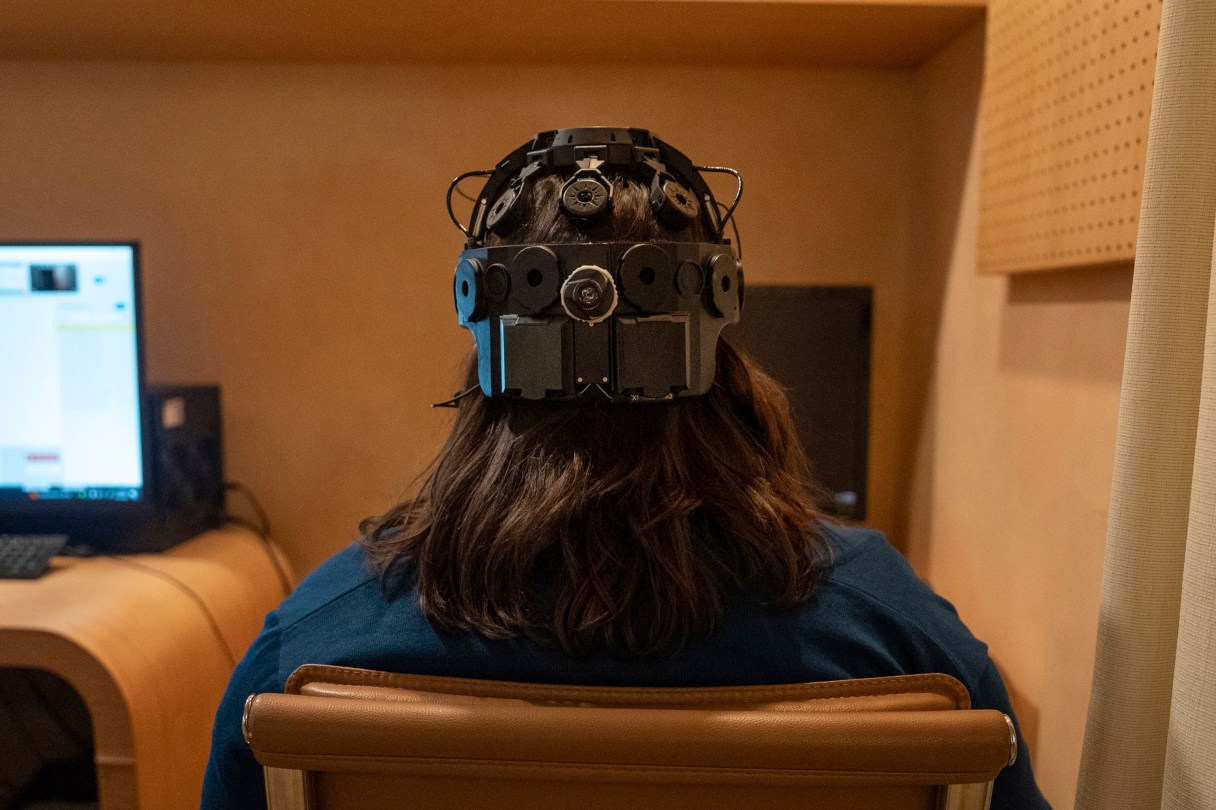
Emily Hollenbeck, a deep brain stimulation therapy patient, demonstrates an EEG device that records brain activity as she reacts to short videos at Mount Sinai’s “Q-Lab” in New York on Dec. 20, 2023. Dr. Brian Kopell, who directs Mount Sinai's Center for Neuromodulation, says in normal brains electrical activity reverberates unimpeded in all areas, in a sort of dance. In depression, the dancers get stuck within the brain’s emotional circuitry. DBS seems to “unstick the circuit,” he says, allowing the brain to do what it normally would. (AP Photo/Mary Conlon)

NEW YORK (AP) — Emily Hollenbeck lived with a deep, recurring depression she likened to a black hole, where gravity felt so strong and her limbs so heavy she could barely move. She knew the illness could kill her. Both of her parents had taken their lives.

She was willing to try something extreme: Having electrodes implanted in her brain as part of an experimental therapy.

Researchers say the treatment —- called deep brain stimulation, or DBS — could eventually help many of the nearly 3 million Americans like her with depression that resists other treatments. It’s approved for conditions such as Parkinson’s disease and epilepsy, and many doctors and patients hope it will become more widely available for depression soon.

The treatment gives patients targeted electrical impulses, much like a pacemaker for the brain. A growing body of recent research is promising, with more underway — although two large studies that showed no advantage to using DBS for depression temporarily halted progress, and some scientists continue to raise concerns.

Meanwhile, the Food and Drug Administration has agreed to speed up its review of Abbott Laboratories’ request to use its DBS devices for treatment-resistant depression.