
This story was originally published by Chalkbeat. Sign up for their newsletters at ckbe.at/newsletters
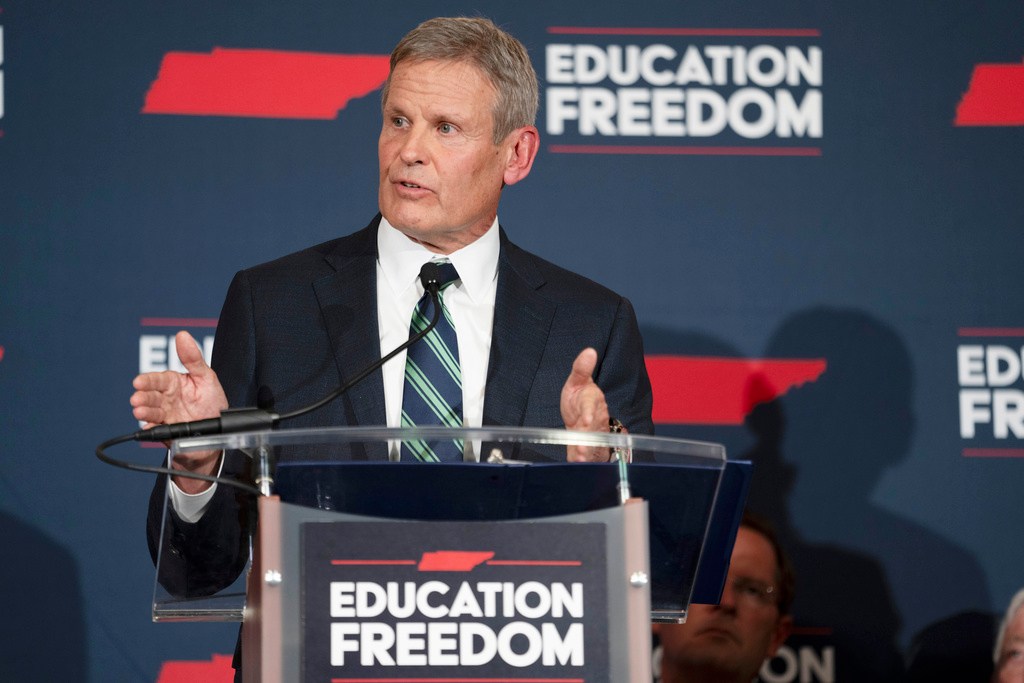
Gov. Bill Lee and Senate leaders unveiled dueling proposals to bring universal school vouchers to Tennessee.
Testing accountability stands out as a key difference in multiple amendments filed as part of a Republican campaign to eventually give all Tennessee families the option to use public money to pay for private schools for their children. The Senate plan also calls for open enrollment across public school systems.
The proposals were unveiled Wednesday.
Lee’s seven-page plan does not require participating students to take annual tests to measure whether his Education Freedom Scholarship Act leads to better academic outcomes. The governor has said that parental choice provides ultimate accountability.
The Senate’s 17-page proposal requires recipients in grades three-11 to take some type of norm-referenced tests approved by the state Board of Education, which could include state tests that public school students take under the Tennessee Comprehensive Assessment Program.
Assessments must include a third grade test in English language arts and an eighth grade test in math; the grades are considered benchmark years for learning those skills. Eleventh grade recipients would also have to take the ACT, SAT or a similar exam to assess their readiness for continuing their education after high school.
“The testing component is critical,” Senate Education Committee Chair Jon Lundberg, R-Bristol, told Chalkbeat. “We have a responsibility to share with Tennesseans how this is working.”
The developments show divisions at the state Capitol, despite a GOP supermajority, about key details of the biggest education proposal of Lee’s tenure, even before legislative debate begins in public. Lundberg’s committee is scheduled to take up the issue this week.
The governor wants to start with up to 20,000 students statewide this fall and eventually open up the program so any K-12 student can use a $7,075 annual voucher, regardless of family income. His earlier education savings account law, which squeaked through the legislature with a historic and controversial House vote in 2019, targeted students from low-income families in low-performing schools in Memphis and Nashville but remains underenrolled, even with the addition of Hamilton County last fall.
Cost is expected to be a major hurdle for Lee’s voucher expansion plan in a state that prides itself on being fiscally conservative.
Tennessee government has a nearly $378 million budget shortfall through the first six months of its current fiscal year, according to a revenue report released this month.
Even so, Lee’s proposed $52.6 billion spending plan for the next fiscal year includes $144 million annually for vouchers and $200 million to grow state parks and natural areas, all while slashing corporate business property taxes by hundreds of millions of dollars.
(READ MORE: Pride flag ban advances for Tennessee schools)
Republican Rep. Bryan Richey, of Maryville, told a local town hall that, although he supports statewide vouchers, he expects to vote against this year’s proposal over budget concerns and the lack of accountability provisions.
The Daily Times reported that Richey compared the upcoming legislative process to baking a cake as he urged his constituents to engage early with lawmakers while the proposals are in committees.
“Once the ingredients are in the batter and it’s all mixed up, we’re not going to be able to go in there and pull the egg back out or get the oil out,” he said.
Lee’s proposal did not look markedly different from draft legislation that was inadvertently filed in the Senate in late January due to a miscommunication, then pulled a short time later. Vouchers would be funded through a separate scholarship account, not the funding structure in place for public schools.
But the Senate version aligns funding with the state’s new public school formula, known as Tennessee Investment in Student Achievement. And it would allow students to enroll in any school system, even if they’re not zoned for it.
“We want open enrollment so you can transfer anywhere,” Lundberg said. “It’s not just for private schools.”
The funding follows the student, Lundberg said.
“I look forward to reading the House proposal, but there are obviously already major discrepancies,” said JC Bowman, executive director of Professional Educators of Tennessee, who has been in some of those meetings.
“I really don’t see how these versions can be reconciled this year,” added Bowman, a voucher critic. “If they’re hell-bent on doing this, they need to at least take the time to get it right.”
But a statement from the governor’s office said the various proposals show “an encouraging amount of engagement in this process.”
“The governor has repeatedly emphasized that the Education Freedom Scholarship Act is a framework, built upon the foundation that parents should have choices when it comes to their child’s education, regardless of income or ZIP code,” the statement said.
The bills are sponsored by Senate and House majority leaders, Jack Johnson, of Franklin, and William Lamberth, of Portland.
Marta Aldrich is a senior correspondent and covers the statehouse for Chalkbeat Tennessee. Contact her at maldrich@chalkbeat.org.
Chalkbeat is a nonprofit news site covering educational change in public schools.
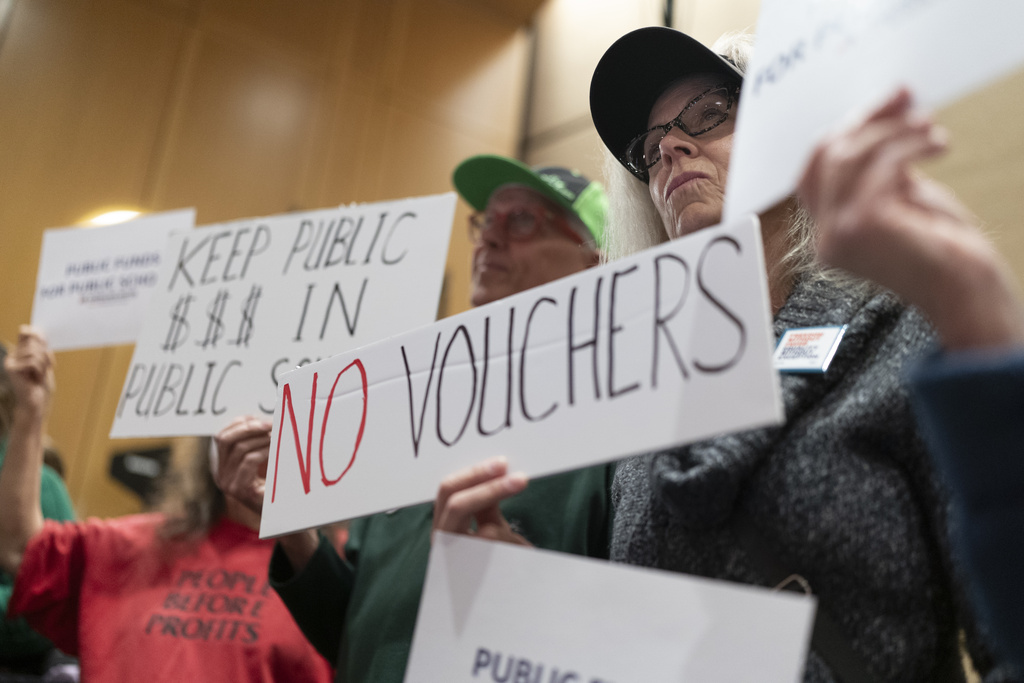 Georgia Phelps holds a sign against school vouchers Nov. 28 during a news conference in Nashville. Gov. Bill Lee presented the Education Freedom Scholarship Act of 2024, his administration’s legislative proposal to establish statewide universal school choice. (AP Photo/George Walker IV)