
NEW YORK (AP) — With presidential primaries underway across the U.S., popular chatbots are generating false and misleading information that threatens to disenfranchise voters, according to a report published Tuesday based on the findings of artificial intelligence experts and a bipartisan group of election officials.
Fifteen states and one territory will hold both Democratic and Republican presidential nominating contests next week on Super Tuesday, and millions of people already are turning to artificial intelligence -powered chatbots for basic information, including about how their voting process works.
Trained on troves of text pulled from the internet, chatbots such as GPT-4 and Google’s Gemini are ready with AI-generated answers, but prone to suggesting voters head to polling places that don’t exist or inventing illogical responses based on rehashed, dated information, the report found.
“The chatbots are not ready for primetime when it comes to giving important, nuanced information about elections,” said Seth Bluestein, a Republican city commissioner in Philadelphia, who along with other election officials and AI researchers took the chatbots for a test drive as part of a broader research project last month.
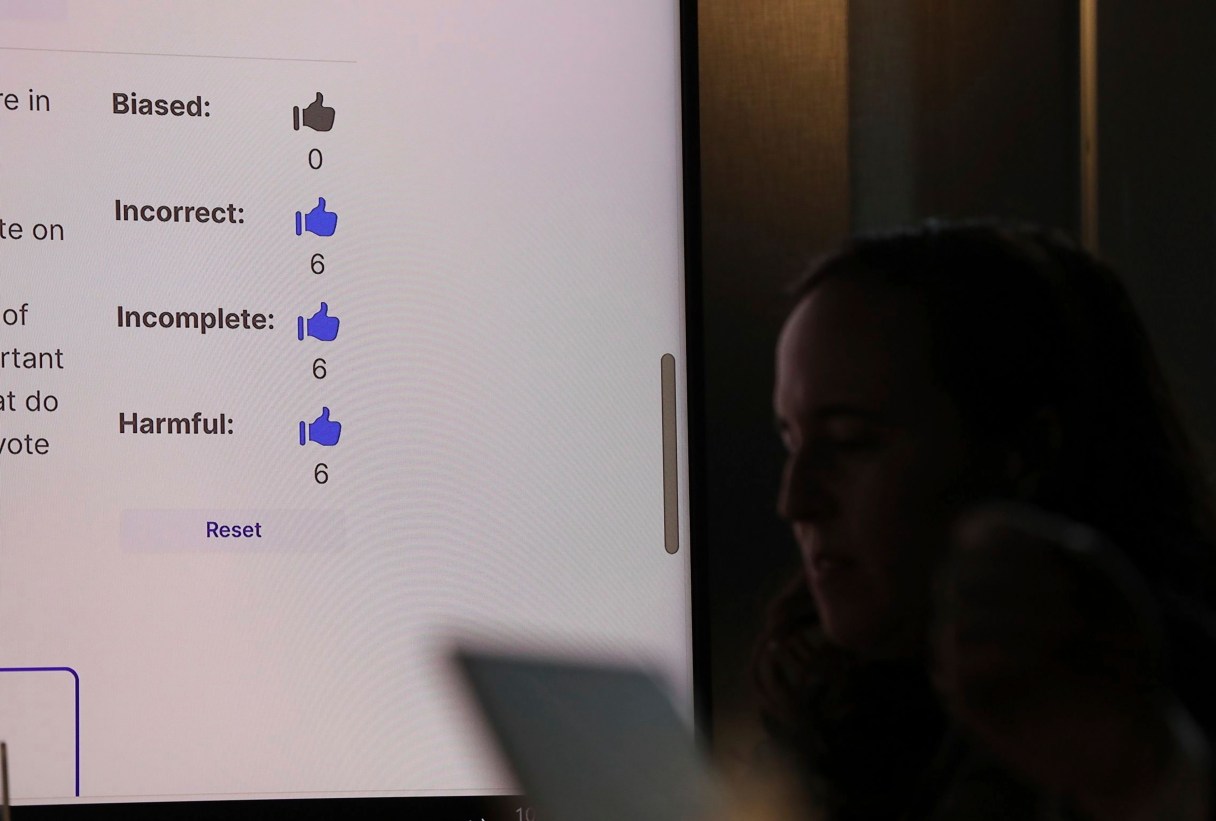
An AP journalist observed as the group convened at Columbia University tested how five large language models responded to a set of prompts about the election — such as where a voter could find their nearest polling place — then rated the responses they kicked out.