
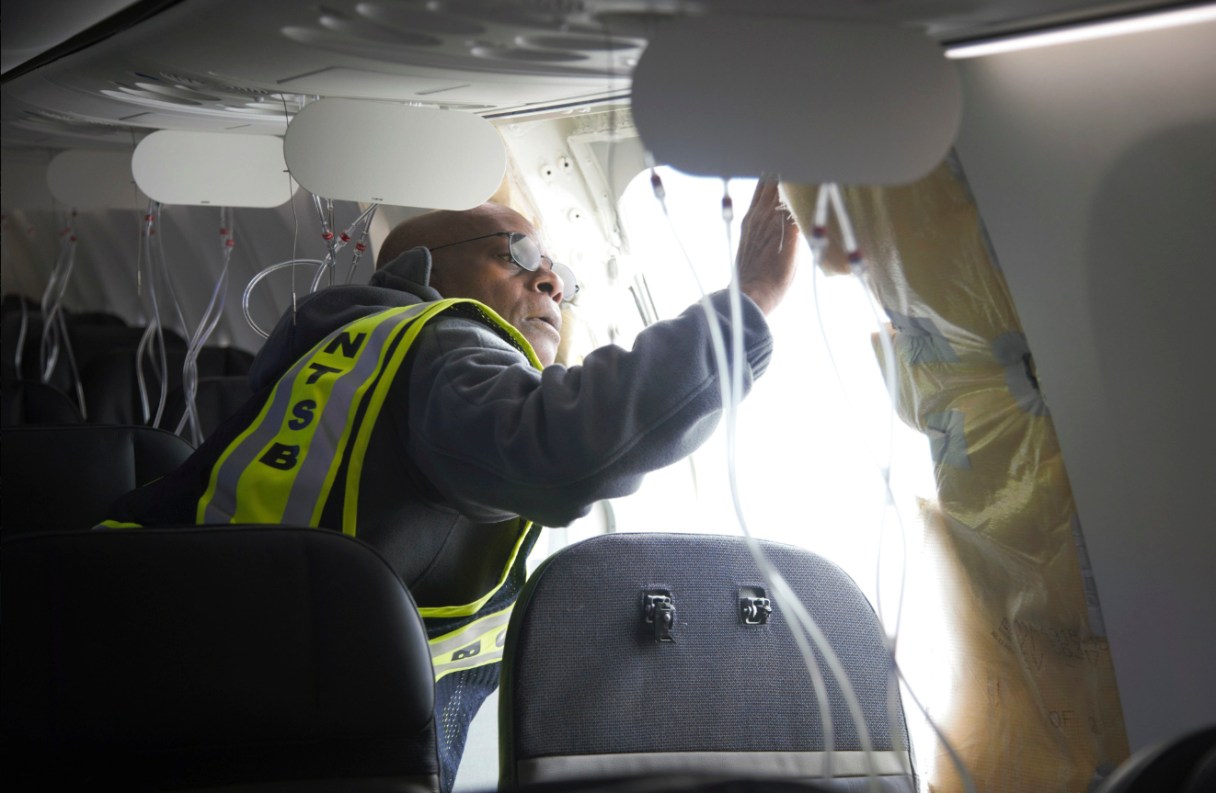
PORTLAND, Ore. (AP) — The decision by Alaska Airlines to stop flying one of its planes over the Pacific Ocean to Hawaii due to warnings from a cabin-pressurization system — yet keep flying it over land — is raising questions about whether the jet should have been in the air at all.
The nation’s top accident investigator says warning lights were triggered on three flights, including each of the two days before the brand-new Boeing 737 Max 9 suffered a terrifying fuselage blowout Friday night. A plug covering a spot left for an emergency door tore off the plane as it flew 16,000 feet (4,800 meters) above Oregon.
Jennifer Homendy, chair of the National Transportation Safety Board, said maintenance crews checked the plane and cleared it to fly — but the airline decided not to use it for the long route to Hawaii over water so that it “could return very quickly to an airport” if the warning light reappeared.
Friday’s flight was headed from Oregon to Southern California, and made it back to Portland without serious injury to any of the 171 passengers and six crew members. But the decision to allow it to fly over land in the first place struck some aviation experts as illogical.
“If you are afraid to take the airplane far from land, what is the reason for that? That has to be answered by Alaska Airlines,” said Steven Wallace, an air-safety consultant and commercial pilot who once headed accident investigations for the Federal Aviation Administration.