
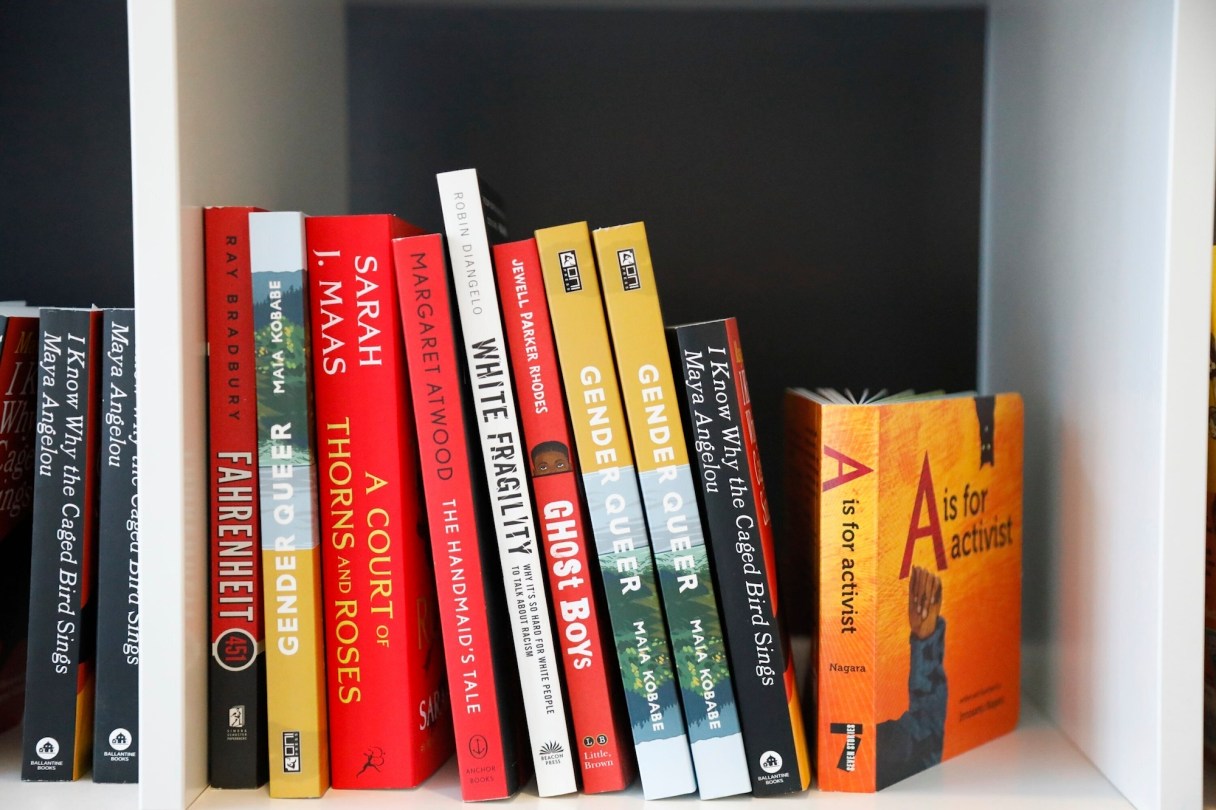
America has a race problem, and it has abandoned all pretensions to hide it. We need only to do an autopsy on 2023 to witness this toxic brew of racial animosity boil over, in full public view. The days of the so-called post-racial, colorblind America are long behind us, if they ever existed. White legislators in statehouses and boards across the U.S. seized power to institute openly anti-Black laws, resolutions and decrees.
Take, for example, the recent decision by an all-white Missouri school board to remove Black history classes and books from the district’s course offerings. This act of Black scholastic erasure comes in the aftermath of the Florida Board of Education’s approval of new protocols for the teaching of Black history. Those guidelines tout the benefits of Black chattel slavery, arguing enslaved people enjoyed advantages because of their conditions in bondage. As to be expected, such a revisionism-riven reading of American slavery history unleashed public outcry from a chorus of Black civil rights organizations. So universal was the condemnation of the board’s ahistorical account that even some prominent Black conservatives criticized the reckless move.
Any cursory reading of Black history in this country, from slavery to Jim Crow, reveals a clear historical pattern: Keep Black people away from writing their own histories by outlawing Black literacy witnessed in slavery, or explicitly impoverishing Black literacy, as observed in Jim Crow laws of “separate but equal.”
America seems intent on repeating its noxious history of Black oppression. Arkansas, under Sarah Huckabee Sanders’ governorship, approved similar bans on Black literature and history.
Other states, from Texas to Oklahoma, also banned various forms of Black literature, curriculum, history and the teaching of critical race theory.
Have we forgotten the lessons of Jim Crow and the tremendous damage heaped upon Black communities?
According to the American Library Association, Texas led the nation in book banning in 2022. The white hoods of a past era are now substituted for the corporate jacket, the judicial gavel and the legislative pen. There’s an oft-repeated adage that speaks of slavery being America’s original sin. But what of its contemporary sins? When will America overcome its fondness for racial injustice?
Indeed, the times are changing. No longer is racial terror the sole work of people in white hoods but inked in this nation’s history through legislators. These evolving currents of America’s race problem must be voiced and documented for all to witness. Failure to name racism, in whatever form, necessarily gives full rein for its rise and continuity in American life.
All these examples of anti-Blackness in America are made possible only when white people use their legislative pens and gavels to reproduce racial oppression that they say they oppose.
Failure to grapple with contemporary wrongs will result in repeats of racial crises, of the sort witnessed after the 2020 police murder of George Floyd, the 2012 fatal shooting of Trayvon Martin, and the 1968 assassination of the Rev. Martin Luther King Jr.
Banning Black literature is not an abstraction. Its costs are counted in Black graves.
Derefe Kimarley Chevannes is an assistant professor of political science at the University of Memphis.