
Monday, November 16, 2026Nov 16

Kenya embarks on its biggest rhino relocation project. A previous attempt was a disaster

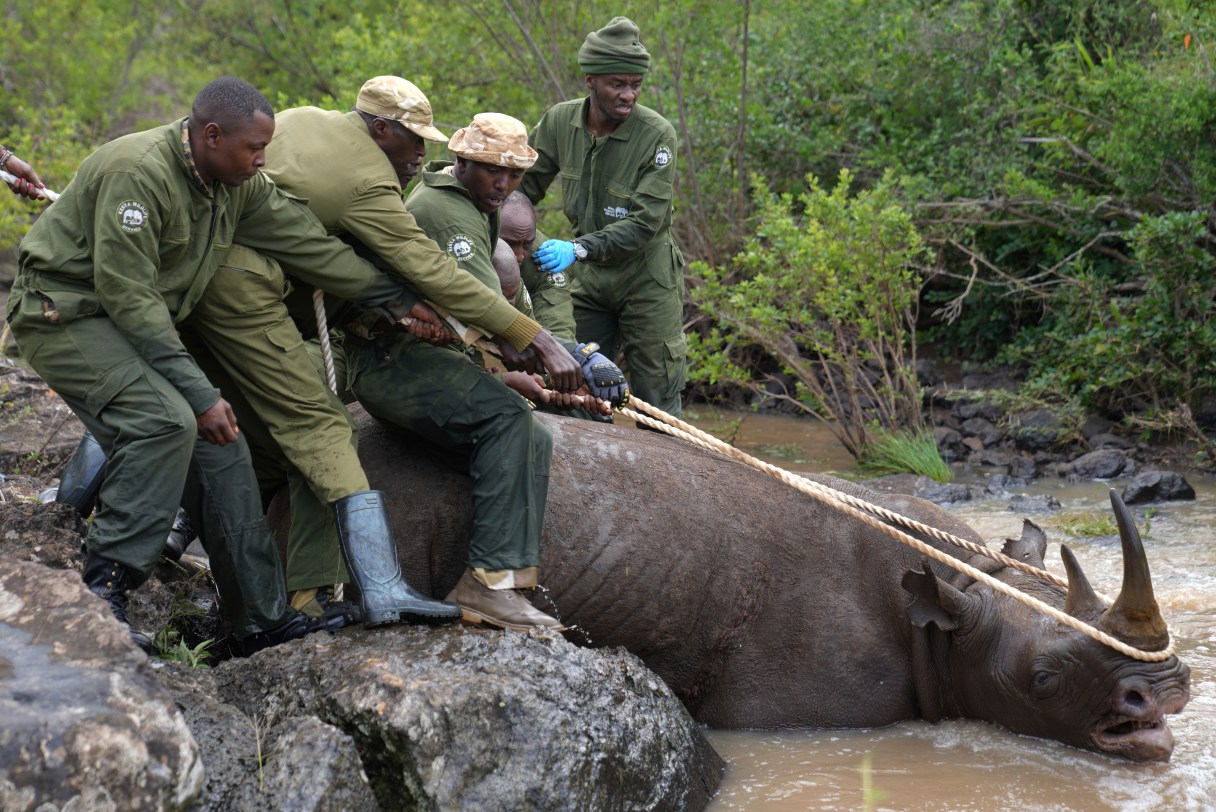
Kenya Wildlife Service rangers and capture team pull out a sedated black rhino from the water in Nairobi National Park, Kenya Tuesday, Jan. 16, 2024. Kenya has embarked on its biggest rhino relocation project ever and began the difficult work Tuesday of tracking, darting and moving 21 of the critically endangered beasts, which can each weigh over a ton, hundreds of miles in trucks to a new home. A previous attempt at moving rhinos in the East African nation in 2018 was a disaster as all 11 of the animals died. (AP Photo/Brian Inganga)

NAIROBI, Kenya (AP) — Kenya has embarked on its biggest rhino relocation project and began the difficult work Tuesday of tracking, darting and moving 21 of the critically endangered beasts, which can each weigh over a ton, to a new home.

A previous attempt at moving rhinos in the East African nation was a disaster in 2018 as all 11 of the animals died.

The latest project experienced early troubles. A rhino targeted for moving was not subdued by a tranquilizer dart shot from a helicopter. Wildlife rangers on the ground attempted to restrain the rhino with a rope but decided to release the animal to make sure it was not harmed.

Wildlife officials have stressed that the project will take time, likely weeks.

The black rhinos are a mix of males and females and are being moved from three conservation parks to the private Loisaba Conservancy in central Kenya, the Kenya Wildlife Service said. They are being moved because there are too many in the three parks and they need more space to roam and, hopefully, to breed.