
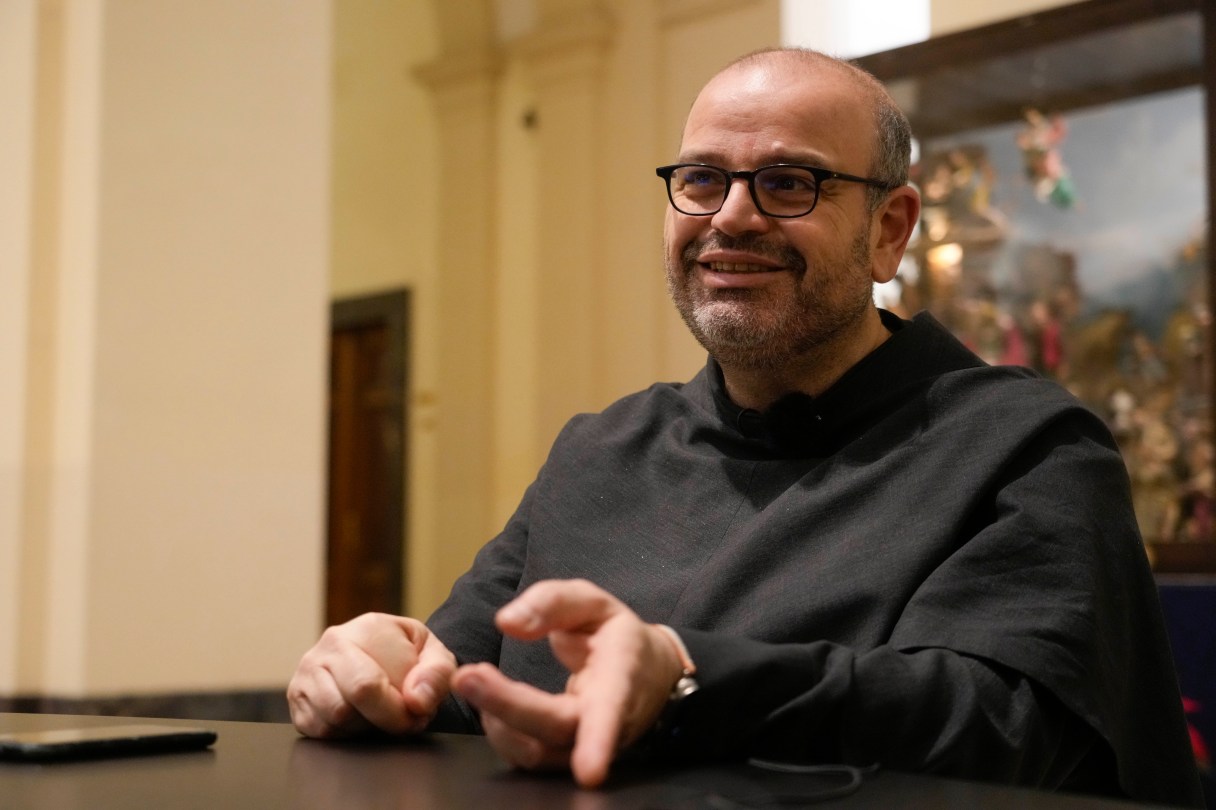
ROME (AP) — Friar Paolo Benanti wears the plain brown robes of his medieval Franciscan order as he pursues one of the most pressing issues in contemporary times: how to govern artificial intelligence so that it enriches — and doesn’t exploit — people’s lives.
Benanti is the Vatican’s go-to person on the technology and he has the ear of Pope Francis as well as some of Silicon Valley’s top engineers and executives.
With a background in engineering, a doctorate in moral theology and a passion for what he calls the “ethics of technology,” the 50-year-old Italian priest is on an urgent mission that he shares with Francis, who, in his annual peace message for 2024, pushed for an international treaty to ensure the ethical use of AI technology.
“What is the difference between a man who exists and a machine that functions?” said Benanti in an interview this week with The Associated Press during a break at the Pontifical Gregorian University, where he teaches courses such as moral theology and bioethics to students preparing for the priesthood. “This is perhaps the greatest question of these times, because we are witnessing a challenge that every day grows more profound with a machine that is humanizing.”
Benanti is a member of the United Nations’ Advisory Body on Artificial Intelligence as well as head of an Italian government commission tasked with providing recommendations on how to safeguard journalism from fake news and other disinformation. He is also a consultant to the Vatican’s Pontifical Academy for Life.