
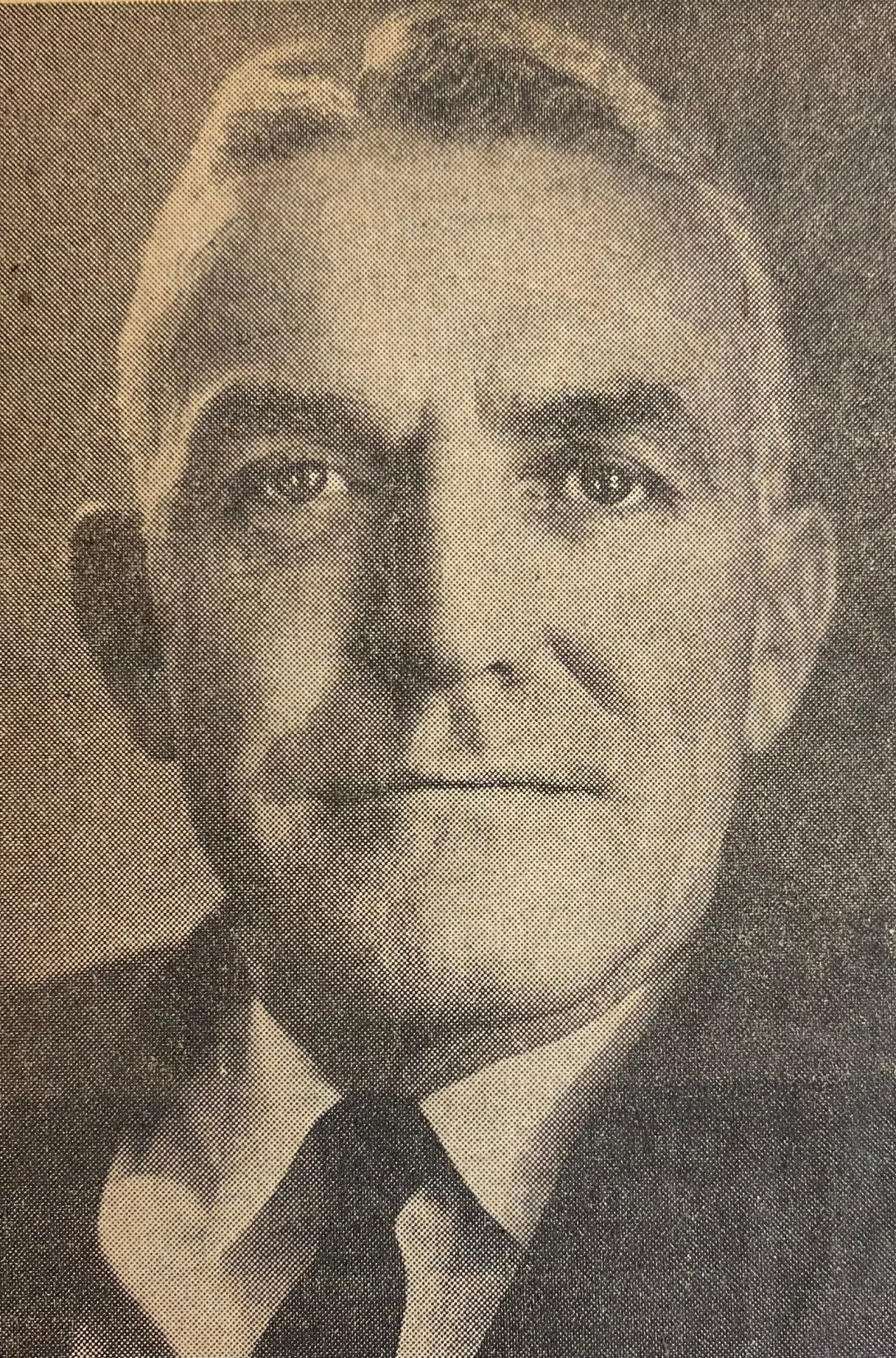
Following Ralph Kelley’s appointment to the federal bankruptcy bench, Vice-Mayor A.L. “Chunk” Bender was sworn in as mayor in a Jan. 2, 1969, ceremony at Chattanooga City Hall. Bender had served as public works commissioner since 1962 and vice-mayor since 1967, compiling a record of integrity, commitment and humility.
Shortly after taking the oath of office, the new mayor addressed the assembled guests: “This is a wonderful occasion for me. I accept the office of mayor of the city of Chattanooga … knowing well the responsibility and challenge I am assuming. I earnestly solicit your advice and assistance in charting a course all Chattanoogans will be proud of … . With a sound plan, active citizen support and a unified City Commission working in harmony, we can and will be a city with pride … saying Chattanooga — that’s my hometown.” Bender and his wife were joined at the ceremony by their three children, Mrs. George A. Cooper, Miss Fran Bender and Andy Bender.
The City Commission room was filled with colleagues, including now-Judge Kelley, County Judge Chester Frost and representatives of all city departments along with personal friends. Tennessee Gov. Buford Ellington, a personal and political friend, telegraphed the new mayor: “Congratulations upon assuming the responsibility … as mayor of Chattanooga. You have my best wishes … .” Bender admitted to feeling a tinge of sadness at leaving the staff of the public works department and expressed his gratitude for the “help and support given by the employees … .” He spoke to them, reminding each that “whatever has been accomplished belongs to you.”
Then he prepared for his first day on the job. Jimmie Lou Rhodes, Bender’s secretary at public works, moved to the first floor as his secretary. Robert Maffett, his former administrative assistant, assumed the same position in the mayor’s office.
For the next two years, Bender presided over a city making progress as it moved forward as an industrial and business center while attempting to determine its future in a period of rapid change in the nation. The job’s responsibilities took a toll on the mayor, whose health appeared failing, and in early January 1971, Bender announced that he would not be a candidate for mayor in the “forthcoming city elections.” Joined for the announcement at city hall by his steering committee members, including Coyel Ricketts, Scott Probasco, Robert Maclellan, William Nobles, Wilkes Thrasher Jr., John Crabtree, George McInturff and H. Clay Evans, the 54-year-old mayor thanked his “many dedicated friends and supporters who have been so loyal over the years.”