
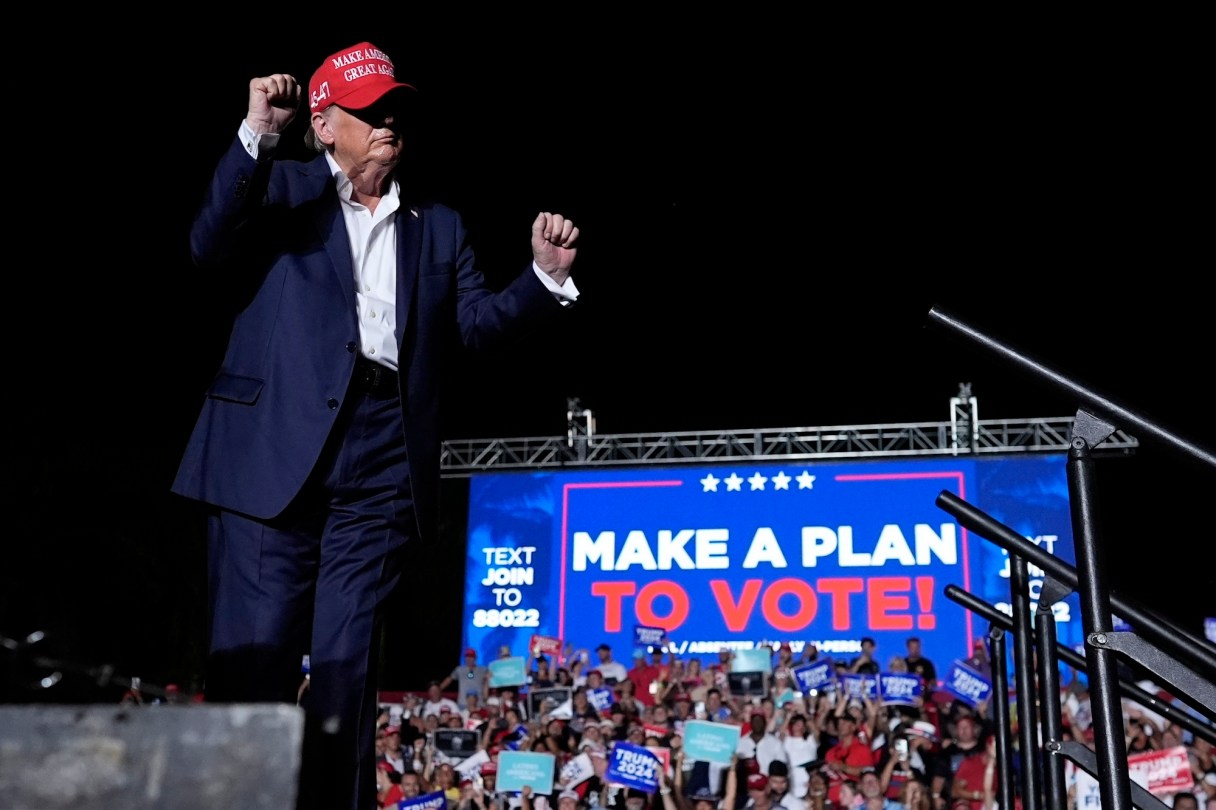
Donald Trump isn’t normally thought of as a consensus-builder, but in one sense that’s exactly what he is. Many of Trump’s most ardent fans and foes alike believe he is the leader of a political movement with a clear and defined set of principles and goals. They disagree only on whether that agenda is good or bad.
The tendency to cast Trump as a tool of the ideological right serves the purposes of both sides. The right needs to believe Trump is a warrior for its causes to justify its support for him, and the left wants to believe the same to justify its opposition.
While the notion that Trump is an ideological conservative isn’t outlandish, it is outdated. It’s certainly true that if Trump is re-elected, he will do things that please the GOP and conservatives. But let’s not get the causality backward: His supporters will like what he does — and his enemies will hate it — because Trump did it. They’ll look up the arguments later.
Right-wing apologists’ attempt to construct an intellectually consistent Trumpism is one of the oldest stories of the Trump era. And time and again, Trump has beclowned them for it.
Consider the recent humiliation of Kevin Roberts, the Heritage Foundation’s president. Roberts has worked tirelessly to turn the storied think tank into the ideological avant-garde of Trumpism. Along with a who’s-who of former Trump administration officials and conservative groups, he launched Project 2025 as both a playbook for another Trump term and a how-to manual for the true believers the group is screening to staff the administration.