
(Editor’s note: First of three parts)
When Chattanooga gained fame as the “Dynamo of Dixie” in the last quarter of the 19th century, the city had a relatively small geographic footprint. Its suburbs grew significantly as people came to work at the prosperous foundries, railroads and heavy manufacturing companies but lived outside the city.
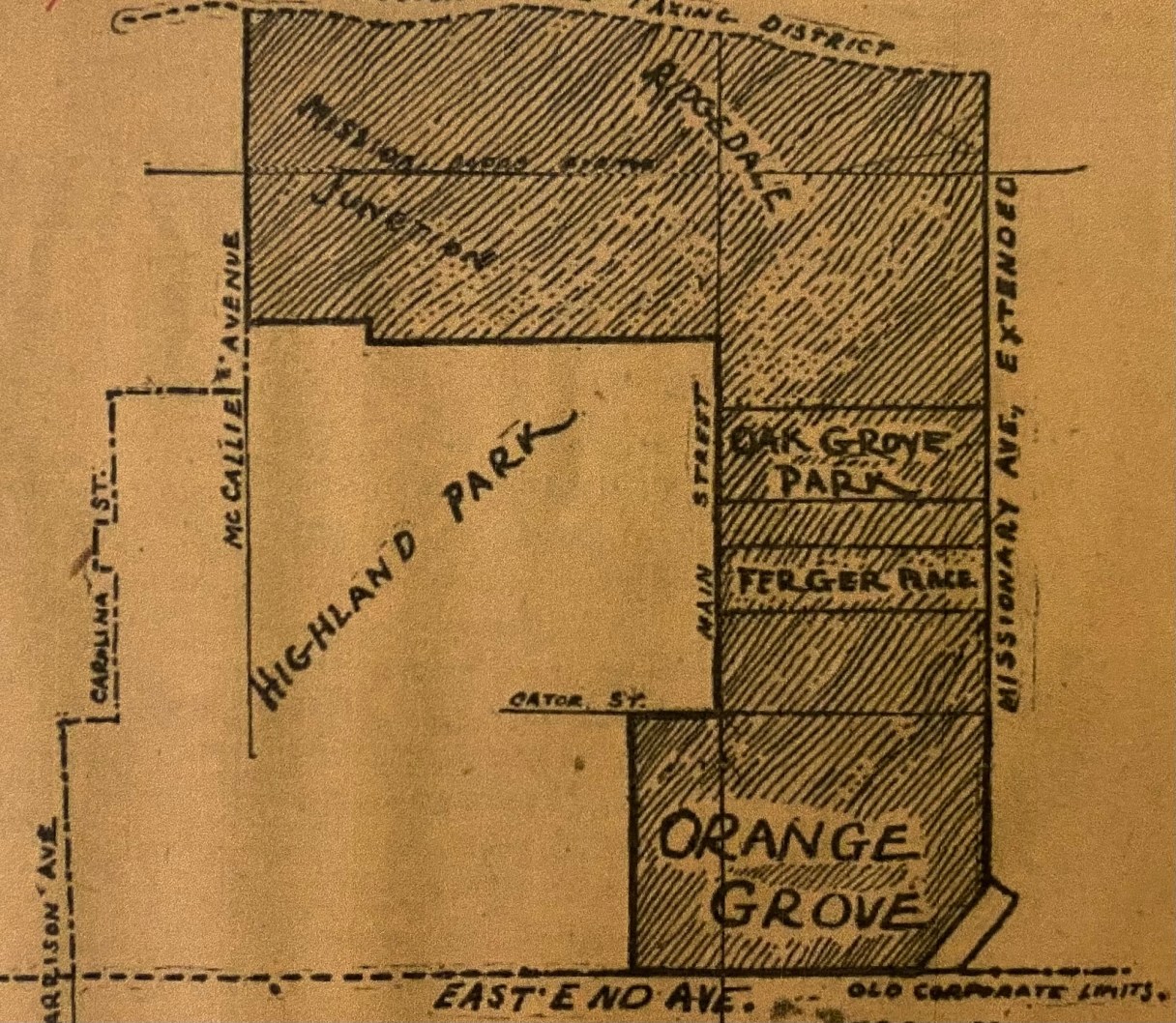
In February 1913, the Chattanooga Daily Times announced that the City Commission had voted the previous day to annex several communities located east of the current “corporate limits,” beginning at East End Avenue (today’s Central Avenue). The city’s E.R. Rogers drew the map for commissioners, depicting the proposed annexation areas including Orange Grove, Ferger Place, Oak Grove Park, Ridgedale bordering McCallie Avenue, Missionary Avenue and the Mission Ridge “Taxing District.”
In a separate move, the commissioners added an area identified as the “Gardenhire District,” bordered by the Tennessee River, Lauderdale, Harrison Avenue and the Southern Railway Line edging toward Citico Creek. The additions would add about 10,000 citizens to the current population of the city, noted as 60,000 in the 1910 census, as well as property carrying about $2.5 million in appraisals. In an agreed-upon move, however, the buildings, equipment and properties associated with Central High School would remain in the hands of Hamilton County.
The community leaders supporting the annexation included Ridgedale leaders R.T. Wright, J.A. Hargraves and J.A. Nicholson, and a strong Oak Grove movement led by E.D. Nolan, A.D. Johnson and Fred Kampschefey. The most vocal opposition leaders were R. Burnett and A. Shelton. The commission awaited an approval vote by the Hamilton County delegation to finalize the annexation, but prior meetings between the commission and the delegation assured approval would be given.