
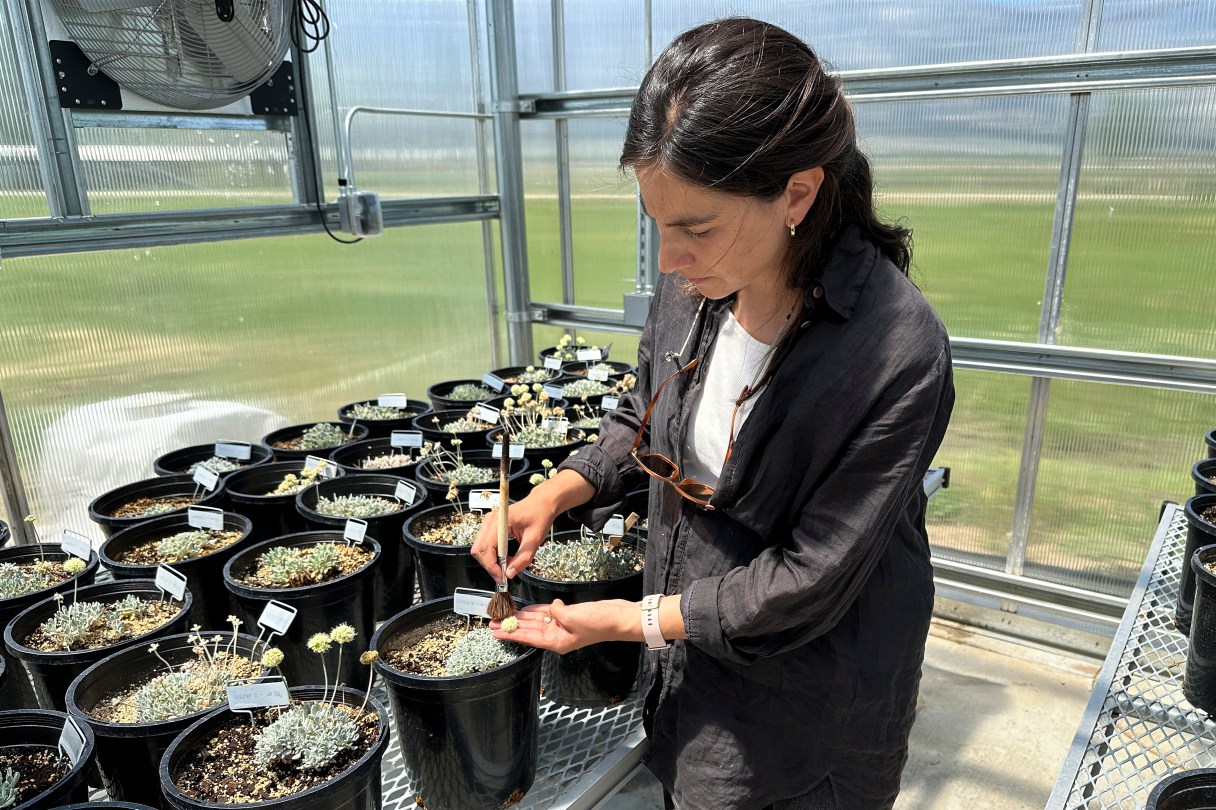
GARDNERVILLE, Nev. (AP) — A botanist gently strokes the pollen of endangered wildflowers with a paintbrush as she tries to reenact nature inside a small greenhouse in the shadow of the Sierra Nevada.
It’s part of a lithium mining company’s grand experiment intended to help keep an extremely rare desert plant from going extinct in a yearslong battle that has set one green agenda against another: clean energy versus native biodiversity.
Australia-based Ioneer says the mine it wants to dig in the Nevada desert would more than quadruple U.S. production of lithium needed to speed production of electric vehicles and build the batteries needed for other clean electricity projects.
Conservationists proclaim their support for world leaders who are trying to tackle climate change by curbing global emissions. But they’re fiercely fighting the mine because it would dig deeper than the length of a football field near the world’s only known patches of land where endangered Tiehm’s buckwheat grows.
So far, the U.S. Bureau of Land Management has endorsed the company’s latest strategy, which includes propagating and transplanting the buckwheat, as its preferred alternative in a draft environmental impact statement, one of the last steps toward final approval of the mine. The plan still must be reviewed by the Fish and Wildlife Service, which has raised concerns about earlier versions.