
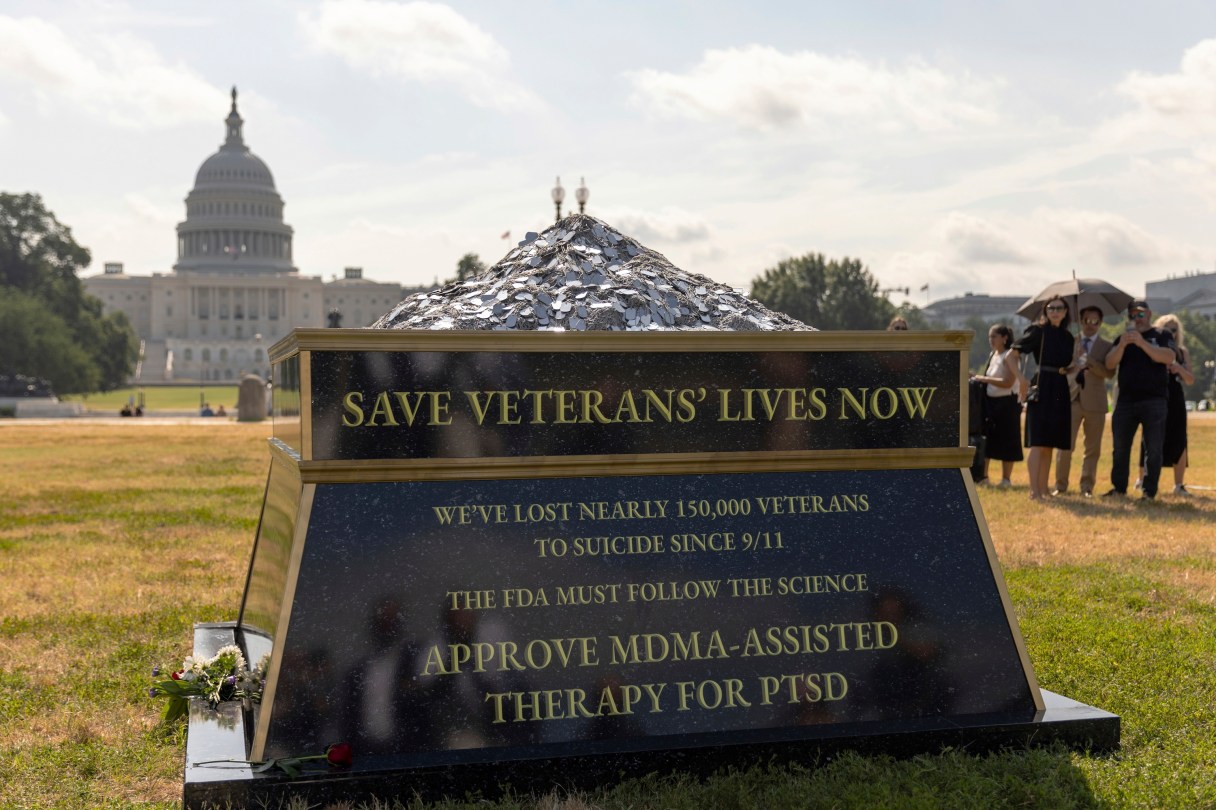
NEW YORK (AP) — It was a landmark moment for the psychedelic movement: The Department of Veteran Affairs’ top doctor stood on stage, praising advocates who have spent decades promoting the healing potential of mind-altering drugs.
In an unannounced appearance at a New York psychedelic conference, the VA’s Dr. Shereef Elnahal said his agency was ready to start rolling out MDMA-assisted therapy for post-traumatic stress disorder as soon as regulators approved it.
“The VA has to be first, as we have been, with the mental health needs of our veterans,” Elnahal told attendees at the May meeting. He also highlighted the “awesome, groundbreaking” research on the drug by MAPS, or the Multidisciplinary Association for Psychedelic Studies, the leading nonprofit advocating for the medical and legal use of hallucinogenic drugs.
But expectations for MDMA’s first-of-a-kind approval unraveled a few weeks later when Food and Drug Administration advisers voted overwhelmingly against the drug, citing flawed data, questionable research conduct, and potential safety and addiction risks. The panel’s recommendation isn’t binding, but the FDA is widely expected to delay or decline approval when it makes its decision by mid-August.
The potential rejection has sent shockwaves through the psychedelic community, including combat veterans who have spent years lobbying for the drug, which is also known as ecstasy or molly. The advocacy effort has long been intertwined with MAPS, which has funded or supported some of the most vocal veterans supporting psychedelic therapy.