
Tuesday, November 17, 2026Nov 17

This story is exclusive to subscribers.

The German Way: After battling a decade to join the UAW, Chattanooga auto workers shook the South and finally secured success

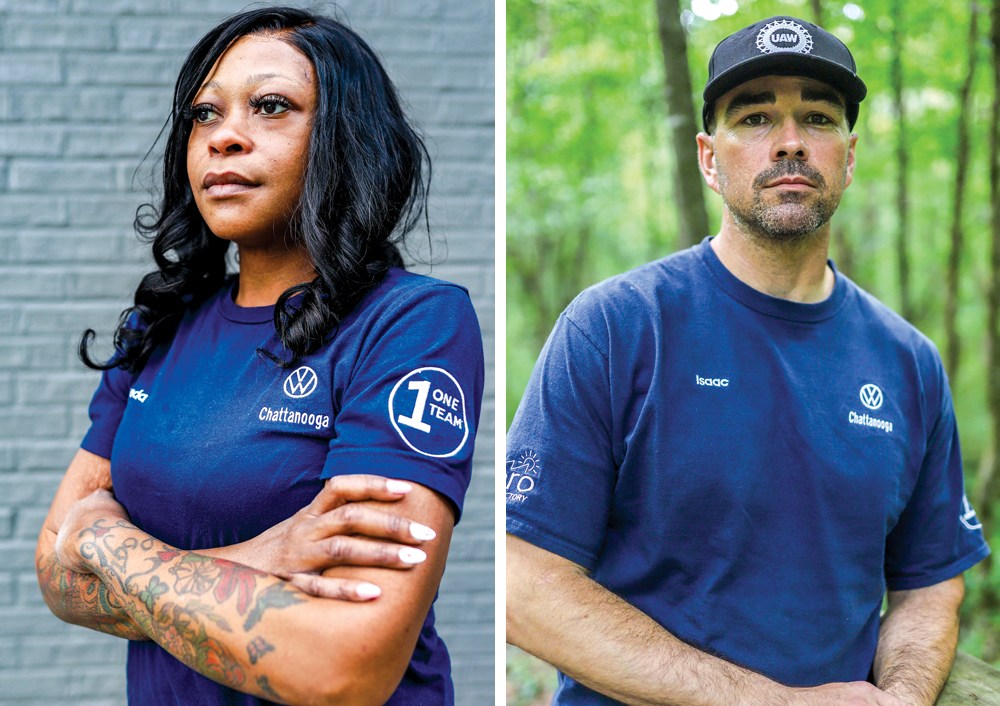
Staff photos by Olivia Ross / Left: Yolanda “Yogi” Peoples, one of the first 2,000 production workers hired when VW first opened in Chattanooga, began helping the United Auto Workers organize the plant in 2013. / Right: Isaac Meadows, a former Reno, Nev., police officer, joined the VW production staff in 2023. The production staff was among the most regionally diverse in the plant’s history.


The auto titans didn’t see it coming.

The collection of men who went on strike at General Motors’ Lakewood plant outside Atlanta in 1936 posed more of a threat to top leaders of the fledgling United Auto Workers than they did to GM, which atop the pack was enjoying colossal corporate gains midway through the Great Depression.

Union membership was just under 7% of the private workforce, near where it hovers today, and U.S. carmakers had successfully kept unionization at bay.

UAW’s top brass, struggling for recognition from national labor leaders, wanted to go after GM but remained undecided on how, until a move was forced by their militant Southern representative, a 25-year-old German immigrant named Fred Pieper, who’d been fired from the Atlanta plant two years earlier for organizing.