
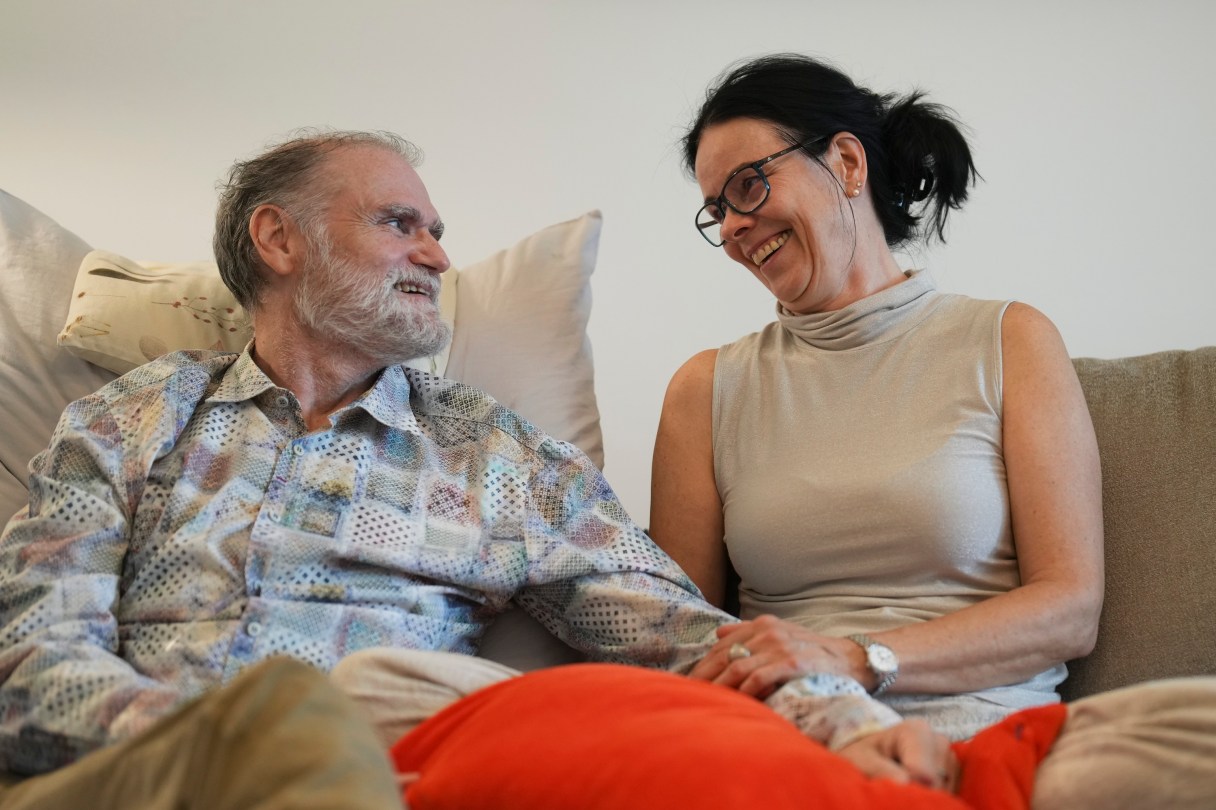
BERLIN (AP) — When Michael Bommer found out that he was terminally ill with colon cancer, he spent a lot of time with his wife, Anett, talking about what would happen after his death.
She told him one of the things she’d miss most is being able to ask him questions whenever she wants because he is so well read and always shares his wisdom, Bommer recalled during a recent interview with The Associated Press at his home in a leafy Berlin suburb.
That conversation sparked an idea for Bommer: Recreate his voice using artificial intelligence to survive him after he passed away.
The 61-year-old startup entrepreneur teamed up with his friend in the U.S., Robert LoCascio, CEO of the AI-powered legacy platform Eternos. Within two months, they built “a comprehensive, interactive AI version” of Bommer — the company’s first client.
Eternos, which got its name from the Italian and Latin word for “eternal,” says its technology will allow Bommer’s family “to engage with his life experiences and insights.” It is among several companies that have emerged in the last few years in what’s become a growing space for grief-related AI technology.