
Sunday, November 15, 2026Nov 15

A realistic way to protect kids from social media? Find a middle ground

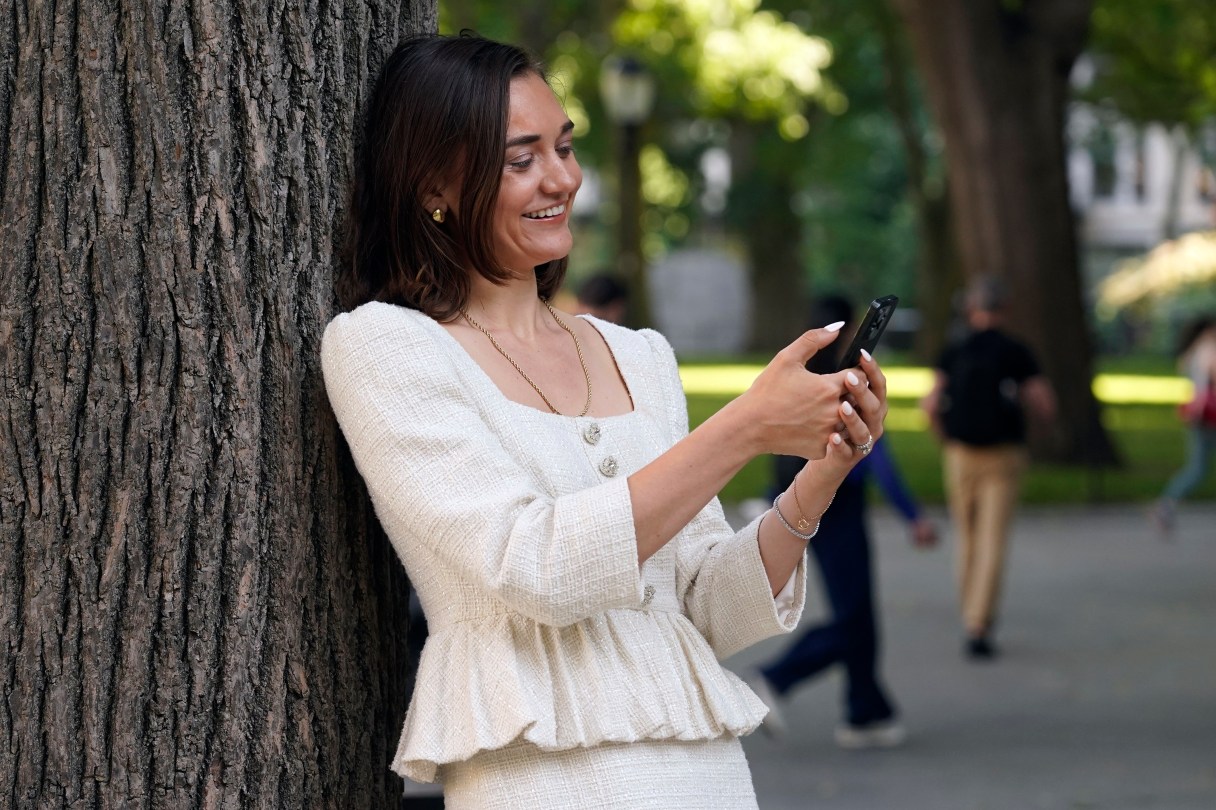
Larissa May, of HalfTheStory, is photographed in New York's Madison Square Park, Tuesday, June 4, 2024. The site works with young people to build better relationships with technology, on their own terms, starting in middle school even before some kids have a device. To May, abstinence is not the answer to teens' problems with social media. (AP Photo/Richard Drew)

Ahmed Othman isn’t on TikTok and doesn’t want to be.

He and his younger sister got iPhones when they were in eighth and seventh grade respectively, but with no social media, just iMessage. Their parents, who are both computer scientists, spent the next year teaching them about social media, bombarding them with studies about its effects on teen mental health.

“They really tried to emphasize social media is a tool, but can also be like your worst enemy if you so make it,” Othman said.

Now 17, Othman credits his parents’ deep involvement for what he calls a “healthy relationship” with his phone. That includes staying away from TikTok.

“The algorithm is so potent that I feel like, you know, TikTok might not benefit me,” he said.