
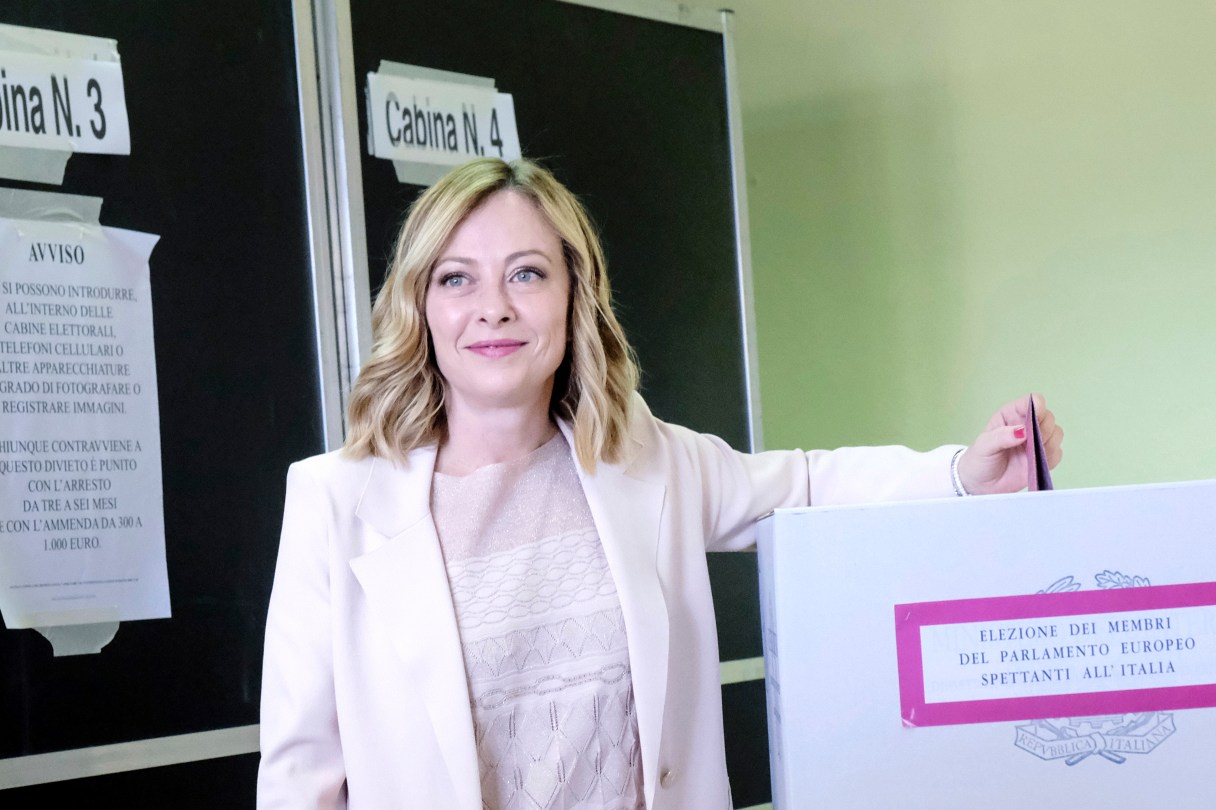
ROME (AP) — Prime Minister Giorgia Meloni joined voters in Italy and a half dozen European Union nations in casting a ballot during the penultimate day of European Union parliamentary elections on Saturday. The bloc’s premier hard-right politician threw down the gauntlet to the traditional center parties, telling them their time to run the EU as they liked was up.
Populist and far-right parties were looking to make gains across the 27-member bloc in the wake of the strong showing by Geert Wilders in the Netherlands on Thursday.
And Meloni, the leading hard-right politician governing a key founding nation of the bloc, left no doubt about what was at stake when she went to vote in her suburban neighborhood in Rome on Saturday afternoon.
“This vote will decide our next five years,” she said, echoing her campaign theme that time had come to pull back powers to national capitals and curtail the reach of the EU institutions that have been dominated by Christian Democrat, Socialist and pro-business Liberal politicians.
As the third most populous nation in the bloc, Italy wields considerable influence. It will send 76 legislators to the 720-seat parliament, which has extended its powers in recent years. Only Germany and France, which vote on Sunday, have more seats.