
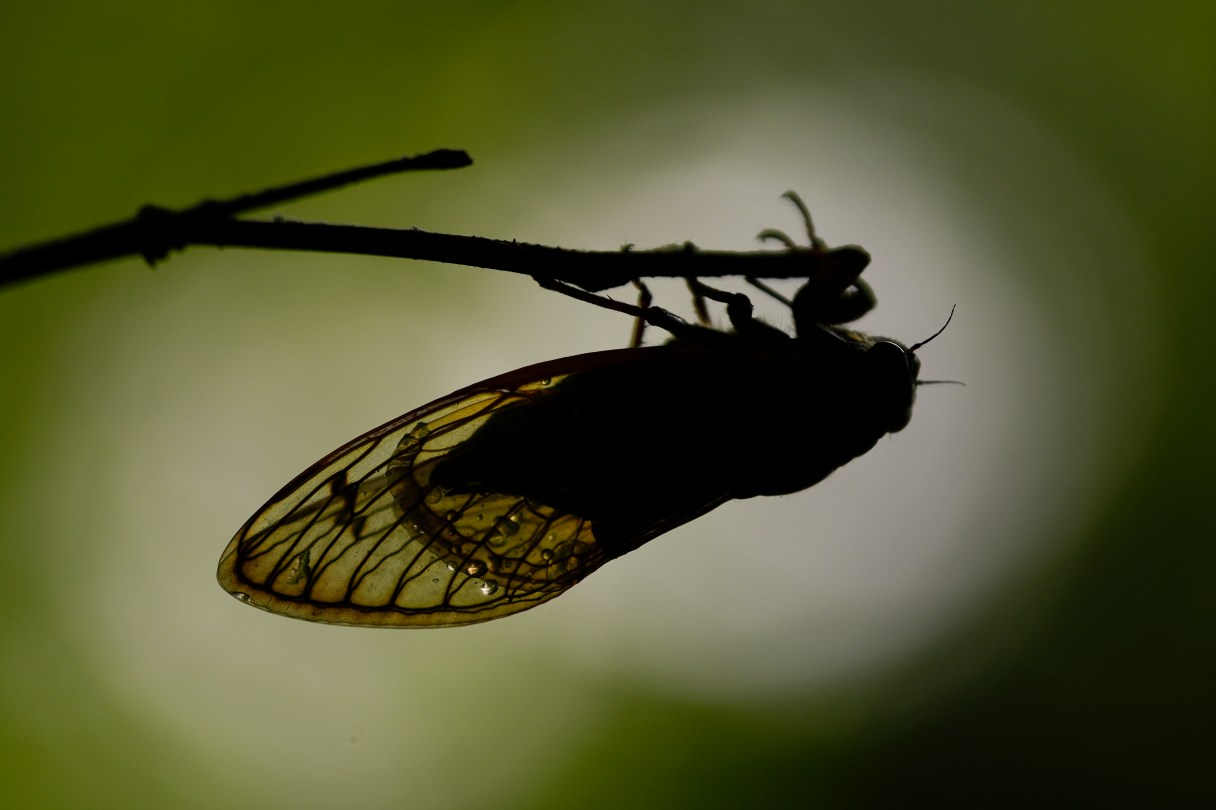
WHEATON, Ill. (AP) — The most noticeable part of the cicada invasion blanketing the central United States is the sound — an eerie, amazingly loud song that gets in a person’s ears and won’t let much else in.
“It’s beautiful chaos,” said Rebecca Schmidt, a U.S. Department of Agriculture research entomologist. “It does make this kind of symphony.”
The songs — only from males — are mating calls. Each periodical cicada species has its own distinct song, but two stand out: those of the orange-striped decims or pharaoh cicadas, and the cassini cicada, which is smaller and has no orange stripes on its belly.
“The one we’re hearing the most is the cassini, a buzzy trail that goes up in a wave and is coming back down,” Jennifer Rydzewski, an insect ecologist at DuPage County Forest Preserve, said in an interview in a clearing near a bunch of trees.
“And every time it goes up in a wave and comes back down, you’ll see in the treetops a bunch of them start flying out, so they’ll make a call and then jump to a new branch and make the call again. So it’s actually like different groups that are coming in waves.”