
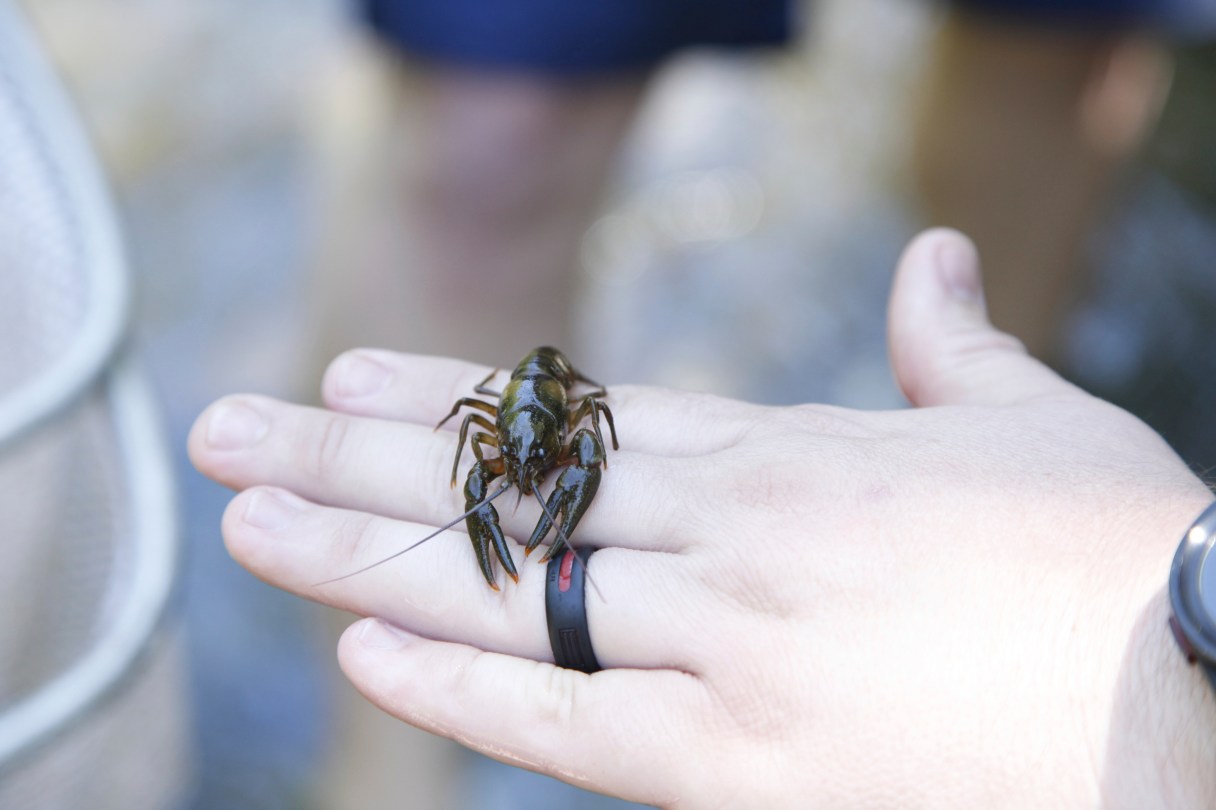
NASHVILLE, Tenn. (AP) — Dale McGinnity has been turning over rocks in Mill Creek to study the endangered Nashville crayfish for a decade. He hopes to learn whether this little crustacean that makes its home mainly in the urbanized area around its namesake city is being harmed by all the development surrounding it. The results are encouraging.
“Things are looking good so far,” said McGinnity, who works at the Nashville Zoo as curator of ectotherms, or cold-blooded creatures. “It’s been a really nice, maybe steady or slightly increasing population over those 10 years.”
But that good news is also potentially bad news. The U.S. Fish and Wildlife Service proposed removing the Nashville crayfish from the endangered species list in 2019, and that proposal is still being considered. A healthy and robust population could add to the pressure to remove it. But some biologists argue the Nashville crayfish still needs protection because species with very small ranges are more vulnerable to extinction, for a variety of reasons.
McGinnity credits the current healthy population to recent changes to stormwater regulations. Runoff from parking lots, building and other hard surfaces now drains to bioretention areas, where it is slowly reabsorbed into the ground.