
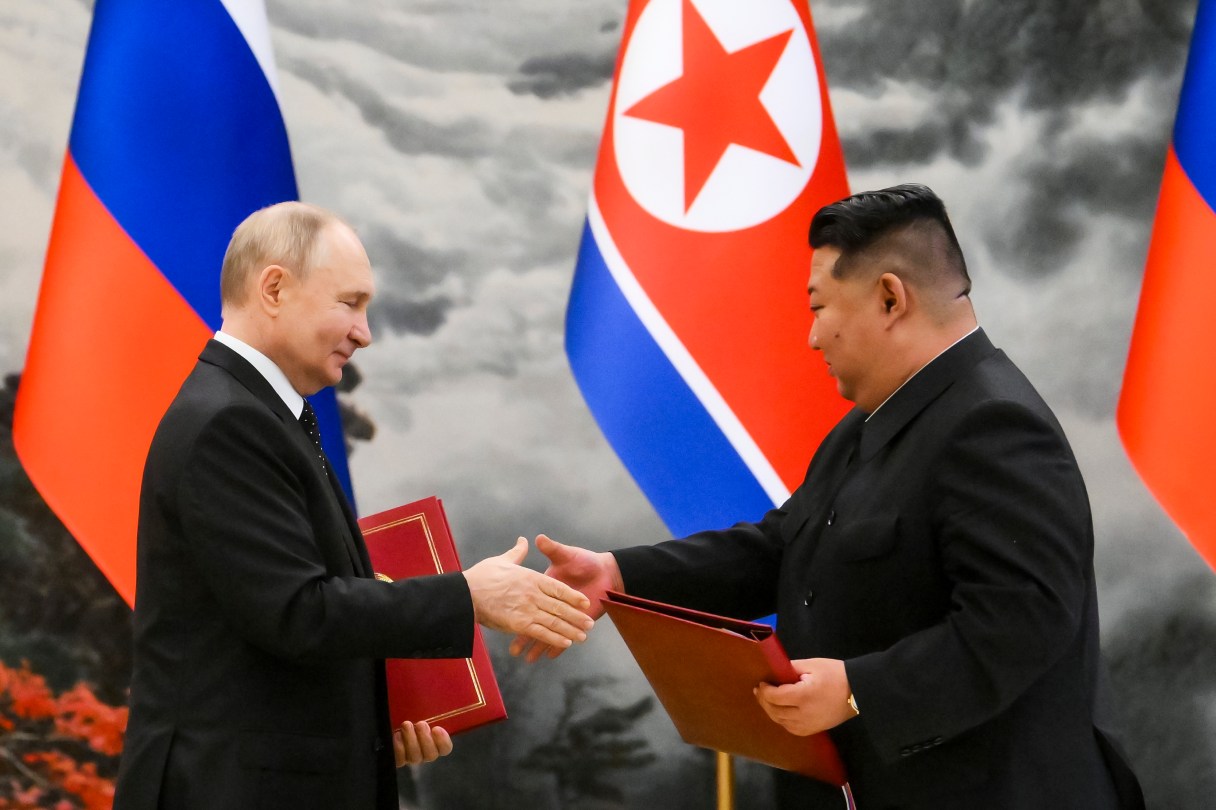
BEIJING (AP) — With no obvious options, China appears to be keeping its distance as Russia and North Korea move closer to each other with a new defense pact that could tilt the balance of power among the three authoritarian states.
Experts say China’s leaders are likely fretting over a potential loss of influence over North Korea after its leader Kim Jong Un and Russian President Vladimir Putin signed the deal this week, and how that could increase instability on the Korean Peninsula.
Beijing may also be struggling to come up with a response to what could be the strongest Russia-North Korea partnership since the Cold War because it has conflicting goals: keeping peace in the Koreas while countering the U.S. and its Western allies on the global stage.
Beijing so far has not commented on the deal — which requires both countries to provide defense assistance if the other is attacked — and only reiterated boilerplate statements that it seeks to uphold peace and stability on the Korean Peninsula and advance a political settlement of the North-South divide.
The Chinese response has been “very weak,” said Victor Cha, senior vice president for Asia and Korea chair at the Center for Strategic and International Studies, adding that it could be a sign that Beijing doesn’t yet know what to do.