
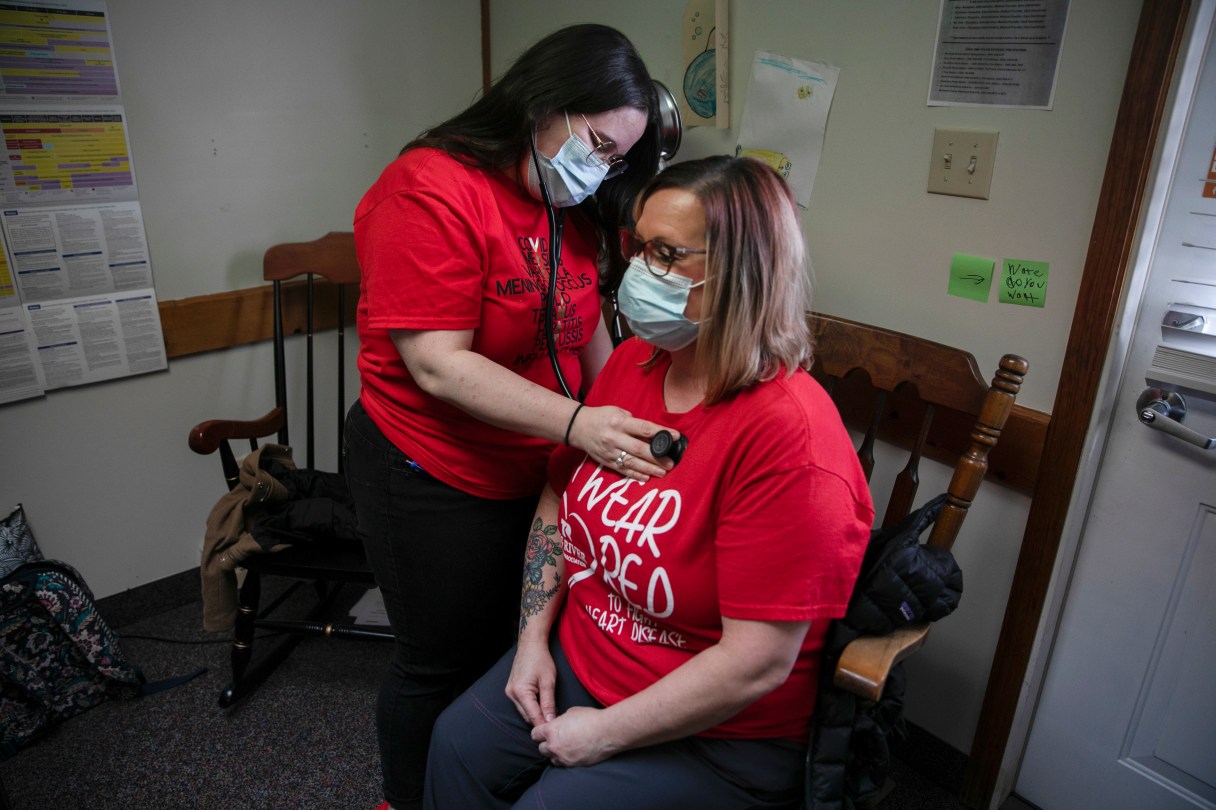
Joanna Bailey, a family physician and obesity specialist, doesn’t want to tell her patients they can’t take Wegovy, but she has gotten used to it.
Around a quarter of the people she sees in her small clinic in Wyoming County, West Virginia, would benefit from the weight-loss medications known as GLP-1s, which also include Ozempic, Zepbound and Mounjaro, she said. The drugs have helped some of them lose 15% to 20% of their weight. But most people in the area she serves don’t have insurance that covers the cost, and virtually no one can afford sticker prices of $1,000 to $1,400 a month.
“Even my richest patients can’t afford it,” Bailey said. She then mentioned something many doctors in West Virginia — among the poorest states in the country, with the highest prevalence of obesity, at 41% — say: “We’ve separated between the haves and the have-nots.”
Such disparities sharpened in March when West Virginia’s Public Employees Insurance Agency, which pays most of the cost of prescription drugs for more than 75,000 teachers, municipal workers and other public employees and their families, canceled a pilot program to cover weight-loss drugs.
Some private insurers help pay for medications to treat obesity, but most Medicaid programs do so only to manage diabetes, and Medicare covers Wegovy and Zepbound only when they are prescribed for heart problems.