
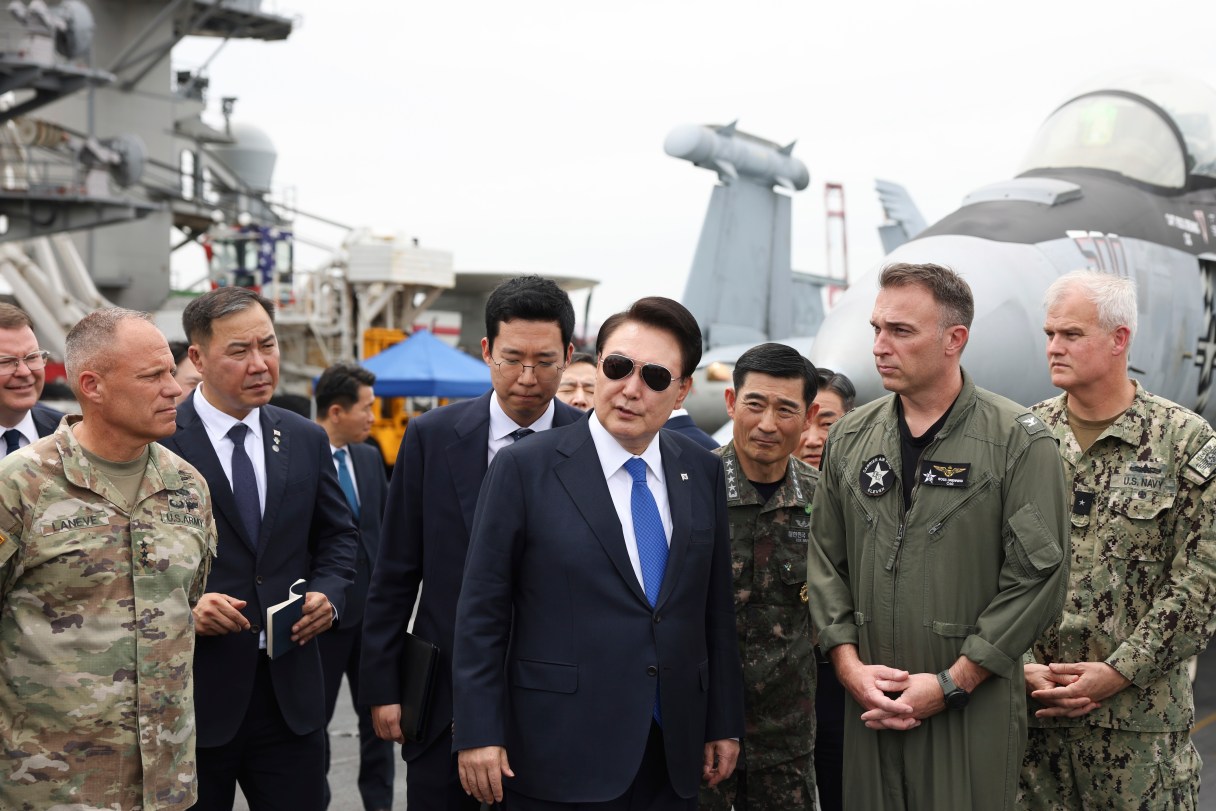
GIMHAE AIR BASE, South Korea (AP) — The United States wrapped up its first multidomain exercise with Japan and South Korea in the East China Sea on Saturday, a step forward in Washington’s efforts to strengthen and lock in its security partnerships with key Asian allies in the face of growing threats from North Korea and China.
The three-day Freedom Edge increased the sophistication of previous exercises with simultaneous air and naval drills geared toward improving joint ballistic-missile defense, anti-submarine warfare, surveillance and other skills and capabilities.
The exercise, which is expected to expand in years to come, was also intended to improve the countries’ abilities to share missile warnings — increasingly important as North Korea tests ever-more sophisticated systems.
Outside of Australia, Japan and South Korea are the only U.S. partners in the region with militaries sophisticated enough to integrate operations with the U.S. so that if, for example, South Korea were to detect a target, it could quickly relay details so Japanese or American counterparts could respond, said Ridzwan Rahmat, a Singapore-based analyst with the defense intelligence company Janes.
“That’s the kind of interoperability that is involved in a typical war scenario,” Rahmat said. “For trilateral exercises like this the intention is to develop the interoperability between the three armed forces so that they can fight better as a cohesive fighting force.”