
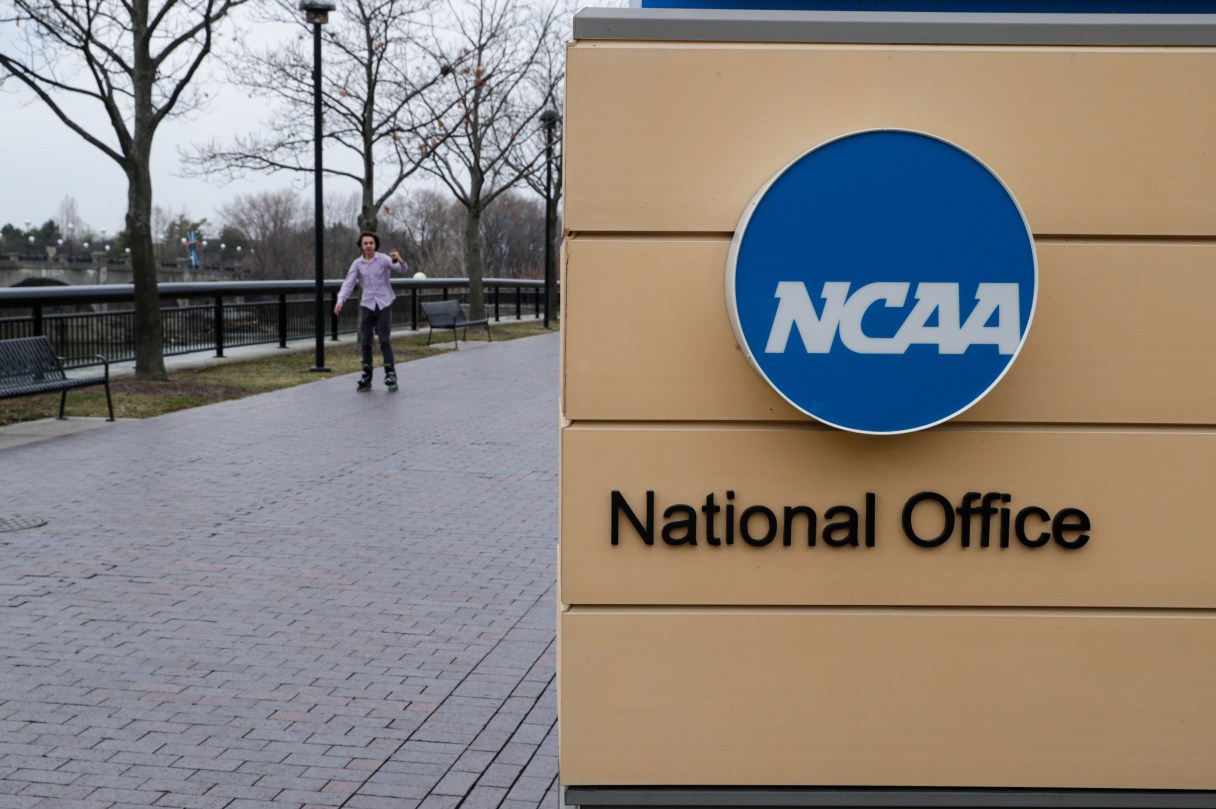
After another courtroom loss, the NCAA has told its enforcement staff to halt investigations into booster-backed collectives or other third parties making name, image and likeness compensation deals with Division I athletes.
In a letter to member schools on Friday, NCAA President Charlie Baker said the the Division I Board of Directors directed enforcement staff “to pause and not begin investigations involving third-party participation in NIL-related activities.”
The move comes a week after a federal judge granted a preliminary injunction in a lawsuit brought by the attorneys general of Tennessee and Virginia. The antitrust suit challenges NCAA rules against recruiting inducements, saying they inhibit athletes’ ability to cash in on their celebrity and fame.
“There will be no penalty for conduct that occurs consistent with the injunction while the injunction is in place,” Baker wrote in the letter obtained by The Associated Press. “I agree with this decision, while the progress toward long-term solutions is underway and while we await discussions with the attorneys general. In circumstances that are less than ideal, this at least gives the membership notice of the board’s direction related to enforcement.”
The judge’s decision had prompted speculation about whether the NCAA would appeal as it fights to maintain its decades-long amateurism model for athletes in the face of rapid change. Baker noted that three specific policies involving NIL compensation remain in place and will be enforced, including prohibitions on schools directly playing athletes and any payment or compensatoin for specific athletics performance.