
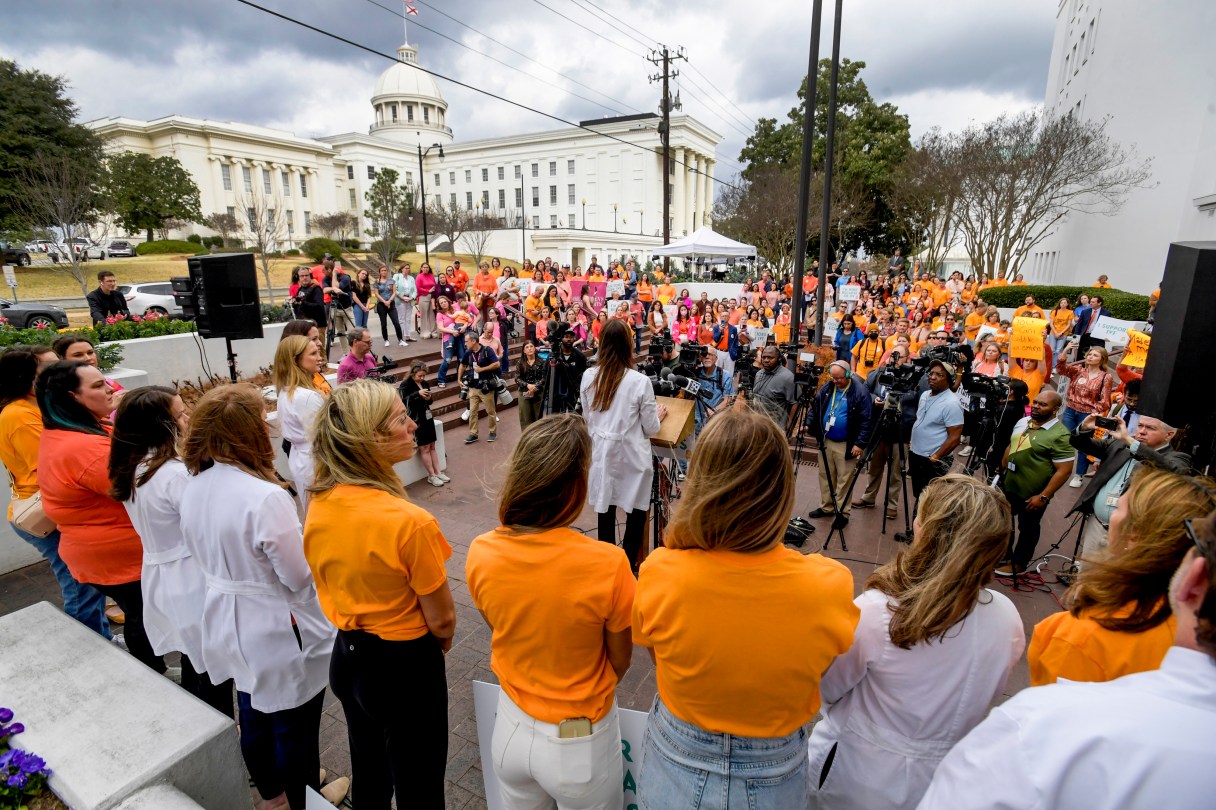
CHICAGO (AP) — The recent ruling in Alabama that frozen embryos are legally considered children created a political firestorm after the decision halted treatment for many couples seeking to have families through fertility treatments. It also has turned the spotlight on the importance of institutions that are poised to play a central in this year’s elections: state supreme courts.
Decisions by states’ highest courts have become especially critical in the nearly two years since the U.S. Supreme Court overturned a constitutional right to abortion. This year, campaigns for state supreme court seats are expected to be among the most expensive and bitterly contested races on the ballot. At stake are future decisions over abortion, other reproductive rights, gerrymandering, voting rights and other crucial issues.
“This is where the action is,” said Jessie Hill, a law professor at Case Western Reserve University School of Law in Cleveland.
The ruling on Feb. 16 by the Republican-majority Alabama Supreme Court to consider frozen embryos created through IVF to be children under state law has unexpectedly made in vitro fertilization, or IVF, an emerging issue in campaigns up and down the ballot. With multiple providers pausing fertility treatments in the state, fearing criminal charges or punitive damages, the GOP-controlled Legislature is under pressure to come up with a fix.
After the U.S. Supreme Court overturned Roe v. Wade in 2022, eliminating federal protections for abortion rights, the decision unleashed a flurry of activity in the states, from legislation to lawsuits that often have ended up before state supreme courts. Those cases have magnified the stakes of having liberals or conservatives controlling a majority on those courts.